Table of Contents
Overview & Symptoms | Diagnosis & Treatment | Vet Q&A
Summary:
"There are a number of causes for canine skin rash. The most common trigger is some type of allergy (fleas and parasites, environmental, food), infection and seborrhea (dandruff) or an immune system disorder. Puppies are prone to demodectic mange, a condition transmitted from the mother. In addition to addressing any symptoms, treatment is specific to the cause of the underlying condition."
Overview
Dog skin rash can be caused by a number of things. Flea allergy leads the list, followed by other types of allergy including atopy or environmental allergies (pollen) and dog food allergies. Other causes are demodectic mange in the case of puppies, of in adult dogs fungal infection, bacterial infections, immune-mediated disease, seborrhea or warts are all likely culprits. Diagnosis and treatment starts by eliminating the most likely cause, fleas or some type of allergy and then through a process of elimination, a veterinarian will identify the trigger and then recommend a treatment approach. Review the various descriptions and pictures below to narrow down the list.
If you don't see improvement after starting a treatment, be sure to see your veterinarian for skin tests and other diagnostic procedures. Often, if a veterinarian or owner suspects a cause, improvement after treatment will confirm the diagnosis. For example, if you use a flea dip and then see improvement, then this confirms that fleas were probably the cause of the dog skin condition.
Symptoms of Canine Skin Rash
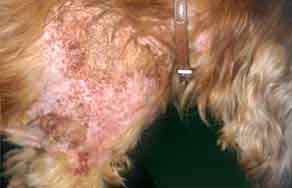
Symptoms of canine skin rash include red spots or patches, “pimples,” or crusty patches on the skin. Your dog may also scratch, lick, or bite at the area if the rash is itchy. Bald spots may appear. If the rash is untreated, the area may become infected from being scratched repeatedly.
Diagnosis and Treatment of Canine Skin Rash
Many different things can cause canine skin rash:
Canine Skin Parasites
- Fleas: It only takes a couple of fleas to cause a problem. The result is that you may not be able to find any fleas on your dog, even though this is the cause of the problem. If the dog skin rash occurs at the rump/back of the dog, and if it is accompanied by severe itch, then suspect fleas. A dog flea rash will be accompanied by small red pimples. Treatment starts by removing any existing fleas on your dog with a product such as a herbal flea dip. The next phase is to prevent future infestations with a spot-on treatment. Even after treatment but your pet may continue to itch and it may take a day or two for the rash to go away. You also need to make sure that fleas are removed from your dog's environment. Vacuum thoroughly, wash any pet blankets. Apply a product like flea busters to carpet and disinfect any surfaces.
- Mites: Dog mites burrow under the skin causing your dog to itch from the toxin that the mites release. The red areas get raw from scratching. There are two types of mange in dogs. The first, demodectic mange primarily infects puppies from mites that move from the mother to the pup. The other type, sarcoptic mange can result in local or generalized lesions and itching and occurs in dogs of all ages. Demodectic mange can be passed from dog to dog or from a wild animal such as a fox to a dog. Your veterinarian can prescribe a prescription miticide or you can use a lime-sulfur dip at home such as Naturasil for Pet Mange.
Canine Skin Allergy
Skin Allergy could be caused by a number of substances. For instance, it could be a reaction to food, to insecticides such as lawn treatment, or to soap. If you have recently changed your dog’s food or shampoo, or started walking your dog in a new area or begun having a new lawn treatment applied in your yard, this may be causing your dog’s rash. This could be causing hives, raised red patches, on your dog. Try eliminating the potential allergen and see if the rash improves.
For dog food skin allergy an elimination diet is used where the diet is paired back to a simple protein and carbohydrate such as chicken and rice. If improvement occurs after several weeks, then the food allergy diagnosis is confirmed. Ingredients are added back into the diet until symptoms reappear. The last ingredient added is then identified as the cause of the problem and should be permanently eliminated from the diet.
Canine Fungal Skin Infection
There are several types of fungal infections that can cause skin rashes:
- Ringworm (dermatophytosis) - looks like round red patches with pale centers. Your vet may diagnose ringworm just by looking at it, or he or she may look at it under a special ultraviolet light called a woods light.

As an initial step, you could try a ringworm home treatment and see if there is any immediate improvement. One product available over the counter is Naturasil for Ringworm.
Ringworm is caused by fungal spores that can live in your dog's environment for up to 18 months. To avoid reinfection be sure to clean the rooms your dog lives in with cleaner designed for this purpose such as Benzarid.
- Yeast infection (Malassezia): Canine fungal yeast infections result in red, scaly skin. It may also cause an unpleasant odor. It is itchy and will cause your dog to scratch. Your vet may be able to diagnose a yeast infection just be looking at it, or he or she may rub the affected area with a cotton swab and examine it under a microscope.
Fungal infections are treated with oral anti-fungal medications and with medicated shampoos. There are also topical medications that can be used, but your dog will probably lick these off before they can be effective, and licking the area can cause further irritation.
Seborrhea (Canine Dandruff)
This skin disease is also known as dandruff. Symptoms include flaky red skin. When touching the canine skin rash it could feel oily or dry to the touch (each requires a different treatment). Symptoms can include itch, thinning hair in patches, scabs, bumps and pimples.
Treatment consists of giving your dog frequent baths starting with every other day for 10 days, then 2x a week, then 1x a week depending on the level of improvement you see. If your dog's skin is dry use a shampoo that contains sulfur or salicylic acid. If the skin is greasy use a shampoo what contains coal tar, benzoyl peroxide or selenium sulfide (degreaser for the skin).
Use warm water when bathing. Also consider an after bath spray that contains colloidal oatmeal, fatty acids, urea or glycerin.
You may want to consider an a natural skin supplement that contains fatty acids such as Skin and Coat Tonic for Dogs.Canine Immune-Mediated Disease
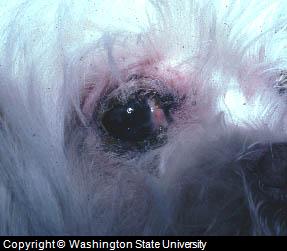
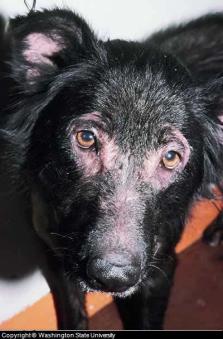
If you dog has what looks like a sunburn on the nose that turns into sores that spread, it could be canine skin rash due to an immune-mediated disease. This condition occurs when your dog's immune system attacks its own skin cells. Your veterinarian will take a skin biopsy (sample) for testing and a blood test to make sure that you pet does not have systemic lupus erythematosus (SLE), a disease that attacks the joints.
Symptoms of immune mediated disease start on the face and spread to the body and feet. You will see sores spread and skin discoloration. Dogs with this condition should avoid sunlight since it makes the condition worse. If you take take your pet outside use a sunblock on the face (apply into the fur and edge of nose). Corticosteroids are prescribed to keep the immune system under control.
Ask Our Vet A Question or Share Your Story
Have A Question about Your Dog's Skin Condition? Our Team Will Answer It for Free!
Do you have a question or comment? Share it!
Our editors will pick 1 question to answer each week. Please include your dog's age, breed, medical history, medications and if possible, a picture of the condition.
We will do our best to get back to you quickly (it depends on how many questions we receive each day). If you do require an immediate response we suggest using this online dog veterinary service that is available now.
References for Canine Skin Rash
The Dog with Papules, Pustules and Cysts
Mueller, R. S.
Muller and Kirk’s Small Animal Dermatology
Scott, D. W., Miller, W. H., Griffin, C. E.
Merck Veterinary Manual
Hound Health Handbook
Brevitz, Betsy D.V.M


