Table of Contents
Summary:
"Treatment to control dog diarrhea is sometimes not necessary, as it will pass after the body has removed whatever toxin and waste that needed to be removed. This includes dog diarrhea due to food poisoning, viruses, and parasitic infections such as worms. Long lasting diarrhea may be caused by dietary problems, and frequent vaccination. Be sure to get your dog to a veterinarian if you notice signs such as canine bloody diarrhea, weakness or if the diarrhea is frequent in 1 day (6x to 8x in one day)."
Overview
The first step to control dog diarrhea is to understand the cause. Diarrhea problems are present when your dog passes a liquid stool or a loose stool more often than is normal for your pet.
Not all diarrhea is the same, with differences in color, consistency (eg; how watery) and smell being associated with specific causes. This is why whenever my dog has diarrhea, I put some in a container in case I need to bring him to the vet (which my Vet actually appreciates in an odd sort of way). Often by straining the diarrhea he can see what my dog ate to cause the problem or he can spot other digestion problems such as parasites.
Your Vet should ask two questions upon your arrival in their office to control dog diarrhea (reinforcing that you should keep a diary of your pets health so you can tell anyone his history, even when your thoughts are on your dog, not its history):
- Did the diarrhea just start in your dog?
- Was there a change in diet or surroundings?
If your dog is young, old or small, then bring your dog to the Veterinarian immediately due to the risk of dehydration. If your dog is not then you can try one of these dog home diarrhea treatments or change your dog's diet to one that is bland to control dog diarrhea (a call to your Vet is still a preferred idea).
The most common causes of dog with diarrhea have nothing to do with illness and are caused by something else.
Common Causes of Diarrhea in Dogs
- Eating What They Shouldn't - Don't we all. In the case of my
dog, it's amazing what goes into his mouth. This is the most common
cause of diarrhea. If this is the case, a little laxative that could
be bought in any pet store could help.
- Eating too much - (they
say a dog reflects the habits of its owner, in this case definitely
true). This can even happen when you feed your dog 1 time a day. Since
they know they are only going to be fed once, they tend to over eat. A
better suggestion would be several small feedings throughout the day
(its how I started losing weight) or leave the food out all day and let
your dog eat at his or her leisure (where leisure is definitely no
problem for the barking king of our house).
- Cheap Pet Food -
OK, pet food is expensive. Do for you dog as you do for yourself.
When I buy cheap food, I feel it in my stomach (think fast food). Same
is true for your dog. In fact, you'd be surprised what they mix into a
cheap bag of food. Buy a reputable brand of food that was recommended
by your local pet store or Vet.
- Foods that your dog likes, but don't like your dog
- As I get older I can't eat pizza without a side of Tums. Same for
your dog. This isn't common in dogs, they can almost eat any food, but
if something new was introduced into their diet, try cutting it back
out.
- Stress - Not that my dog has anything to worry about, but they do. Someone new in the house?, Moved? All are causes of stress and all cause diarrhea. Remove the causes and you will control dog diarrhea.
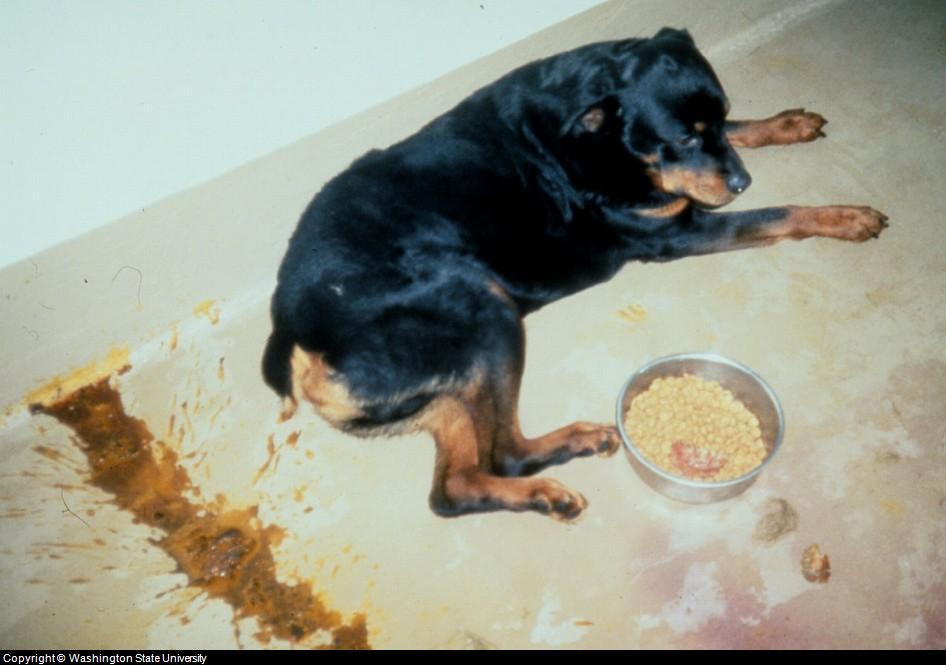
Source: Washington State University
Illness as Cause of Dog Diarrhea
Diarrhea is often due to a disease in your pet's large or small intestine, or a problem with the intestinal tract. The choice of dog medicine for diarrhea will vary based on which one it is.
Small Intestine Dog Diarrhea Symptoms
Diarrhea caused by disease that resides in the small intestine is associated with a large stool with increases in number of bowel movements from 3 to 5 times a day. The dog does not have difficulty with bowel movements. This is often accompanied by vomiting, weight loss, gas and black looking blood.
Large Intestine Dog Diarrhea Symptoms
Bowel movements tend to be smaller and occur 5 or more times every day. Bowel movements are difficult. If there is blood it is usually red. Other symptoms such as vomiting or weight loss are not usually associated with large intestine dog diarrhea.
Viruses and Bacteria
Many viruses and bacteria will trigger dog diarrhea. Viruses include canine coronavirus, dog distemper and canine parvovirus. Bacterial causes include clostridia, salmonella and campylobacter which are often found in contaminated food.
Worms and Giardia
Worms and Giardia can be the cause of diarrhea, especially with younger dogs who are more susceptible. To control dog diarrhea you need to eliminate the worms.
Foreign Objects
If your dog eats something like a stick or bone, it could get caught in the intestines causing diarrhea and sometimes vomiting.
Allergies and Pesticides
If your dog is allergic or has been exposed to pesticide, it could trigger diarrhea in your dog. It is thought that irritable bowel disease (IBD) is caused by an allergic reaction and is often seen in certain breeds (Diarrhea in Basenji). To control dog diarrhea in this case you need to eliminate single foods until the diarrhea ends.
Dog Tumor and Diarrhea
If you see diarrhea in an older dog the cause could be a tumor. Tumors can occur in the glands (adenocarcinoma) or in several places along the intestine (lymphosarcoma).
Fungus
Certain areas of the United States have a fungus that could cause the diarrhea.
Medicines
Certain canine medications such as prednisone are used to treat diarrhea, while others could actually be the cause. Check the labels of any prescription dog medicine your dog might be taking for possible side effects. Tolerance of medications often varies by breed.
Natural Treatment to Control Dog Diarrhea
In addition to feeding your dog a balanced diet, exercise and enough water, natural supplements have a long history of supporting digestive health. Ingredients such as Plantain (supports the digestive system), Lady's Mantle (for firmer stools), Podophyllum ( for abdominal discomfort) and Sulphur (found in every cell of the body) help to restore balance. A supplement made by PetAlive is made for this purpose and is worth discussing with your veterinarian.
Control Dog Diarrhea that is Mild
Simplifying the a dogs diet can often help with diarrhea. Start by not feeding your dog for 24 hours. You can give your dog a meat broth or water. On the second day provide a mix of white rice (2/3 of the meal) and boiled chicken or meat. Continue with this diet until the dogs stool is back to normal.
Once you see a normal stool, then gradually transition back to a normal high quality AAFCO certified commercial diet (AAFCO certifies dog food).
If the diarrhea persists for 3 to 4 days, be sure to check with your veterinarian.
References
Homeopathic Care for Cats and Dogs


