Summary:
"Dog cherry eye is a condition where the tear gland behind your dog's third eyelid moves out of position. Treatment involves surgery where the tear gland is relocated behind the eyelid. Surgery has a high rate of success. If not corrected the condition could cause dry eye, irritation, bleeding, and infection."
Overview
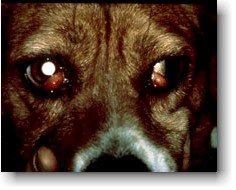
Cherry eye is known as a collapsed gland of the third eyelid. The condition is caused when the tear (lacrimal) gland in the third eyelid moves out of position. The mass sticks out from behind the eyelid and looks like a red mass. This condition is usually a problem with younger dogs.
Breeds More Commonly Afflicted
Breeds that have a higher than average incidence include:
- Cocker Spaniel
- Lhasa Apso
- Shih-Tzu
- Poodle
- Beagle
- Bulldog
- Burmese
This condition does not cause your dog any pain. If left untreated it could become irritated. Also, if your dog rubs the area, bleeding and infection can occur. Issues could also start with the tear gland, with approximately 50% of your dog's tears being produced by this gland.
Treatment
Surgery is used to correct canine cherry eye. The surgeon will create a pocket for the gland and then tuck it into the pocket. More than one surgery may be necessary if it doesn't work the first time. The recovery period is 2 weeks.
Dogs that do not receive the surgery can
develop a condition called Keratoconjunctivitis Sicca (dry eye). Dry
eye would require you to administer eye drops every day for the life of
your dog.
Source


