Summary:
"Dog entropion is a condition where the eyelid appears to have rolled back into the eye socket. It can be inherited or in older dogs due to muscle atrophy. The condition can be corrected with surgery."
Overview
Entropion is a dog eyelid problem where there is a rolling back of the eyelid. It tends to be found in certain breeds (see below).
There are several types of entropion:
Genetic Entropion: genetic condition found in certain breeds.
Conformational Entropion (also called anatomic entropion): occurs in dog breeds that have faces with thicker skin or eyes that are deeply set (eg; St. Bernards, Shar peis).
Geriatric Entropion: found in older adult dogs due to a weakening of the muscle (atrophy) or a loss tissue in the eye.
A more minor problem is when the same problem occurs in the lower dog eyelid. This condition is called canine ectropion.
Breeds with Canine Entropion
The following breeds have an above average incidence of canine entropion:
- Shar Pei
- Chow Chow
- Bulldog
- Golden Retriever
- Labrador Retriever
- Rottweiler
- Neapolitan Mastiff
- St. Bernard
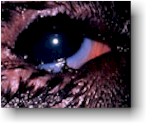
Canine Entropion Treatment
The goal of treatment is to realign the eyelids into normal position. This can be accomplished through canine entropion surgery where some muscle and skin is removed in order to achieve the desired result.
Best practice is to perform the operation on dogs when they are at least 4 months old. The condition needs to be corrected in order to avoid corneal ulcers which can form if the eyelid's eyelashes cause irritation on the surface of the eye. Other problems include eye pain, spasms where your dog appears to wink, conjunctivitis, and keratitis (inflammation of the cornea). Your dog's eyesight can be harmed if the condition causes scarring which impairs eyesight.
It is possible that once your dog is older they will need to undergo corrective surgery again as the growing process causes the condition to reappear.
Sources
AVCO
Hereditary Diseases of the Canine Eyelid and Cornea
Peter Bedford, Professor
Royal Veterinary College
Department of Veterinary Clinical Sciences
Hawkshead Lane, UK


