Table of Contents
What You Need to Know | Podcast | Types of Dog Flea Medicines | Brands | FAQ | Brochure | Ask a Question
What You Need to Know:
Fleas and ticks can be found outdoors year round requiring the annual use of a preventive.
Types of Dog Flea Preventative Medicines:
There are many four main types of dog flea medicines that can be used to protect your dog from getting fleas, or for treating a flea infestation after your dog gets fleas.
- Dog Flea Collars: Although popular, they do not always work as they don't kill all fleas. When you put a dog flea collar onto a dog, you should be able to slip 2 fingers under the collar. Also, consider airing out a collar for a day, once it is removed from the box, to reduce the chance of any skin sensitivity to the chemicals used. If you see any unusual symptoms in your dog such as diarrhea, drooling or an unusual walk, the collar should be discontinued.
- Dog Flea Powder, Foam, Sprays: These products work, but do not last more than one to two weeks.
- Dog Flea Spot-on (Advantage, Frontline Plus): See below. Tend to work for 1 to 3 months.
- Dog Flea Pills (Program): Taken by your pet 1x a month. These products are effective but can be beyond the budget of many owners. You need your Veterinarian to provide you with a prescription.
Many products control more than one type of parasite such as heartworms, whipworms, hookworms, roundworms, ticks, mites, and lice.
For everyday prevention consider use a monthly oral chewable such as Nexgard for dogs or a topical such as Frontline. The only issue with a topical is that if your dog is bathed frequently or swims, the product could be washed off.
When Your Dog Has Fleas:
If your dog has fleas, consider an instant product like Capstar that will kill more than 90% of adult fleas within 4 hours. Follow this with a bath with a regular or flea shampoo to kill any fleas that the medication did not kill.
Other medications are used to address symptoms associated with flea bites such as itch (corticosteroids, antihistamines). These are given by injection or orally.
Some pet parents prefer organic products such as dietary supplements and essential oils. These are more effective for dogs that live in cool, dry environments.
Treat all pets in your home, not just the one with fleas. Do no use products marked for dogs on cats or the reverse. They can be harmful if not used correctly.
Remember to Treat Your Home:
Last treat the home and yard itself. Consider contacting an exterminator to treat the home. Outdoors you can use a yard spray.
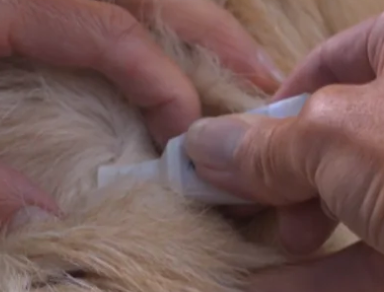
Medicine Overview
When selecting a dog flea medicine, you need to think of getting rid of fleas where your dog lives and also protecting your dog. Flea medicines protect your dog by killing fleas that bite or could bite your pet. Since fleas don't live on your dog, but only jump on when they want to bite, you also need to clean where they live.
Use of dog flea medicine is the best way to keep adult fleas from biting your dog. Every dog should be on a monthly dog flea prevention program. Popular products and types of flea proteciotn include:
- Monthly Topical Solutions
- Monthly Chewable Tablets
- Monthly Liquids
- Six-month Preventatives
- Single-dose Preventatives
Note that some products are for adult dogs only and may harm puppies. Be sure to read labels carefully.
If you see signs of fleas on your dog, start treatment immediately. Control starts with eliminating fleas from the home and dog. Even after treatment you may see fleas for as long as 3 months, but in declining numbers as your treatment strategy takes hold.
Podcast on Dog Flea Control
This is a short podcast on dog fleas featuring Dr. Richard Dixon from the American Veterinary Medical Association (AVMA) that provides some helpful background information on this topic.
Types of Dog Flea Medicines
There are six types of dog flea medicine for getting rid of the fleas on your dog. When applying dog flea medicine be careful to avoid the eyes. Sometimes the face is easier to treat by putting the products on your hands and then rubbing it into your dog. Be sure not to miss any area of the dog with these products. Your dog should be completely covered.
Shampoos, Sprays and Powders
Many over the counter flea powders, sprays and shampoos will kill adult fleas on the time when the product is applied. These products decline in effectiveness over a few hours after aplication and most have no residual effect. This means if your dog comes in contact with fleas the next day, they will be reinfested.
Flea Shampoo
Most dog flea shampoo products contain dog flea medicine that helps to kill fleas on your dog. The problem is that they do not prevent the fleas from coming back after the bath. Also is you don't bathe the dog correctly, the fleas will jump from the part you are washing to other parts osf the dog. To avoid this problem, soap your dog from the head going back. Use a flea comb through the hair, frequently dunking the comb under water to kill the fleas as you go. Once the foam is all over your dog, let it soak in for approximately 15 minutes before washing your pet off.
One product to consider is Botanical Flea Shampoo It is a new product that helps to deter fleas, flies and mosquitoes for dogs.
Flea Spray
Sprays tend to be easier to apply than other products and aren't messy. The best way to apply is to brush your dogs hair backward and then apply as close to the hair roots as possible. Avoid the face and eyes by spraying your hand and then rubbing into the face.
Foam
A foam is similar to a hair mousse. It is easy to apply and doesn't require a bath. You need to rub into every part of the coat. The only disadvantage is that you are not cleaning your dog at the same time, so if there is any residual from the fleas, it will not be washed away.
Flea Powder
Very easy to apply. Just be sure to get the powder to the roots. Powders are applied 2x to 3x per week and are not good for dogs that then tend to lick their fur, as they will ingest the product.
Spot-on Topicals
These are oil based products such as Advantage and Frontline Plus that are put on one or two spots on your dog's back. This type of dog flea medicine is safe. You use gloves to avoid irritation on human hands. They work when you spread the oil throughout the skin, killing the fleas. These products are very popular since they last for several months (1 to 3), and many kill other parasites like ticks or heartworms. This type of treatment often needs a Veterinarian's prescription and can be expensive. Watch the area where it is applied since some dogs are allergic to the treatment. If your dog is allergic you will see some redness where the oil has been applied.
Some do not work immediately and cannot be used if your dog has recently taken a bath, since they require that there is enough natural oil in your dogs coat. To apply, create a part in your dog's hair and drip the oil right on the skin. Be sure to do it where the dog cannot lick it off such as where the shoulder blades are.
Dog Flea Medicine Spot-ons that you buy in the store are different than prescription spot-ons. Cheaper products use the drug permethrin (same as shampoos except the natural PetAlive product mentioned above). This chemical works against most, but not all types of fleas. Do not use this chemical if you also have cats.
Active ingredients in dog flea topicals include:
- Fipronil: Prescription and expensive products have a chemical called fipronil (kills fleas, dog ticks and deer ticks), imidacloprid or selamectin (also prevents heartworm, kills mites, dog ticks, ear mites).
- Imidacloprid: Kills fleas by interfering with the nervous system.
- Pyrethroids: Made from a flower although some products have synthetic pyrethroids. Use with caution on small dogs.
Oral Medications
Oral dog flea medicines work by transmitting the active ingredient to the flea when your dog is bitten. Products use different chemicals:
- Lufenuron: Does not kill adult fleas but any larvae produced by the adults will not survive.
- Spinosad: Kills adults fleas by overstimulating the nervous system of the flea.
- Nitenpyram: Kills adult fleas in 30 minutes and is fast-acting. No long-term effects. Many veterinarians will use this product to quickly kill fleas.
Our Top Rated Dog Flea Medicines
Monthly Chewable Dog Flea Tablets
Comfortis (Spinosad)
Comfortis by Elanco is a FDA approved beef-flavored chewable tablet that kills fleas and prevents and treats infestations. It starts to kill fleas 30 minutes after being consumed. It kills 100% of fleas on dogs in just four hours according to lab tests. There is not need to isolate your dog or other household pets. It is administered with food every month for year-round protection.
Do not use on dogs that that are 14 weeks of age or less or that are under 4.1 lb.
Program (lufenuron)
Program by Nuvartis is one of the most popular dog flea medicine available. This method requires you to give your dog one tablet with food 1x a month. This method works when the flea bites the dog; a substance enters the flea that keeps flea eggs from hatching. If your dog already has fleas, Program can take 30 to 60 days to work. To speed up progress, combine this drug with a flea shampoo, Advantage, Frontline or Capstar.
Do not use Program with puppies that are under 4 weeks, but can be used on pregnant dogs.
Sentinel (Milbemycin Oxime, Lufenuron)
Sentinel by Novartis works like Program in that it comes in a 1x a month pill form and is administered with food. It goes beyond what Program offers by having the added benefit of preventing canine heartworm, whipworm ascarids and hookworms. It can also act as a miticide for certain kinds of mange. If your dog currently has fleas, combine with a product like Capstar that will immediately kill adult fleas.
Do not use in dogs younger or equal to 4 weeks.
Trifexis (Spinosad + milbemycin oxine)
Trifexis is a monthly beef-flavored tablet that kills fleas and prevents infestations. It prevents heartworm disease and treats and controls intestinal parasite infections such as adult hookworm, roundworm, and whipworm..
It should not be used in dogs younger than 8 weeks of age or that are under 5 lb in weight.
Single Dose Preventives
Capstar
Capstar is administered to dogs 1x per day, and works to quickly eliminate adult fleas. The product does not prevent fleas, so it can be used with pregnant dogs. Capstar works within 30 minutes and will provide protection for 24 hours. It is often used with a longer term preventative such as Revolution as noted above. The product works by interfering with the nerve transmission of insects, which kills the fleas. using the ingredient Nitenpyram. Capstar is good to have on hand, since if your dog is re infested, just administer another tablet, not to exceed the 1x a day limit.
Do not use in dogs less than or equal to 4 weeks of age or that are under 2 lb. in weight.
Monthly Topicals
Activyl (Indoxacarb)
Activyl kills fleas at all life stagers and prevents infestations. It is for dogs that are older than 8 weeks of age and that are over 4 lb. in weight.
Activyl Tick Plus (Indoxacarb, Permetrin)
Activyl tick plus kills fleas (all life stages) repels and kills ticks and kills chewing lice. It is for dogs older than 9 weeks and that are greater than 5 lb.
Advantage II (Imidacloprid, Pyriproxyfen)
Advantage Liquid is applied between your dog’s shoulder blades 1x a month. After the odorless liquid is put on your dog’s skin, 98% to 100% of canine fleas are killed within 12 hours. Very easy to apply and kills or debilitates adult fleas on contact. Advantage is not toxic and is not absorbed into your dog’s body. The medication does not harm people. Advantage stops fleas from biting in 3 to 5 minutes, Advantage also will kill fleas before they lay eggs, so their life cycle is broken. The product also controls lice infestations.
The treatment offers 30 days of continuous protection and is waterproof after 24 hours.
You can apply Advantage as much as 1x a week. Do not use Advantage on puppies that are younger than 7 weeks, on pregnant or female dogs that are producing milk.
Certifect (Amitraz, Fiprnil, (S)-methoprene)
Certifect kills fleas at all life stages. The product repels and kills ticks and treats lice infestations. For dogs older than 9 weeks and over 5 lb.
Frontline Plus (Fipronil, (S) methoprene)
Frontline Plus is a liquid that is applied to your dogs skin. It kills fleas in 24 to 48 hours. Unlike Advantage, Frontline still works if your dog gets wet. The product lasts for up to 90 days and also kills ticks for 30 days. Kills adult fleas, disrupts the flea life cycle, very easy to apply, kills ticks and the spray makes application easy.
Disadvantages include that Frontline Plus does not repel fleas. After bath some reduced effectiveness. Must give with food. Do not use Frontline on puppies that are younger than 10 weeks (spray 8 weeks). Ask your Veterinarian about pregnant dogs.
Advantage Multi (Imidacloprid, Moxidectin)
Advantix Multi stops fleas from biting in under five minutes and kills the fleas prior to the laying of eggs. It also kills flea larva, so they don't grow into adult fleas. Advantix prevents heartworm disease and treats intestinal parasite infections.
Advantix Multi can be used with puppies after age 7 weeks or is greater than 3 lb..
K9 Advantix II (Imidacloprid, Permethrin, Pyriproxyfen)
K9 Advantix II repels and kills fleas at all life stages and prevents infestation. It repels and kills ticks adn mosquitoes, repels biting flies, and kills chewing lice.
Parastar (Fipronil)
Parastar kills fleas, ticks, chewing lice, and mites. It also treats sarcoptic mange. The product should only be used on dogs over 8 weeks of age.
Revolution (Selamectin)
Revolution for dogs is liquid that is applied 1x a month that prevents fleas and heartworm It does this by keeping flea eggs from hatching and controls infestations. Kills many internal and external parasites, kills adult canine fleas, larvae and eggs.This product:
- Prevents heartworm
- Treats and controls ear mit infestations
- Treats sarcoptic mange and tick infestations
Very easy to apply.
For dogs older than 6 weeks of age.
Dog Flea Collar
Dog Flea Collar (precor)
The Adams Plus Flea collar for dogs can be helpful If you live in an area where ticks are a problem. This particular collar will continue working for 5 months and does not lose effectiveness when wet.
Scalibor Protective Band (Deltamethrin)
The Scalitor Protective Band is a 6-month preventive manufactured by Merck. It fills fleas and ticks. It also controls sand flies, the source of the disease Leshmania. It also has an anti-feeding effect on mosquitoes.
- Odorless
- Non-staining
- Water resistant and can be worn by the dog when in water
- Kills all blood feeding stages of ticks
- 6 month protection against fleas
It is only for use in dogs over 12 weeks of age.
For Additional Reading
FAQ
Are flea insecticides save for my dog and family?
Flea insecticides are safe for cats, dogs, and humans if you follow the manufacturer's instructions. Do not combine insecticides that work in the same way. Always consult a veterinarian if using a product that has not been specifically recommended or prescribed. Some products can be harmful to invertebrates, reptiles, amphibians, fish, and birds.
Can dogs still have fleas after treatment?
Fleas are not resistant to insecticides. If fleas continue to be a problem it is either because the insecticide was not applied correctly, or areas in the dog's environment such as an outdoor area have not been treated.
How long does it take to remove fleas from the environment?
It can take 2 to 3 months to eliminate fleas from the environment. If you see a flea on your dog it does not necessarily mean that the treatment isn't working. Over time the flea population will be eliminated.
Do you need flea prevention for a dog that primarily stays indoors?
Fleas can be an indoor problem. Humans can bring them into the home on their shoes after a walk. A single flea can quickly turn into an infestation of thousands.
What happens if you put cat flea medicine on a dog?
Never put cat flea medicine on a dog, or dog flea medicines on a cat as it could be toxic and cause serious health problems or death. Check the label before applying any medications not specifically labeled for your pet.
How often can you put flea medicine on a dog?
The frequency of application depends on the product. Some monthly topicals do suggest weekly applications for more severe flea infestations. Check the manufacturer's label. For example, Advantix II is applied monthly but can be applied once every 7 days. After control is obtained, return to monthly treatment.
How does dog flea medicine work?
Topical liquid dog flea medications work by depositing a pesticide into the skin's sebaceous gland. The glands release oils that lubricate the dog's coat with oil. The pesticide will attack a flea's nervous system and cause them to lose the ability to feed on your dog. Some products also contain an insect growth regulator (IGR) which prevents eggs from hatching and creating new adults (lifecycle disruption). Oral flea medications are transmitted to the flea when they bite your dog.
References
Sarcoptes, Demodex, and Otodectes: Treatment Options
R.S. Mueller
Faculty of Veterinary Medicine, Ludwig-Maximilians-University, Munich, Germany.
Have A Dog Flea Question For Our Editors or Story For Our Readers?
Do you have a Dog Flea related Question for our Editors or a Helpful Story to Share? Please include information such as age, sex, breed, medical history, medications your dog is taking, recent changes in behavior, etc.
We will do our best to get back to you quickly (depends on how many questions we receive each day). If you do require an immediate response we suggest using this online dog veterinary service that is available now.
Other Reader Questions and Vet Answers
Click below to see contributions from other visitors to this page...
Dog Flea Bite Treatment 
Reader Question: Dog Flea Bite Treatment
How do you treat the flea bites on dogs? We live in a very humid area of Texas and have been fighting fleas …
Frontline Flea Spray on Pregnant Dog Not rated yet
Reader Question: Frontline Treatment on Pregnant Dog
I have looked after dogs since I was 12 yrs old (30 years) and I never experienced fleas due …
Early signs of Fleas or Mange? Not rated yet
I just got a Jack Russell from a home that wasn't very good. I didn't want to take her because I knew she had issues however I felt the need to save her. …


