Table of Contents
Overview | Symptoms | Common Types | Diagnosis & Treatment | Diet & Natural Support | Brochure | Vet Q&A
Summary:
"Dog Neoplasia refers to the uncontrolled abnormal growth of cells. A neoplasm is the actual growth. A tumor refers to a swollen neoplasm. Any part of a dog's body can be affected, resulting in multiple kinds of cancer. When cancer originates and is found in one location it is referred to being primary. Secondary cancers spread from another part of the body. Cancer accounts for 50% of dog deaths after age 10."
Overview
Canine neoplasia is an abnormal mass of tissue, the growth of which exceeds and is uncoordinated with that of the normal tissues, and persists in the same excessive manner after cessation of the stimulus which evoked the change. In other words, it is a collection of cells that are either growing in the form of a tumor or on the surface of another organ.
Symptoms of Canine Neoplasia
The American Veterinary Medical Association has published a list of ten signs of cancer. They are:
- Abnormal swellings that persist or continue to grow
- Sores that do not heal
- Weight loss
- Loss of appetite
- Bleeding or discharge from any body opening
- Offensive odor
- Difficulty eating or swallowing
- Hesitation to exercise or loss of stamina
- Persistent lameness or stiffness
- Difficulty breathing, urinating, or defecating
Common Dog Neoplasia Types
Dog Skin Neoplasia
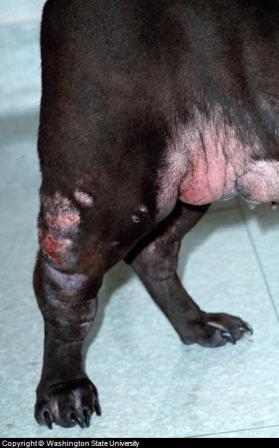
Older dogs often get skin neoplasia. In dogs this type of problem is usually benign, meaning that it is not a threat to health and does not spread. A veterinarian may test a neoplasia to determine if it is malignant or cancerous.
Dog Breast Cancer
When a neoplasia is found on a dog mammary gland, it is malignant or dog breast cancer 50% of the time. The risk of this type of cancer is reduced by spaying.
Dog Neck and Head Neoplasia
Dog mouth cancer or neoplasia is common. Tumors tend to form on the dog gums with symptoms such as a bad odor, dog nose bleeding, dog gum bleeding or refusal to eat. The dog mouth cancer spreads quickly, so early treatment is essential.
Dog Lymphoma
This type of dog neopalsia is suspected when there is an enlarged dog lymph node.
Dog Testicle Cancer
This type of cancer is common in dogs, particularly if a dog has a condition where the testicles did not develop normally and did not move into the proper position (called canine retained testicles).
Dog Ear Neoplasia
In terms of dog neoplasia in the ears, your veterinarian will examine the ear canal using a device called a otoscope (Otoscopic examination). A general anaesthetic may be necessary for good visualisation. The Neoplasm has a space-occupying type appearance and may require a biopsy to distinguish it from other possible causes.
Ceruminous gland adenomas or adenocarcinomas are the most common otic neoplasms. When examining the ear canal, your veterinarian may see small, pink, well-circumscribed, often ulcerated lesions.
In cases of dog ear cancer, the cells or tumor that is blocking the ear canal will need to be surgically removed. After removal symptoms will disappear and your dog will be considered cured.
Dog Abdominal Cancer
This type of canine neoplasia is common, and difficult to diagnose during the early stages of disease. Dog stomach cancer or abdominal cancer symptoms include loss of weight and swelling in the abdomen.
Dog Bone Cancer
Dog bone neoplasia is more common in larger breeds and dogs over the age of 7. Dog bone cancer symptoms include swelling in the affected area.
Dog Neoplasia Diagnosis
A veterinarian will suspect that a neoplasia exists after an examination and history. Confirmatory tests include x-rays, ultrasound and blood tests. When possible a biopsy or skin/lymph node sample will be examined.
The veterinarian will determine the type of neoplasitc cells that are present, whether the neoplasia is malignant (cancerous) or benign, and possible treatment approaches.
Categories of Canine Neoplasia |
|||
|---|---|---|---|
|
Category |
General Features |
Examples |
|
|
Epithelial |
Clustered, tight arrangement of cells | Transitional cell carcinoma, lung tumors |
|
|
Mesenchymal |
Individualized, spindle to oval cells |
Hemangiosarcoma, osteosarcoma |
|
| Round/Discrete Cell | Individualized, round, discrete cells | Lymphoma, transmissible venereal tumor | |
|
Naked Nuclei |
Loosely adherent cells with free round nuclei | Thyroid tumors, paragangliomas |
|
Treatment of Canine Neoplasia
Dog neoplasia treatment varies based on the type of cancer diagnosed and the ability to use one or more of the most common therapies.
Dog cancer treatment therapies include:
- surgery
- immunotherapy
- radiation
- chemotherapy
- freezing (cryotherapy)
- heating (hyperthermia)
For cases that cannot be treated in the veterinarian's office, a referral will be made to s specialist called a veterinary oncologist that specializes in dog cancer treatment. To find a veterinary oncologist visit the Veterinary Cancer Society (VCS).
Dog Neoplasia Diet
Sometimes, dog neoplasia patient health suffers not from the neoplasia itself, but from poor nutrition. Dogs may not have an appetite and refuse to eat the foods that would help to starve cancer cells and improve overall nutrition.
In general, neoplastic cells have a higher rate of metabolism and require more glucose (from carbohydrates) to grow.
Dog cancer diet recommendations provided by Royal Canin include:
- Foods should be rich in protein and fat with reduced levels of carbohydrates. Carbs are used as energy to fuel the higher metabolism of dog cancer cells. Good commercial choices are working or sporting dog foods.
- Fat levels increase the amount of concentrated energy in dog dog, a helpful factor in dogs with low appetite. The goal is to pack as much energy into every bite.
- Supplements such as long chain omega-3 fatty acids have anti-neoplastic properties.
- Dog cancer diets with higher levels of protein can help to maintain muscle strength. Amino acids such as arginine, glutamine and leucine, isoleucine and valine can all be of help.
- Above all else, it's important to get your dog to eat by providing palatable, good tasting food.
Natural Support, Antioxidants and Dog Neoplasia
Natural remedies can play a supportive role in helping to strengthen the dogs immune system and cellular strength. Products such as C-Caps may be of help in protecting healthy cells.
Natural ingredients such as Huang Qi, Mistletoe, Echinacea, Ashwagandha, Milk Thistle (antioxidant) and Cat's Claw all have clinical support for their role in supporting immune system health.
Dog antioxidant supplements such as Vitamin E, Vitamin C, b-carotene, polyphols and selenium are all considered to have a role in preventing cancer although the research in this area is not absolute.
Before giving your dog any supplements, check with your veterinarian or veterinary oncologist. If your dog is undergoing chemotherapy or radiation, it is advisable to only use supplements that improve cell strength such as homeopathic natural remedies and antioxidants before and after treatment in order to avoid protecting cells that are being killed during treatment.
Should You Treat Dog Neoplasia?
Dog cancer treatment often requires a significant commitment from the dog owner in both time and money. Also treatment for some forms of canine neoplasia can last for a long time and negatively impact the dog's quality of life.
If you decide to go forward with treatment, it is important that you fully participate in your dog's care, such as providing the required dog cancer medications, supplements and care.
If you do decide to treat your dog, like in human medicine, there are clinical trials going on that may help your dog. For a list of hospitals that are currently holding trials, visit the Veterinary Cancer Society.
A helpful brochure is available for download from the American Veterinary Medical Association (PDF download).
Ask Our Vet A Question or Share Your Story
Have A Question For Our Veterinarian About Cancer in Dogs?
Do you have a question or story about canine cancer? Share it! Our editors will try their best to answer your question for free.
Please include information such as age, breed, sex, medical history, medications, diagnosis, cancer stage,has it spread and anything you believe that will help us answer your question.
We will do our best to get back to you quickly (depends on how many questions we receive each day). If you do require an immediate response we suggest using this online dog veterinary service that is available now.
References
Cytology of Neoplasia
R.E. Raskin and D. DeNicola
School of Veterinary Medicine, Purdue University
Pathophysiology of Otitis Externa
R. Mueller
Ludwig-Maximilians-Universitaet Muenchen, Germany
The Patient with Otitis Externa
R. S. Mueller
Department of Clinical Sciences Coll. of Veterinary Medicine & Biomedical Sciences
Colorado State University
Fort Collins, CO, USA
Nutritional Status of Dogs with Cancer: Dietetic Evaluation and Recommendations
J. J. Wakshlag and F.A. Kallfelz
College of Veterinary Medicine, Cornell University


