Summary:
"Hematemesis, which is commonly referred to as a dog vomiting blood, is either caused by something temporary such as the ingestion of an object your dog ate after being outside, causes such as dietary intolerance, or something systemically wrong such as with the digestive tract (GI), liver or kidneys. It can also indicate bleeding that originated in the mouth or respiratory system.
Blood can appear as flecks, a blood clot, or digested blood, which has the appearance of coffee grounds. In rare cases blood in vomit can indicate a life threatening condition, so be sure to consult a veterinarian. Keep track of and describe the severity, frequency and progression of the problem. Treatment involves ensuring that your dog is not dehydrated and then removing the underlying cause."
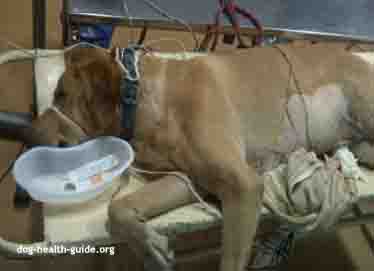
Overview
A dog vomiting blood (called hematemesis) can be due to something temporary or something systemic (a problem with your dog's gastrointestinal system). Problems range from a few drops of bright red blood in his vomit, or the vomit may appear very dark and resemble coffee grounds caused by digested blood.
A few drops of bright red blood is more likely to mean gum disease or a cut in the mouth, while vomit that looks like coffee grounds is more likely to mean an ulcer or bleeding in the stomach.
When observing your dog vomit write down the answers to as many of these questions as possible in order to help your veterinarians reach a diagnosis:
- How long has your dog been vomiting? (record it on your phone's video camera if you have one)
- Medical History
- Diet
- Where your dog has been (eg; outside)
- History of coughing and sneezing
- Does it only happen after your dog eats?
- Odor
- Frequency of vomiting
Causes
The most common causes of vomiting are listed below. These will be ruled out before a veterinarian looks for other causes:
- Poison such as anti-freeze or toxins
- Gastrointestinal Problems
- Motion Sickness
- Swallowing a foreign object such as a dog bone with sharp edges or garbage
- Drugs (eg; NSAIDS)
- Radiation
- Dietary Problem (food intolerance)
- Parasites
- Kidney Disease
- Liver Disease
If vomiting is more severe or chronic, and the above list is ruled out, then your veterinarian will consider the following conditions:
- Intestinal problems (called a Motility disorder)
- Difficulty defecating (Gastric hypomotility)
- inflammatory bowel disease (IBD)
- Chronic gastritis
- Obstruction in the bowel
- Tumor (neoplasia)
Blood Coagulation Disorders
- Thrombocytopenia (drop in the amount of blood cells involved in forming blood clots)
- Thrombocytopathia—von Willebrand disease
- NSAIDs, drugs, glucocorticoids
- Uremia (sign of kidney failure)
- Hyperviscosity syndrome (increased viscosity of the blood)
- Disseminated intravascular coagulopathy (when blood has trouble clotting)
- Anticoagulant rodenticide toxicity (poisoning from rodent pesticide)
- Coagulation factor deficiency
- Liver failure
- Polycythemia (an increase in the total cell mass of the blood)

Gastrointestinal Diseases
- Chronic gastritis
- Gastric ulcers
- Gastric retention disorders (delayed emptying of gas)
- Gastric neoplasia (tumor)
- inflammatory bowel disease (IBD)
- Lymphoma (cancer of the lymph glands)
- Esophageal tumor (neoplasia)
- Colonic volvulus (colon contractions)
- Hemorrhagic Gastroenteritis (called HGE, symptoms include blood in diarrhea)
Vomiting Accompanied by
Diarrhea - Possible Indications
- Inflammatory bowel disease (IBD)
- Intestinal neoplasia (tumor)
- Small intestinal obstruction
- Peritonitis (inflammation of the tissue in the abdomen wall)
Infectious Diseases Causing Gastrointestinal Distress
- Distemper
- Canine hepatitis
- Rickettsial infections (type of bacteria)
- Bacterial Skin Rash with flu symptoms (Leptospirosis)
- Kidney (Renal) failure
- Liver (Hepatic) disease
- Pancreatic disease
Abdominal Disease
- Disease in the uterus (Urogenital disease)
- Problem with a lining of the abdomen (Peritoneum)
- Motion sickness or stimulation of the vomiting reflex
Neurological Cause
- Head injury
- Spinal cord injury or disease
Respiratory Disease
- Nasal diseases (tumor, fungal infection, foreign body in the nose)
- Airway disease (fungal infection, heartworm)
Stress or Major Illness
- Burns
- Severe illness
- Heat stroke
- Trauma
- Hypotension (low blood pressure)
- Major surgery
- Septic (severe infection) or Hypovolemic shock (decreased blood volume)
Other causes
- Toxins or Poisons (metal, plant, chemical)
- Snake bites
- Aflatoxins (natural toxins produced by a fungus)
- Stimulation of the glands near the vagina (Vestibulitis)
- Endocrine disease (hormone problem)
- Hypoadrenocorticism (adrenal gland hormone problem)
- Ketoacidotic diabetes mellitus (diabetes)
- Thyroid disease
Symptoms
Dogs vomit a variety of things and ways. It may be undigested dog food or partially digested, unidentifiable matter. It may be mostly liquid. It may have various colors. Take note of what the vomit looks like and if there are any other symptoms such as diarrhea. If you take your dog to the vet, he or she will want to know that information.
If your dog vomits once or twice, there is usually no reason to run to the vet. If your dog vomits multiple times, however, and seems unable to keep anything down, including fluids, a trip to the vet is warranted.
What To Do If A Dog Vomits Blood
An exception is if your dog appears to be vomiting a mix of dog vomit and blood, then see a vet. The cause is either temporary, such as if your dog ate something he or she shouldn't, causing irritation to the gastrointestinal tract or it could be systemic where there is a problem with the gastrointestinal tract that requires a thorough examination.
Signs of Dehydration
There are two easy ways to check for dog dehydration:
- Run a finger along the space between your lips and gums. Do the same with your dog. If your dog's gums feel dry and not wet like yours, then your pet may be suffering from dehydration.
- The other method is called tenting. Pull the skin gently up along the pets neck in one spot to form a temporary tent. The skin should pull back into position in 2 seconds or less. If it does not, then the dog may be dehydrated.
If you aren't sure, or suspect that your dog is dehydrated, immediate veterinarian attention is needed. Dog can go days not eating, the same isn't true for water - they need to always stay hydrated.
Symptoms That Call For a Trip to The Veterinarian
- Puppy vomiting
- Vomiting in an older dog
- Signs of dehydration
- Suspected dog poisoning
- If you suspect your dog swallowed an object or toy
- Blood in the vomit
- Vomiting combined with behavior change such as lethargy (tiredness)
- Vomiting 3x or more in an hour
- Vomiting that lasts for more than 1 day
- Inability to keep down water
- Projectile (violent) vomiting
Symptoms Associated with Disease
There are several signs and symptoms that indicating that an underlying disease is causing the canine vomiting problem. These symptoms include:
- Excessive urination (polyuria)
- Excessive thirst (polydypsia)
- Enlarged liver (hepatomegaly)
- Cataracts
- Jaundice
- Fluid accumulation in the abdomen (ascites)
- Fever
- Slow heart rate (bradycardia)
- Mouth ulcers
- Pale mucous membranes
- Presence of a mass in the abdomen
If your dog is suffering from a gastrointestinal disease or a partial blockage of the gastrointestinal system, the vomiting of partially digested food happens within 8 - 10 hours after eating. Vomiting can be accompanied by other symptoms such as:
- Nausea
- Anorexia (unusually thin)
- Abdominal pain
- Weight loss
- Belching
- Bloating
- Abnormal thirst (Polydipsia)
- Stools or vomit stained with dark blood (Melena)
- Anemia (reduced number of red blood cells) along with weakness or
collapse
Diagnosis
If you have a dog vomiting blood, take a sample of the vomit with you to the veterinarian for examination.
Your vet will perform a thorough physical exam, do a blood test, and other tests as needed. The goal is to quickly determine if the severity of the problem and to determine if the problem is regurgitation (signs are clear liquid or undigested food) or vomiting (characterized by gagging and retching).
The vet may do x-rays and an ultrasound. A gastroduodenoscopy, a test where the vet can look at your dog’s stomach, may be performed. In some cases, a biopsy or ultrasound may be necessary.
Your veterinarian will go through the following steps:
- Review the history of vomiting episodes and relationship to feeding times and your dog's diet. If you changed your dog's diet recently it could be a sign of food intolerance. If your dog vomits 6 to8 hours after eating then diet is probably not the cause.
- Once diet is ruled out, then other factors such as some type of obstruction or a disorder of the stomach and intestines. Causes include polyps or a growing tumor.
- If vomiting is in the morning and appears bright red or dark red spots like "coffee grounds" then their is probably a problem in the GI tract or your dog has an ulcer.
Other conditions where blood tends to be present include:
- Hypoadrenocorticism (problem with the adrenal glands)
- Early morning vomit or bile could be a reflux disease (enterogastric reflux syndrome).
- Canine Uremia (the kidney is leaving too many toxins in the blood)
- Inflammation of the stomach (called Gastritis)
- Stomach tumor growth (gastric neoplasia)
If a dog is chronically ill the patient may require inpatient treatment.
Treatment
If your dog has had severe vomiting, the patient may need to be stabilized with subcutaneous (under the skin) fluids for dehydration (intravenous) fluid. He should also have a bland diet until the vomiting stops. Your veterinarian may recommend that your dog stay at veterinary clinic for several days.
The appropriate treatment for a dog vomiting blood depends on the cause of the bleeding. For instance, ulcers are treated with medication and a bland diet. The appropriate treatment for gum disease is keeping the teeth and gums clean with regular brushing. The treatment for cancer depends on the type of cancer, how advanced it is, and how aggressively the owner wishes to treat it.
If your dog swallows a foreign object such as a sharp edged bone he or she picked up when outside of the home, your veterinarian will use a laxative to try and pass the bone particles and possibly an anti-biotic to reduce the change of infection. Intravenous fluids and a stay at the veterinary hospital for a few days are a possibility.
If the dog vomiting blood condition condition continues for more than 5 to 7 days after treatment begins, and if bleeding in uncontrolled, or if an ulcer tears or perforates, surgery might be required to stop the bleeding.
Medications
Medications such as histamines can inhibit gastric acid secretion. Antacids can neutralize gastric acid when given 4x to 6x per day. Antibiotics are prescribe to treat any bacterial infections. Antiemetics (anti-nausea drugs) can help to stop vomiting.
Depending on the cause, lab tests can monitor progress.
Prognosis
Conditions with Guarded to Poor Prognosis:
- Malignant gastric neoplasia (cancer)
- Renal failure
- Liver failure
- Pythiosis (conditions caused by bread mold fungus)
- Systemic mastocytosis
- Sepsis, and/or gastric perforation
Conditions with Good to Excellent Prognosis:
- Bleeding due to NSAIDs
- Coagulopathies (see above for list of disorders)
- Inflammatory Bowel Disease
- Hypoadrenocorticism (Addison's Disease)
Brochure For More Information
Everyday Emergencies: The Case of the Vomiting Dog
Kristi L. Graham DVM, MS, DACVIM (SAIM)
Internal Medicine Consultant
IDEXX Laboratories
References for Dog Vomiting Blood
(1) International Journal
of Veterinary Science
P-ISSN: 2304-3075 E-ISSN: 2305-4360 editor@ijvets.com
CASE REPORT
Anticoagulant Rodenticide Toxicity and Secondary Haemostatic Disorder
in a Dog
GR Baranidharan1, AP Nambi1, S Kavitha1, PS Thirunavukkarasu, P
Sridhar, Hamsa Yamini1 and Shanmathy Muthuvel1
Emergency and Critical Care Unit, Department of VCME&J; Department
of Pathology, Madras Veterinary College,
Chennai-7, India
(2) Wendy Blount,
DVM
The Most Common Digestive Diseases: The Role of Nutrition
A.J. German1 and J. Zentek2
Faculty of Veterinary Sciences
University of Liverpool
Faculty of Veterinary Medicine
University of Berlin, Germany
The Vomiting Dog--Diagnosis
Todd R. Tams, DVM, DACVIM VCA
West Los Angeles Animal Hospital
Los Angeles, CA, USA
Chronic Vomiting in Dogs
D.C. Twedt
Colorado State University
Fort Collins, CO, USA
Washington State University Veterinary College


