Table of Contents
Diagnosis | Types and Causes | Bark Collars | Strategies for Training a Reactive Barker
Summary:
"To stop dog barking requires training your dog into alternative and more rewarding behaviors. Dog barking is a natural. If your dog barks frequently correcting the behavior requires an understanding of the cause or trigger. Once identified, behavior modification and rewards can be used to transfer the behavior to more acceptable outlets.
Dogs are creatures of habit and tend to be consistent. Try and avoid triggers and if a dog reacts too excitedly to a new place, stay with the familiar until you have developed some solid coping strategies for her reactions."
Overview
Barking is obviously a normal dog behavior. There are many natural reasons dogs bark which need to be asked when determining how to stop dog barking including:
- To Protect Territory
- When Seeking Attention from Others
- Fear of separation from family members (called separation anxiety)
- Fear in general
- Some type of abnormal behavior (cognitive dysfunction due to old age, senility)
- Learned behavior
- Group behavior
Many dogs are "reactive barkers." They bark after some type of initial stimulus due to one of the above triggers.
Diagnosis of Barking
Because barking is disruptive, particularly in suburban and urban areas, many owners are interested in changing the behavior. There may be cause for concern if the barking is frequent. If you are planning to seek the veterinarian it might be helpful to keep a log of the length and number of times your dog barks in a period of time. This way your veterinarian can make a determination if the barking is normal.
Your veterinarian will ask a series of questions as outlined by Kevin Stafford from the Institute of Veterinary and Biomedical Sciences:
- Where and when does the barking occur?
- Who or what is the target of the barking or the trigger
for it? - Is the owner present or absent?
- How does the owner respond to the barking?
- How does the dog behave thereafter?
- Is the barking continuous?
- What other behavior does the dog show when
barking?
Types of Dog Barking Problems
Territorial Barking: This is when you dog is protecting the home or an area surrounding your property. To change this dog behavior you need to either eliminate the cause or "trigger" by not exposing your dog to visitors or blocking a window your dog uses to spot anything that triggers the behavior. One way to train your dog is to associate the barking with a negative behavior by following these steps:
Step
1. When a visitor approaches and your dog barks place your dog in a
kennel or crate before the visitor enters the house and can be seen by
your dog.
Step 2. Next step is to have a friend come to the
house, have your dog see the visitor, and then place in your dog in the
kennel while your friend is entering the house.
Step 3. Once your
dog is desensitized to visitors in order to avoid the negative behavior
you can replace it with a positive behavior such as a treat for not
barking.
Barking for Attention: Your dog barks if you respond to the behavior. By responding your are rewarding your dog vs. ignoring the barking. The key to changing this dog behavior is to substitute an alternate such as asking your dog to sit when she starts barking. Reward the sitting behavior. Some owners provide a negative reward for barking such as using an air horn or water spray, although that could be cruel if not done gently.
Separation Anxiety: To help your dog with separation anxiety is to help your dog feel comfortable when alone. According to the ASPCA you can try providing your dog with a Kong Biscuit Ball Dog Treat Holder which can be stuffed with treats right before you leave the house. This will keep your dog busy and distracted for long periods of time. Only leave for 30 seconds and then come back in. Remove the toy when you return.Repeat for 30 minutes instead of 30 seconds. Over time expand the time by 15 minutes. Use multiple toys at once to keep your dog busy over longer periods.
If your dog barks or howls infrequently when left alone, it might just be a case of boredom. Try increasing your dog's exercise regimen.
If this doesn't work then you may need to hire a Certified Animal Behavioral Therapist or Certified Professional Dog Trainer.
Fear Barking: This requires that you desensitize your dog to what is causing the fear if it can be identified at all. Treatment works the same way as above, but either protecting your dog from the trigger, substituting an alternate positive behavior such as sitting with a treat.
Cognitive Dysfunction: Like an older person, an older dog may suffer from bouts of senility. If this is the case you might want to consider either prescription medication or a natural remedy such as PetAlivePetCalm Formula for Anxious and Stressed Pets.
Tips and Strategies for Training a Reactive Barker
Trigger Recognition
Many dogs bark when they see a person or another dog. The barking response can be excited, territorial or fearful. Each of these is expressed as a sound, which is a dog's form of emotion, in the same way your dog barks when he is sounding an alert, reacting to a door knock or playing.
Other triggers by reactive barkers are frustration if they cannot get to another person or dog. Other stimulus includes outside sounds such as from a squirrel moving by a window or a slamming car door across the street. The length and intensity of barking varies by dog, with some barking a few times, while others go longer.
Dogs tend to be consistent in their barking reactions. Once you know your dog's triggers, you can try and avoid them, such as another dog or stranger. Once these types of reactions start, it can quickly become habitual.
One approach to changing a trigger is to solicit the help of a family member or friend who can get close enough to your dog to cause barking, but to act as if the dog did. not bark. Eliminating the human reaction to barking might train the dog to stop. You can also start taking your dogs into situations where he doesn't bark, and then gradually move into more stressful occurences.
Do Not Reinforce Barking Behavior
The one thing you do not want is for your dog to be rewarded for barking. This includes the behaviors in others such as people that move away when he starts barking or if your dog gets more attention when barking. This makes training difficult sometimes unless you are working with someone you know. If your dog reacts to other dogs, find a dog that does not react to barking vs. others that are scared and try to move away.
Remove Your Dog From the Situation
If you can, move your dog away from any stressful situations that can trigger barking. When your dog does bark, slowly move him away from the situation. The overstimulation that accompanies barking takes away from any training related focus. Once away from the situation your dog should come down. Whatever you do, do not scold or yell at your dog. Yelling escalates the stress, resulting in even more barking.
Use Basic Redirection Commands
The use of treats can be helpful. Once a dog is removed from a stressful situation, reward your dog for a behavior they know how to complete such as sitting. This is a method of separating your dog mentally from what just triggered the barking.
Providing your dog with an alternative path will bring focus to what he is doing, and places the attention on you, not other dogs or people. Over time you can use this to prevent barking. Practice having your dog put his attention on you vs. other outdoor distractions.
Once your dog is focused on you, provide a treat. Make this a habit so looking at you is rewarding for your dog. You can do this even before you spot a potential stressor.
Stop Barking Collar
Many owners consider purchasing a stop barking collar as an approach for how to stop dog barking. There are several types including electrical that use a small static electricity shock collar, air spray, or citronella air spray. Veterinarians are divided as to whether they should be used since they do use a form of punishment and it might not be clear to the dog why, although according to a recent study the majority of owners that try them are satisfied (97%).
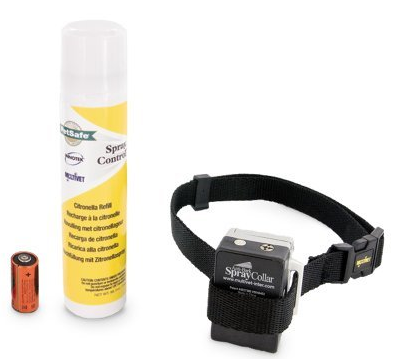
All types of collars are effective as a method for how to stop dog barking with approximately 80% of dogs if the negative signal produced by the collar is followed by a reward provided by the owner which reinforces the positive behavior. If you do not do this then the positive impact of the collar will in most cases be short term.
It is also possible that the stop barking collar does not work if your dog only barks in a specific place or territory. When the collar punishes the dog for barking they may not associate it with barking, but with the location they were standing.
References
Barking and its treatment; should anti -Barking collars be allowed?
Kevin Stafford MVB, MSc, PhD, FRCVS, MACVSc [and Vicki Erceg BVSc]
Institute of Veterinary Animal and Biomedical Sciences
Massey University, Palmerston North, New Zealand


