Table of Contents
Overview | Symptoms & Diagnosis | Treatment | Natural Support
Summary:
"Signs of diabetes in dogs include behavior changes such as excessive water drinking, urination accidents in the house, and weight loss. Treatment is usually a combination of medication, dietary change and possibly natural supplements."
Overview
There are two types of diabetes. In type one, the body does not produce enough insulin, a hormone the controls how the body absorbs and uses sugar. In type two, the body does not utilize insulin properly. Either way, the body does not break down and utilize sugar the way it should.
The signs of diabetes in dogs can be subtle and easy to miss if you don't know what to watch for. It's important to catch it early, though, so treatment can begin before your dog becomes very ill. Diabetes can occur in puppies (juvenile-onset diabetes) or in adult dogs (adult onset diabetes).
The exact cause of diabetes is not known. Risk factors include obesity, an unhealthy diet, cortisone treatments, stress and shock. Genetics may also play a role.
Signs of Diabetes in Dogs
Signs of diabetes in your dog include drinking more water than usual, the need to urinate more than usual (called polyuria/polydipsia - your housebroken dog may suddenly begin having "accidents" in the house), and weight loss. Your dog may seem more tired than usual, suffer from weight loss, her coat may grow dull, he may vomit, and may have weakness in his rear legs. If you notice these symptoms in your dog, you should take him to the vet for an examination.
Other symptoms including anorexia, lethargy, and diarrhea are common in more complicated cases of diabetes (ketoacidosis). Dogs can also present with cataracts.
Diagnosing Canine Diabetes
Your vet will recognize the signs of diabetes in your dog. He or she will do a blood test to check your dog's blood sugar. This test may need to be done when your dog has been fasting for about twelve hours, so ask when you schedule the appointment if you should feed your dog before taking him to the vet. Your vet will also check your dog's urine for sugar. The presence of sugar in the urine means that the body is not absorbing and using sugar properly.
When clinical signs are not typical, the diagnosis becomes more difficult to confirm. In these cases, repeated measurement of blood glucose, home monitoring of urine glucose or determination of fructosamine (number of blood glucose molecules linked to protein molecules) are all ways to resolve the problem. A complete blood count, biochemical analysis, and urinalysis are indicated to detect any disease that is occurring at the same time including the possibility of a urinary tract infection.
Treating Diabetes in Dogs
There is no cure for diabetes in dog. Your dog will need lifelong treatment. Daily insulin shots will be needed, and you may need to check your dog's blood sugar levels as well. Your vet will show you how to do this. You may also need to test your dog's urine for sugar at home.
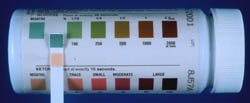
The top row measures sugar levels and the bottom measures ketones.
Source: George Washington University
Your pet may need to be on a special diet. Ask your vet which brand of food is best for your dog and how much you should feed him. He should eat the same amount of food every day and eat at the same time every day. When you feed your dog will affect when you should give him the insulin, so talk to your vet about your dog's feeding schedule. If your dog is overweight, it will be more difficult to control his blood sugar, so talk to your vet about the best way to help him lose the extra pounds.
All dogs need regular exercise, and a dog with diabetes is no exception. However, the amount of exercise he gets affects the amount of insulin his body requires. That means he should get about the same amount of exercise each day, unless you are checking his blood sugar and adjusting his insulin accordingly. A regular schedule of exercise will work best for your dog.
Your dog should be closely monitored by your vet, and monitored daily by you. Let your vet know right away if you begin to see signs of diabetes in your dog despite treatment.
Sometimes dogs that are undergoing diabetes treatment suffer from a bout of low blood sugar. If your dog shows unusual behavior such as seizures or appears to stagger, it could be a low blood sugar symptom. Keep a source of sugar in the home that can be quickly given to your dog. Either rub corn sugar on the dog's gums or provide orally via syringe if the dog is awake. Consult a veterinarian as soon as possible.
A dog with diabetes can live a long and happy life with proper care.
Natural Remedies for Dog Diabetes Support
A diet that is high in fiber and complex carbohydrates for instance, slows the digestive process and helps to stabilize blood sugar levels. A growing body of evidence suggests that select herbal remedies and dietary supplements can help to both prevent diabetes and to keep it under control in animals who have already developed it.
Along with the lifestyle changes, herbal remedies and dietary supplements can reduce or eliminate the need for prescription medication, and can also aid in preventing some of the tissue and organ damage associated with uncontrolled blood sugar levels.
A good commercial source of diabetes supplements is PetAlive GlucoBalance.
Sources for Signs of Diabetes in Dogs
Petdiabetes.org
Techniques for Monitoring Diabetes Mellitus in Dogs and Cats
Nelson, Richard W. DVM
Canine and Feline Diabetes Mellitus
S. Daminet, DMV, PhD, DACVIM, DECVIM-ca
Department of Small Animal Medicine Faculty of Veterinary Medicine
Ghent University
Belgium


