Table of Contents
What is Atopy? | Symptoms | Predisposed
Breeds | Diagnosis
| Treatment
Free Brochure |
Ask
a Question
Summary:
"Canine Atopy is a condition where your
dog's skin is reacting to something in the environment (called
hypersensitivity) such as weed pollen, grass, mold, dust or mites found
in the home. The result is a condition called canine atopic dermatitis
which clinically appears as a rash accompanied by skin itch. Symptoms
can appear in one location or several, with many dogs experience
itching on the paws and face along with watery eyes, sneezing and ear
infections. The condition, also referred to
as AD, is thought to affect between 10% and 30% of dogs.
Symptoms often start as a seasonal allergy and then can become
year-round.
The signs of allergies to airborne substances are similar to signs seen with food allergies. The only real way to know is to either carefully review the patient's history and the patient himself or by changing the diet for food allergy, and if results aren't seen, assume the problem is atopy. There are several effective treatments for canine atopy including prescription and over the counter medications. In some dogs the condition worsens each year, requiring a close relationship with a veterinary dermatologist."
What is Atopy?
Atopy (canine atopic dermatitis) is caused by a hypersensitivity to aeroallergens such as pollens, house dust mites, or mold spores. Allergy related problems could vary with the change in seasons and then gradually start to appear year round.
Atopy can affect different areas of the body, but is primarily found on the ears, paws, stomach and legs. In the past few years treatments have greatly improved with several good options available including prescription medications, over the counter and natural approaches.
Symptoms
Symptoms of canine atopy start to appear between the ages of 6 months to 3 years. Symptoms include dog skin itch (pruritus) and rash (erythema). Symptoms that are associated with atopy in dogs include:
- contact dermatitis (allergen binds to skin causing the allergic
reaction)
- changes in the coat or hair
- excessive sweating (hyperhidrosis)
- oily skin (seborrhea)
- skin licking, particularly on the legs (acrol lick dermatitis)
- bacterial skin infection due to itching (pyrotraumatic dermatitis)
- canine hives (urticaria)
- nasal discharge and inflammation (rhinitis)
- conjunctivitis
Dog skin diseases that are similar to atopy include parasite problems such as scabies, bacterial or fungal skin infection, allergies such as those caused by food or fleas). Diseases which can cause similar symptoms include pancreatic disease (hepatocutaneous syndrome) and tumor formation on the outer layer of the skin (called canine epitheliotropic lymphoma).
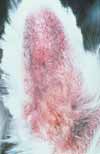
Shown here: West Highland White Terrier with atopy.
Source: George Washington University
Predisposed Breeds
Some dog breeds are genetically predisposed to allergic atopic dermatitis.
- Terriers (all breeds)
- Bulldogs
- Dalmations
- Lhasa Apsos
- Old English Sheepdogs
- Golden Retrievers
- Irish Settlers
Diagnosis
After ruling out the other possible causes mentioned above such as
food allergy and fleas, a
veterinarian could test the dog for various allergens using an ELISA or
RAST test in the same way humans are tested for allergies. Allergy
testing is not foolproof. Allergy tests that show that a dog has
antibodies to specific substances only means that he has been exposed
and reacted to dust mites, ragweed or another allergen. Often this
testing is only done if it is necessary to identify the specific
allergen causing the problem, which is the case if immunotherapy
(allergy shots) is used.
Treatment
There are several dog atopy treatment methods that have shown to be effective as described below.
At the start of treatment, and to bring some relief to the dog, symptoms are treated with corticosteroids and antihistamines. If a dog has a skin infection that contains pus (called superficial pyoderma), then antibiotics are prescribed for 3 weeks along with the use of an anti-bacterial shampoo such as Clinical Care. Also, cool water alone will have a soothing effect and help to wash away any allergens.If this initial approach does not work, then many of the following are tried until the problem is resolved:
- Oatmeal Bath - Dog shampoos such as Lambert
K that contain colloidal oatmeal can provide relief from itch. It
is not completely understood why, but oatmeal based products have a
soothing effect on the skin.
- Pramoxine - this is a topical spray ingredient that
has
become more popular in veterinary medicine since it doesn't have the
toxicity associated with other products such as lidocaine. It is
available in over the counter products such as Dermal
Soothe Anti-Itch Spray.
- Lime sulfur dips - these are safe for dogs and are
particularly useful when dogs cannot tolerate or use corticosteroids or
antihistamines.
- Linoleic Acid Shampoo - Allermyl,
relatively new shampoo by Virbac has linoleic acid as an active
ingredient. It works by improving the ability of the skin to resist the
absorption of allergens, referred to strengthening the skin barrier.
- Topical Corticosteroid Shampoos and Conditioners -
These
products are very effective in human medicine and are now available for
dogs in shampoos, creams, ointments and sprays such as Corti-Care.
There is also a leave on conditioner available called ResiCort, that is not rinsed off the dog. A clinical study demonstrated that when this product is applied to dog skin 2x per week for 6 weeks, skin condition returned to normal levels in terms of allergic response. If used in small breed dogs, consult a veterinarian as inflamed skin will increase the absorption of hydrocortisone.
- Glucocorticoid spray - the active ingredient
triamcinolone (.15%) was shown in a clinical study to reduce a
"significant reduction in skin itch and irritation in 67% of dogs
treated. It is available via prescription in Genesis Topical Spray.
- Cyclosporine (Atopica®) topical treatment - has been
shown to be effective. The atopy may return after treatment, although
it is common and acceptable to go on and off treatment. Side effects
include vomiting and diarrhea.
- Topical Immunomodulators (TIMs) - are a new class of
drugs
that have been approved in humans for the treatment of atopic
dermatitis. The initial approved formulation, Tacrolimus, has also been
shown effective in dogs with atopic dermatitis. Initially, treatment is
a light application of the ointment or
cream until it is completely rubbed in twice daily for two weeks. If a
response is seen the frequency may be lowered to once daily or less.
Side effects are minimal and have been limited to irritable behavior.
- Interferons (INF) - available under the trade name Roferon-A®. This drug is given to your dog orally with limited results on long term effects.
Essential Fatty Acid Supplements for Dogs with Atopy
Essential fatty acids (Omega-3, Omega-6) such as those found in natural fish oil have produced improvement in dogs being studied including reduced levels of skin itch and improved coat quality. Other studies of dog's taking DVM 3V Caps, an essential fatty acid supplement also showed improvement in 11% to 27% of dogs.
Side effects from fish oil supplements are rare, but are possible. These include gas, diarrhea, weight gain, bad breath (smells like fish) and pancreatitis.
Immunotherapy
It may be necessary to reduce a dogs sensitivity to specific allergens which is the treatment goal of immunotherapy. In humans, allergy shots are a form of immunotherapy. In dogs a schedule is set based on how well the dog responds to allergy treatment. It can take from 3 to 6 months to show any results to this approach.
Medications
Two drugs are newly approved by the FDA for canine atopic dermatitis (AD).
- Immunosuppressant drug cyclosporine A
- Oclacitinib which blocks a signaling pathway involved in inflammation.
Glucocorticoids such as prednisone are often prescribed, however dogs can develop adverse reactions to long-term steroid use, ranging from increased thirst and urination to higher risk of infection and Cushing's disease.
Prevention
While you cannot prevent environmental allergies from developing in a
dog, you can reduce the allergen load through exposure minimization.
- Avoid fields of allergens when outdoors
- Close the windows in those seasons when weeds, grass and trees polinate
- Vacuum often using a HEPA filter which reduced airborne dust
- Use dust-mite proof casts on your bed if your dog sleeps with you. Frequently wash bed linens in hot water.
- Keep humidity levels low at home to prevent mildew and mold growth
- Use mild skin topicals to prevent any inflammation of sensitive dog skin
Brochure
Dog Atopy (Canine Atopic Dermatitis)
Atopy in dogs symptoms, diagnosis and
treatment.
Written by: Todd Nash, DVM
Available in a free
Ebook
Ask Our Vet A Question or Share Your Story
Have A Question about Your Dog's Skin Condition? Our Team Will Answer It for Free!
Do you have a question or comment? Share it!
Our editors will pick 1 question to answer each week. Please include your dog's age, breed, medical history, medications and if possible, a picture of the condition.
We will do our best to get back to you quickly (it depends on how many questions we receive each day). If you do require an immediate response we suggest using this online dog veterinary service that is available now.
References for Canine Atopy
Canine Atopic Dermatitis
Clinical Disease and Diagnosis
Randall C,. Thomas DVM Dip ADVD
Caolina Veterinary Specialists
Charlotte, NC
Canine Atopic Dermatitis
Old and New Therapies
Randall C. Thomas, DVM, Dip. ACVD


