Table of Contents
Overview | Other Symptoms | Prevention | Q&A
Summary:
"If your dog has bad breath, it is probably caused by a dental issue. Treatment involves receiving a professional dental cleaning and then daily brushing of the teeth. A natural oral spray can come in handy (see bottom of page) as both a preventative and a quick solution to bouts of bad breath."
Overview
We've all heard of the phrase "dog breath". The causes of bad breath in dogs is usually something to do with dental health.
Food that your dog is eating gets caught in the teeth. If the food isn't removed with brushing, bacteria starts to form. Bacteria on the teeth is called plaque which in turn becomes tarter. The tarter causes the gums to become irritated which allows the bacteria to get to the tooth roots. The roots become susceptible to infection, tooth decay and loss and ultimately, bad breath.
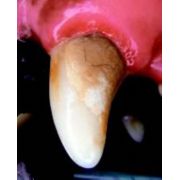
You can check your dog for tarter buildup by pulling up the top lip and check at the base of the teeth. If you see discoloring (yellow, brown, gray) then tarter is building up. The gums themselves should be pink. If they are red then your dog might have a condition called gingivitis.
In severe cases, infection in the gums creates an opening in the dogs nose. If you see discharge from the nose, it could be that what is called an abscess has formed.
Note if the bad breath has a garlic smell and your dog could have ingested phosphorous (found in fireworks, matches, rat and roach poison) then seek immediate treatment. The "garlic breath" would be accompanied by diarrhea and vomiting.
Other Symptoms
If your dog has dental disease, then other symptoms may accompany bad breath such as drooling more than normal. Your dog might have trouble eating as represented by changes in the way food is chewed and handled. Your dog might favor one side of the mouth over the other if the dental disease is localized.
If your dog's mouth has inflammation and when examining inside the mouth you see redness or what looks like holes in the lining of the mouth (ulceration) then your dog might be suffering from a condition called Stomatitis (sore mouth). Types of stomatitis include Trench Mouth (caused by bacteria, see saliva stains on legs) and Thrush (usually forms in dogs on antibiotics - causes white patches in the mouth). Treatment involves a professional teeth cleaning and antibiotics.
Prevention
Their are two paths to prevention.
1. Brush your Dog's teeth every day - Dogs require the same
dental care as humans. Daily brushing with a soft bristle children's
brush or brush made for dogs will keep the teeth clean. So our guide on
brushing
dog teeth
2. Consider A Natural Herbal Spray - Colloidal silver, a
safe and natural remedy, helps to naturally control bacteria in the
mouth. Sprays can be used as a preventative or when a bad smell is
detected. Pet
Alive OralHealth Mouth Spray promotes oral health, is all natural
and made expressly for this purpose.
Ask Our Vet A Question or Share Your Story
Have A Question about Dog Breath for Our Vet?
Do you have a question or comment on a bad breath in dogs?
Our Veterinarian will answer questions for FREE, plus you will be helping other dog owners that will see the question and our response. Please include your dog's age, breed, sex, medical history, medications, changes in behavior and if possible, a picture of the condition.
Please do not type your question in all capital letters.
We will do our best to get back to you quickly (it depends on how many questions we receive each day). If you do require an immediate response we suggest using this online dog veterinary service that is available now and operates 24 hours a day.
Other Reader Dog Respiratory Related Questions and Vet Suggestions
Click below to see contributions from other visitors to this page...
9 week old Puppy and Garlic breath Not rated yet
My puppy has a garlic smell to her breath. No other symptoms. What could this be?
Editor Suggestion for Garlic Dog Breath
A garlic smell on a puppy's …
Cure For Dog With Horrible Breath Not rated yet
My 15 yr old Male Chihuahua, 10lbs 13 oz, standard size, has lately developed very bad breath. HIs teeth and gums are fine. He developed a cough a little …
How to Cure Dog with Horrible Bad Breath Not rated yet
Reader Question: How to Cure Dog with Bad Breath
My 15 yr old Male Chihuahua, 10lbs 13 oz, standard size, has lately developed very bad breath. HIs …


