"Heartworms in dogs is caused by bites from
infected mosquitoes that transmit the heartworm (Dirofilaria immitis)
into the dog. The worms live in the pulmonary arteries and the heart,
causing symptoms such as coughing, being short of breath and weight
loss.
Heartworm disease is increasingly common in both previously affected and unaffected areas, according to the American Heartworm Society's 2022 map. The rise is attributed to various factors such as poor adherence to preventive measures, weather changes, and an increase in heartworm-positive pets. Areas where the disease has declined credit greater adherence to preventive measures. To combat this, veterinarians should emphasize the importance of heartworm prevention to every dog owner.(3)
The severity of symptoms depends on the number of worms and how
long the worms have been causing a problem. The mean age for infected
dogs is age 3 to 8. Treatment options include medications and possibly
surgery. As
the worms multiple and grow, it can lead to canine heart failure and
death. In the United States it is more common along the Gulf Coast, West and Midwestern United States,
but has been diagnosed in all 50 states.
Cases that can be treated by
injection of a heartworm medication result in a cure 96% of the time. Exercise must be restricted during treatment to avoid dead worms blocking blood flow to the lungs.
During treatment contact your veterinarian if you see any of the following symptoms:
Test
your dog for heartworms before buying a heartworm preventative in order
to avoid complications. Only purchase name brands recommended by a
veterinarian such as those at the bottom of this page. These products
are almost 100% effective in preventing the disease."
What Is Heartworm? Overview and Pictures
Video from the American Heartworm Society on the disease basics.
Overview: Heartworms in Dogs
There are two types of heartworm in dogs. In pulmonary heartworm
disease, dogs have live heartworms in the pulmonary arteries. In caval
syndrome, there are worms in the heart itself. The worms
themselves may be alive or dead. Heartworm in dogs tend to be between 9
and 16 inches in length.
The disease can be lethal and infect the heart and lungs. As
the worms grow they can interrupt blood flow. An infestation can
include
100's of worms and grow for several years inside a dog."
heartworm pictures
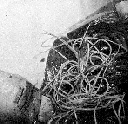
Heartworm lives in a dog's heart. They can grow to be a foot long, blocking the heart, lungs and arteries. The worms can produce babies and spread to other pets.
How Common is Heartworm?
The risk of heartworm in dogs is 1 in 200, affecting about 250,000 dogs each year.(3) According to the American Heartworm Society "the number of infected dogs per clinic is rising by 21% in the United States and its territories between 2013 and 2016."
Is Dog Heartworm Medicine Necessary?
Many people ask if heartworm medicine is necessary for a dog. The
answer depends on where a dog lives. The answer is yes in high risk
areas such as warmer climates. This includes the southern half of the
U.S., with a focus on the southeast.(1) Another indicator is the mosquito
problem in your area. If there is a big mosquito problem, then dog
heartworm treatment is probably necessary. Dogs should also get a
preventative if they travel in these areas. The disease is somewhat
rare in the most northern states such as Washington. It never hurts to
consult with your veterinarian.
In areas where there are long lasting mosquito populations,
and with over 70 kinds of mosquitoes carrying the disease, it is highly
likely that one will bite and infect your dog. Prevention is the best
approach to heartworm in dogs.
Canine Heartworm in Right Section of Adult Dog Heart.
Heartworms can grow up to 14 inches in length
Getting Heartworm Disease
Dogs are highly likely to get heartworm disease if they are bitten
by an infected mosquito. The mosquito spreads heartworm disease by
biting an infected dog, thereby acquiring the heartworm and then passing on
the worm by biting another dog.
There are four factors that will affect how your dog reacts to
heartworms:
Number of worms
Health of your dog's immune system
Length of time your dog has the worms
How active your dog is
Dogs that are active tend to get a more severe case of heartworm
disease than inactive dogs. Also, large dogs tend to tolerate the
disease better than small dogs since small dogs have smaller artery
openings in the heart.
The risk of infection is higher in warmer climates of if the
temperature remains above 64F for one month or more.
Heartworm In Dogs Symptoms
Many pet parents ask how would you know if your dog has heartworm?
Dogs that have not had any treatments to prevent heartworm are
checked for symptoms such as:
respiratory problems such as coughing
(particularly during exercise)
muscle weakness or lethargy
weight loss
shortness of breath or labored breathing
loss of appetite
vision problems
high blood pressure
(hypertension).
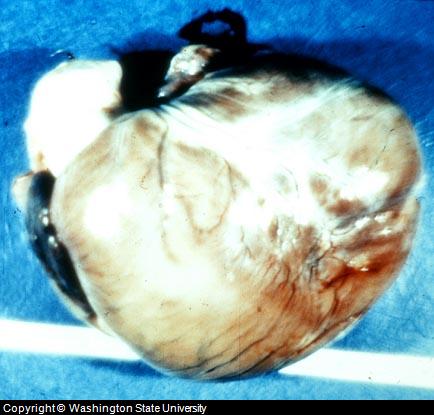
Heartworm disease can cause an enlarged canine heart (Dirofilaria immitis). Above picture of heartworms. Source: From the collection of Dr. Richard Wescott via Washington State University
Diagnosis
Heartworm in Dogs is diagnosed using a blood test that only
requires a few drops of blood and sometimes x-rays. Blood tests usually
do not detect the disease until the worms are at least 6 months old.
Other signs such as respiratory distress, hypertension (high blood
pressure) and kidney disease as also associated with heartworm.
Mild cases of heartworm in dogs can be detected while the disease is
still treatable.
Treatment For Canine Heartworms
Is Heartworm Treatable in Dogs? Is there a cure?
There are three treatments for heartworm in dogs. Most dogs can be treated and cured of the disease.
These include
surgery, treatments using drugs that kill the heartworms (melarsomine
dihydrochloride), or no treatment if your dog has other problems such as
liver problems. Most dogs will need to be hospitalized at some point during treatment (see below for Day 60).
Dog heartworm treatment can be expensive and traumatic. This is compounded by shortages of the required dog heartworm medication. Heartworm treatment starts with killing any larvae in the bloodstream and worms that are in the heart itself. After killing off all of the larvae, a medication called melarsomine (immiticide®) is used to kill adult worms. Dogs being treated with melasomine need to be confined to a crate and up to 8 weeks after receiving injections. The reason is to keep dogs from being too active to reduce the risk of a dog getting a pulmonary embolism or death. The only time they can leave the crate is to go to the bathroom. The most common side effect of this treatment is some swelling where the injection was given. With 2 doses, 96% of dogs are cured with this treatment.
Keep an eye on your dog during treatment and watch for signs of issues such as diarrhea, sluggishness or appetite loss. If this is the case immediately contact your veterinarian.
DOG ACTIVITY MUST BE RESTRICTED DURING TREATMENT due to the risk of dead worms blocking blood flow.
If the heartworms caused any damage to the dog's heart, this will be permanent.
In severe cases, surgery is used to remove heartworm if your dog is at high risk.
After treatment, cage rest is often recommended. Most Veterinarians prefer to do this in their office, however, you can ask your Vet for a tranquilizer or keep your dog in a caged area.
Initial Dog Heartworm Treatment
Once diagnosed, dogs should be confined during the treatment period. This includese 6 to 8 weeks after the last time the dog is injected with melarsomine which is the medication used to kill heartworms.
Dogs will also be given a 1x a month heartworm preventative. The preventative will prevent any new infections and kill any immature heartworms in the dog's body. This will continue for the entire lifetime of your dog.
Dogs will also be prescribed an antibiotic for 30 days such as minocycline or doxycycline. These medications will kill the bacteria found in the heartworms. The goal of using antibiotics is to reduce the chance of any complications during treatment.
Treatment after 60 Days
After 2 months on the preventative a dog will be injected with melarsomine, a medication that will kill any heartworms. Your dog will be kept in the animal hospital or clinic for observation. When released a veterinarian may prescribe an anti-inflammatory such as prednisone to address and minimize any side effects.
Treatment After 90 Days
After 90 days a dog will be given 2 more injections of melarsomine within 24 hours of each other. A dog may need to be observed in a veterinary clinic in case there are any complications.
Treatment After 120 Days
After 120 cays a dog will receiving an in-office clinical exam to review heart health and lung function. The dog will also be tested for immature heartworm. More medication might be needed if immature stages of heartworm are found.
Day 270
After 270 days the dog's blood will be tested to ensure that all signs of heartworm infection have been eliminated.
How Much Does Heartworm Treatment Cost?
According to the American Animal Hospital Association treatment can cost between $400 and $1,000. Higher amounts are related to cases where a dog needs to stay in the hospital to guard against any treatment side effects.
Dog Heartworm Medicine For Prevention
Dog Heartworm prevention and preventatives should be used starting between ages 6 to 8
weeks. For dogs that have not been protected by one of the following
treatments, a simple test in the Veterinarians office (antigen test)
will determine if your dog has heartworms. Do not give a treatment
until your dog has been tested first!
There are several treatments that are effective in preventing heartworm in dogs. These approaches stop worm larva from developing during
the 1st two months after infection. These drugs are used every month or
in larger intervals. Even if you forget to treat your dog for 2 to 3
months, as long as you continue for the next 12, the treatments should
be effective. Most products have an automatic 15 day leeway built in.
Also, it can take up to 6 months for the tests to read positive for dog
heartworm after a dog has been bitten by a worm-carrying mosquito.
We recommend buying name brand from a reputable company. Examples
include:
Heartgard
Plus: (prescription required) Convenient chewable that is very
popular with veterinarians. Almost 100% effective in recent studies.
Also helps to prevent roundworms and hookworms.
Interceptor:
(prescription required) Comes in a chewable. Prevents heartworm,
controls adult hookworm, and removes and controls adult roundworm and
whipworm. Almost 100% effective. 97% effective if used every 3 months.
Revolution:
Topical applied to skin of dogs 6 weeks of age or older. Almost 100%
effective. Kills fleas and flea eggs, ticks and ear mites.
Also, the addition of a natural homeopathic product such as Parasite
Dr. helps to support a dog's natural immunity, a step that could
be of benefit during recovery and to prevent future dog worm problems.
Human Heartworm and Dogs
It is rare for a human to contract heartworm. If an adult does get
heartworm it is from a mosquito bite, not from contact with a dog.
Amercian Heartworm Society guidelines for dog heartworm treatment.
Written by: American Heartworm Society
Available in a free
Ebook
Ask Our Vet A Heartworm Question or Share Your Story
Have A Dog Heartworm Question For Our Veterinarian?
Do you have a Dog Heartworm related question for our Veterinarian or a Helpful Story to Share? Please include information such as age, sex, breed, medical history, medications your dog is taking, recent changes in behavior, etc. Pictures are also helpful in identifying the severity and cause of any parasite related problems.
We will do our best to get back to you quickly (depends on how many questions we receive each day). If you do require an immediate response we suggest using this online dog veterinary service that is available now.
What Other Visitors Have Said
Click below to see contributions from other visitors to this page...
Dead Heartworms in Dog Poop? Not rated yet I adopted my dog, a 15 pound Jack Russell, 3 years ago. Her story was fragmented but basically she was found on the streets in Miami and had heartworms. …
Dog Heartworm Testing Not rated yet Reader Question: Heartworm Testing in Dogs
I have 3 dogs & live on 5.5 acres in the country. The dogs have limited access to the bush. Our rescue …
Bloody Canine Urine Not rated yet Reader Question: Why Is My Canine With Heartworms Urinating Blood?
My dog Max is a pug. He was diagnosed with heartworms and is now peeing blood. …
The Dog Health Guide is not intended to replace the advice of a Veterinarian or other Health Professional and is for educational purposes only. you should always consult a lice3nsed veterinarian or other qualified dog health care professional for any questions concerning your dogs specific mecial issues. This site accepts advertising and other forms of compensation for products mentioned. Such compensation does not influence the information or recommendations made. We always give our honest opinions, findings, beliefs, or experiences.
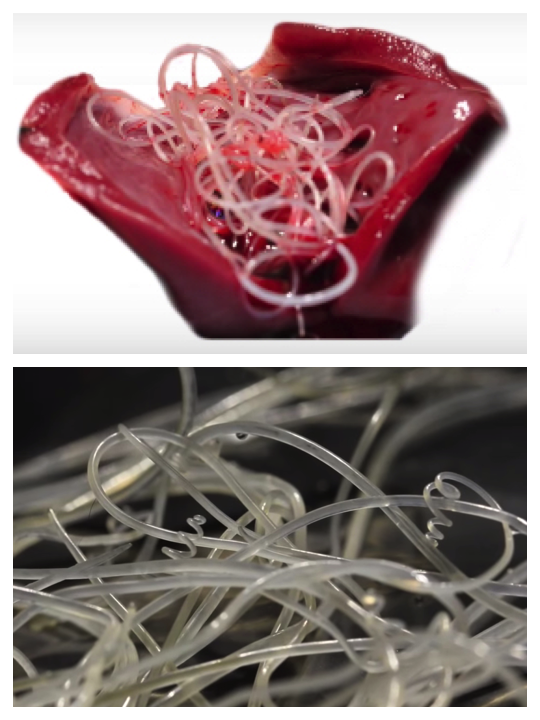 Heartworm lives in a dog's heart. They can grow to be a foot long, blocking the heart, lungs and arteries. The worms can produce babies and spread to other pets.