Table of Contents
Summary:
"Dog herpes is causes by direct contact with fluids from another dog. It rarely causes symptoms in adult dogs and can be fatal in pups under 2 years of age. There is no treatment for adults and puppies that are showing symptoms. Pups in exposed litters can be helped by antiviral drugs."
Overview
Canine herpes is most often seen in neonatal pups. Causes include poor temperature control at the breeder and immature immune systems up to 10 days after birth.
The virus grows only in canine cells and tends to be grow in either the kidney or the testicles.
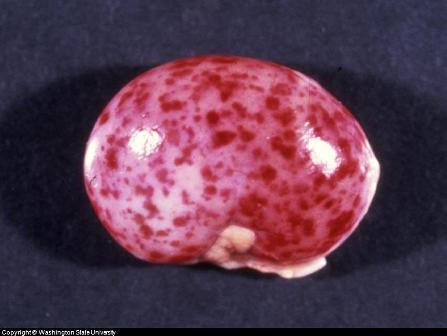
Source: George Washington University
The virus is spread via direct contact with bodily fluids that contain the infection. It cannot be picked up from an infected surface since the virus doesn't survive well in the environment.
Pups can catch the disease from the birth canal of the mother. They can also catch the disease from dogs that are "shedding" the virus in the kennel.
If caught the disease is fatal in pups. Those that do survive can have problems with the central nervous system. If caught after age 2 weeks usually survive. The disease lasts 1 to 3 days.
The virus causes conjunctivitis or dog red eye as a minor symptom. Conjunctivitis is a condition where the white part that surrounds the eye becomes inflamed or is the cause of a corneal ulcer (wound on the surface of the eye).
Symptoms of Canine Herpes
Canine herpes generally does not cause symptoms in dogs older than 2 weeks. If pups and adults do show symptoms, they include:
- Anorexia
- Difficulty breathing
- Pain in the abdomen
- Awkward muscle movements
- Soft, yellow-green feces
- Bloody nasal discharge
- Diarrhea
- Conjunctivitis (in unexposed adults)
- Inflammation of the vagina
- Abortion
- Infertility
- Lesions on the male penis
Diagnosis
The virus can be diagnosed through testing in the lab with fluorescent antibody staining of tissues.
Treatment of Dog Herpesvirus
Drugs for dog herpesvirus have been generally unsuccessful. Pups that are treated before the onset of symptoms (if you know a letter has been exposed) can see success, although other problems can occur such as issues with the heart and central nervous system.
Once symptoms are present in pups, treatments tend to be ineffective.
Sources
Viral Diseases of the Dog
Remo Lobetti BVSc MMedVet (Med) PhD Dipl ECVIM (Internal Medicine)
Bryanston Veterinary Hospital
PO Box 67092, Bryanston, 2021, South Africa
Neonatal Viral Infections of Pups: Canine Herpesvirus and Minute Virus of Canines (Canine Parvovirus-1)
L. Carmichael
Baker Institute for Animal Health
Cornell University, Ithaca, New York, USA


