Summary:
"There are many types of canine penis problems. Some can be treated at home, while others require a trip to the vet. Symptoms and treatment options available are described for the most common causes of dog penis diseases and conditions. Problems such as bleeding or blood in dog urine are commonly caused by prostate problems, infection, calculi (mineral buildup) accumulation and injury. Less common causes are tumors/neoplasia and cysts.
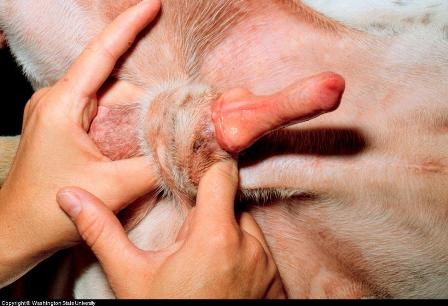
Source: Washington State University
Dog penile problems can manifest themselves in a variety of ways. In this article, we will be providing you with a list of things that can go wrong. While it may seem overwhelming, with a watchful eye and the help of a good vet, you and your dog will do just fine."
Overview: Types of Dog Penis Problems
The types of canine penis problems you may encounter are listed below along with symptoms and treatment, where applicable, meaning some are the result of genetics (inherited) and not much can be done. For further information you should speak to your family vet, as this list is quite comprehensive and covers not only the canine penis, but also the external and internal sheath.
Phimosis
Canine phimosis is a condition where the dog is unable to retract the canine penis back into the sheath. The condition is usually caused by a birth defect, and usually have two forms. The first is congenital (birth defect) and other one is acquired in later life. The reasons for acquired phimosis may be inflammation, balanitis (inflammation of glans penis), scarring and even tumors. Immediate treatment is required. Options include surgical correction and/or ointments and topical medications.
Paraphimosis
Canine pharaphimosis is a condition where the dog is unable to retract penis back into prepuce due to number of reasons, which includes mating, infection, inflammation, trauma or even congenital defects. An emergency surgery may be required to enlarge the orifice or opening. However, in mild cases and if the problem is identified early, it maybe possible to treat the condition with medication and ice-packs. Nonetheless, surgery is considered the most effective treatment.
Undescended Testicle (Cryptorchidism)
This dog testicle problem refers to one or both testicles that will not descend from abdomen to scrotum. There are number of factors, which may cause this problem. Most commonly includes incomplete descent during fetal development, hormonal imbalances and genetic factors. The condition can be unilateral or bilateral. The dogs with this testicle problem at any age are mostly at high risk of testicular cancer, infertility and testicular torsion. The usual treatment option is neutering. However, reproduction for dogs with this condition is not recommended as this a genetic disorder that could be passed on to the next generation of dogs, i.e. the problem most commonly is hereditary.
Priapism
Canine priapism refers to persistent canine penis erection, which is not caused by sexual stimulation. The condition can be a result of drugs, tumors and masses on penis, blood vessel abnormalities, neurologic dysfunction, trauma or even an unknown cause. It may be the result of spinal cord injury, which would require surgery. If the blood vessels are blocked, it should immediately be treated as medical emergency. In either case, the condition should only be examined and diagnosed by a licensed veterinarian.
Posthitis
Dog posthitis refers to inflammation of the prepuce (canine foreskin inflammation). This an any form of infection in penis (or parts of penis) is a result of either bacterial infection, parasitic infestation, fungal infection, allergy, trauma or even in underlying diseases (including diabetes and Cushing's disease). Spotting, excessive licking, discharge are related symptoms. Treatment involves removal of any foreign bodies and daily flushing with an antiseptic solution. Once the exact cause is identified, the treatment should follow accordingly with either antibiotics, antifungals, topical medication etc.
Balanitis
Canine balantis refers to inflammation of the dog penis head. It is relatively uncommon condition but it causes extremely uncomfortable for dog. Balantis symptoms include Loss of appetite, bloody discharge, excessive licking, fever and foul odor. Treatment includes antibiotics for infection, tumor removal and flushing with and antiseptic solution.
Phalitis
Canine phalitis refers to inflammation of the penis. See balanoposthitis (below) as these two things usually go together.
Balanoposthitis
This condition refers to inflammation of the canine penis head and the internal layer of the prepuce (canine foreskin). Canine balanoposthitis symptoms include yellow, green or bloody discharge, lethargy and fever. Treatment includes tumor removal if one is present, antibiotics for infection, daily irrigation with an antiseptic solution, and the use of antibiotic ointment directly on the sheath. Neutering is also an option.
Immune Mediated Posthitis
Dogs rarely get this condition. Typically, it may be the result of pemphigus vulgaris (water blisters) or systemic discoid erythematosis (skin inflammation and redness). If they do get this, it’s a system wide disease involving blisters in the anus and mouth. Look for lesions, blisters, ulcers. Typical treatment includes corticosteroids (anti-inflammatories), antibiotics to treat infection and anti-bacterial baths.
Infectious Posthitis
Canine infectious posthitis is generally bacterial in origin. Symptoms include green or yellow discharge, fever, swelling, inflammation and there may be a foul smell. It is difficult to identify or isolate the exact pathogen causing the problem. Typical treatment involves antibiotics and daily flushing with antiseptic solution etc.
Mycoplasma (Mycoplasmal) Infection
Mycoplasma is kind of bacteria which generally affects respiratory system (Pneumonia) and genitourinary tract. Symptoms of canine mycoplasma infection include coughing, sneezing, straining to pee, blood in urine, frequent urination, bloody diarrhea, depression, abscesses and depression. The diagnosis of mycoplasma in dogs may require more than just a physical examination. Usually a PCR test and X-Rays are considered mandatory for confirmation. Once suspected, it's important that early diagnosis and treatment with antibiotics and other care is done in a professional supervision. A veterinary hospital stay or at home supportive treatment involving antibiotics is required. In most cases, a prolong therapy is usually imminent.
Ureaplasma Infection
See canine mycoplasma above.
Malassezia Pachydermitis
This condition refers to a dog yeast infection. Symptoms cf yeast infection in dogs includes greasy, red, itchy skin, and a rancid odor. Treatment choices include the medications Ketoconazole, itraconazole, fluconazole and Selenium sulfide, a degreasing agent that kills Malassezia. Maintenance includes the use of Chlorexidine, and a vinegar/water rinse.
Leishmania Donovani (Protozoal Infection)
Dog penis problems that are parasitic infectious diseases are rare in the USA. Symptoms include weight and hair loss, skin ulcerations, bleeding from nose, kidney/liver failure and lameness. Treatment is difficult as there are no drugs to cure the disease. The veterinarian may be able to use medications to lessen long-term symptoms. Relapses are frequent.
Physiochemical Injury (Also Trauma)
A physiochemical injury refers to hemorrhagic (bloody) or purulent (pus) discharge from the dog foreskin (prepuce) – see next nine entries for sub categories of this main category of dog penis problems:
- Canine Prostatic Disease (Physiochemical Injury):
Prostatic disease in dogs is a bacterial infection of the canine
prostate gland. Symptoms include fever, weight loss, weakness, anorexia
(loss of appetite), vomiting, blood in the urine, discharge from the
penis (cloudy or bloody) and straining to urinate. Treatment calls for
antibiotics for 4 weeks, IV fluids and pain killers.
- Foreign Body (Physiochemical Injury): A foreign body typically affects smaller dogs, that are low to the ground. Symptoms include discharge from the penis, excessive licking, itching, swelling, and a foul odor. Surgery is usually required to remove the sand, rock, hair, grass, etc. from the canine penis, followed by supportive home care with an anti-septic solution.
- Prolapsed Urethra (Physiochemical Injury): This condition describes a condition where the lining of the tail end a portion of the urethra protrudes through urethral opening (the urethra is the canal that carries urine from the body to the outside). Symptoms of a canine prolapsed urethra include straining to urinate, bloody urine, frequent urination, bleeding without peeing, excessive licking and a blocked urinary tract. Surgery may be required or amputation of the prolapsed urethra. Other treatment options include antibiotics, estrogen compounds, and the possible use of chemotherapy for any underlying cancer that may have contributed to the condition. Canine urethral neoplasia is cancer of the urethra and often is present with a prolapsed urethra.
- Urolithiasis (Physiochemical Injury): Urolithiasis in dogs refers to the formation of stones in the urinary tract, including the canine penis. Symptoms include difficulty peeing, frequent peeing and blood in the urine. Treatment involves the use of Antibiotics, surgical removal of stones, a change of diet or both.
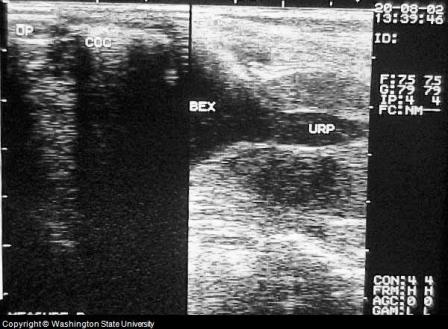
Source: Washington State University, Marcelo B.Almeida and Gustavo Luiz G.Almeida,DVM,MSc,MD
- Urethritis (Physiochemical Injury): Dog experiencing urethritis have inflammation of the urethra (canal that carries urine from the body) due to injury, infection or cancer. Symptoms include straining to pee, difficulty urinating, frequent peeing, discharge and/or blood from penis and a painful abdomen. A veterinarian will remove any stones if present, treat bacterial infection with antibiotics, and use anti-inflammatory drugs if required. Chemo, radiation or surgery may be necessary to treat any underlying cancer if found.
- Ureteral Duplication (Physiochemical Injury): If a dog has two ureters (duct that moves urine from kidneys to bladder), it can result in dog penis problems. One of the ureters is usually referred to as blind/going nowhere. Symptoms of canine ureteral duplication symptoms includes recurring urinary tract infections and abdominal pain. Surgery is used to remove the duplicate ureter.
- Persistent Frenulum (Physiochemical Injury): This is a condition where a small band of fibrous material gives the dog penis a curved look. Symptoms of canine persistent frenulum include difficulty peeing, excessive licking, discharge and frequent peeing. Typically surgery is used to loosen the band. Ask you veterinarian about the alternative treatment options available.
- Fracture of Os Penis – This is referred to a dog penis fracture which is literally a fracture of the bone in the canine penis. Symptoms of a canine penis fracture includes difficulty urinating, frequent urinary tract infections, discharge, excessive licking and a dog that is straining to pee. Surgery may be needed which involves the removal of bone and stabilization of the fracture with a stainless steel finger plate. Treatment options vary depending on the severity of the dog penis fracture.
- Epithelial Hyperplasia: This condition refers to dog skin cancer. Lumps and bumps can appear under or on the skin. A Dog may itch, scratch, bite at the site, have flaky skin, and may have red skin. Dog penis cancer treatment depends on nature of tumor and may include surgery, radiation, chemo, cryosurgery and photodynamic therapy
Canine Transmissible Venereal Tumor
A dog penis tumor (called canine penile tumors) is most commonly caused by what is called transmissible venereal tumors. Symptoms include a mass or swelling on the dog penis, discharge (bloody), excessive licking, bad odor and a dog that is straining to urinate. See your veterinarian immediately. Treatment for a canine penis tumor includes surgery, chemotherapy and radiation.
Chondrosarcoma
A canine chondrosarcoma is a bone tumor. These types of tumors are usually not identified until they have grown to the size required to cause clinical symptoms. It is a malignant dog tumor (cancerous) and slow growing. Related symptoms include frequent urination, the urine may be cloudy or bloody, there may be swelling, itching, scratching, weight loss or loss of appetite. A canine penis tumor is treated with surgical intervention, chemo, radiation, and supportive therapy for secondary complications.
Hemangiosarcoma
This condition refers to malignant cancer of the cells that form the blood vessels. Canine hemangiosarcoma symptoms include pale gums, difficulty breathing, a mass/lump under skin, a dog can’t exercise, bone swelling, and pain in the bones. Dog hemangiosarcoma treatment depends on the location of the sarcoma. If the sarcoma is in the skin, then chemotherapy, radiation and surgery may be necessary. When this type of cancer reaches the internal organs,the prognosis (expected outcome of treatment) is poor.
Lipoma
A canine lipoma is a benign (not cancerous) fatty tumor under the skin. Symptoms include skin swellings, lumps and bumps. It is usually oval or spherical in shape. Treatment includes possible surgical removal if the tumor is growing fast and radiation. If there are no significant changes, no treatment is necessary.
Lymphoma
A canine lymphoma is a malignant cancer (cancerous) that involves the lymph system. Enlarged lymph nodes, weight loss, loss of appetite, vomiting, diarrhea, difficulty breathing, increased thirst and peeing are the associated canine symptoms. A dog lymphoma treatment plan can include chemotherapy, radiation, surgery and supportive home care.
Soft Tissue Sarcoma
Typically, these are dog skin tumors that run along connective tissues, not the bone. Lumps/bumps, swelling, may be slow growing or fast, depending on grade of tumor. May affect ability to urinate, straining to pee, foul smell. Surgical excision first choice treatment. Chemo, radiation, supportive therapy.
Hypospadias
This is a congenital developmental anomaly where the external urethral orifice (where urine passes from the body) is on the ventral surface of the dog penis rather than at the tip of the glans. Symptoms include urinary incontinence, dry penis, scaly, flaking, infection. Surgical intervention is often the canine hypospadias treatment of choice.
Urethrorectal Fistula
This dog penis problem is a congenital anomaly where urine leaks from the anus. A canine urethrorectal fistula requires surgical repair.
Urethroperineal Fistula
This is a congenital anomaly, similar to hypospadias of urethral duplication. (see above) In a canine urethroperineal fistula, the normally positioned dorsal channel acts as the normal urethra. The treatment of choice is surgical excision of the ventral channel causing the problem.
Hepatoid Gland Tumors
A canine hepatoid gland tumor refers to the overgrowth of sebaceous glands (tiny structures in the skin that produce oil) called hepatoid glands. This condition only occurs in dogs. Symptoms include dog penis skin inflammation, ulceration, and infections. Treatment includes surgical removal of the dog skin lumps and castration. If malignant, palliative care recommended by vet.
Penile Problem Symptoms
As you can see, there are a number of symptoms that could be signs of canine penis problems depending on the medical issue causing his discomfort. Generally speaking, if there are dog penis problems, you will notice lumps, bumps, swelling, unusual looking tissue, odd growths, discharges, odd odors, excessive licking, scaling, lesions, excessive urination, straining to urinate, fever, inflammation, ulcers and possibly dog bleeding from penis mixed into the urine.
Common causes of conditions such as bleeding include prostate enlargement or a urinary tract infection. Other less common causes of bleeding include tumors or cysts and prostate cancer.
If you are concerned about something unusual on your dog’s penis, see your vet for answers and don’t let any unusual signs go untreated, or they may spiral out of control. Act early and you may be able to avoid a lot of pain and grief for your dog.
Diagnosis
Each of the above mentioned canine penis problems usually starts with a visual examination and may also involve a needle aspiration biopsy NAB), which is used to take cell samples from the skin surface, a complete blood count, x-rays, ultrasound, other diagnostic imaging and other tests. Often, there are numerous tests to rule out or rule in what may be causing your dog’s illness.
When dealing with some of these canine penis problems, expect them to take longer to resolve than other issues, simply because they are more serious and many may involve surgery. As always, in terms of diagnosing what is wrong, ask your vet questions to get an understanding of what is happening, why, where it is located in the body, how it affects your dog, what can be done to deal with the situation and a prognosis.
Treatment
Treatment will be based on the specific diagnosis by your veterinarian. This can include the use of antibiotics for infection, or surgery to correct problems such as stone deposits (calculi) or prostate problems. To help hasten recovery and minimize the chance of secondary canine penis problems, the use of supportive natural remedies such as Kidney Support or Prospet could be helpful.
Ask a Question or Share Your Story
Have a Canine Penis related Question For the Dog Health Guide Team?
Do you have a dog penis related question? Please include related information such as age, sex, breed, medical history, symptoms, diagnosis, diet, changes in behavior, diet and medications. Pictures of any skin conditions will help provide a better answer.
We will do our best to get back to you quickly (depends on how many questions we receive each day). If you do require an immediate response we suggest using this online dog veterinary service that is available now.
Other Dog Penis Related Reader Questions and Answers
Click below to see contributions from other visitors to this page...
Bleeding dogs penis 
My two year old unneutered Great Pyrenees started bleeding from his penis yesterday. He was losing large amounts of blood. I took him to our local vet …
Dog Penis Bleeding Causes and Treatment
Reader Question: Why Is My Canine's Penis Bleeding?
Please look at these pictures A vet here in East London has not explanation for my dogs behaviour. …
Dog Penis Infection Q&A
Reader Question: Which Canine Penis Problem Is My Dog Suffering From?
I have a Hungarian Viszla dog (not neutered) who is a normally very healthy, …
Dog Penis Discharge
Ever since my Dog, a Great Dane, Male, 4 year old, Coda, was neutered he has occasionally had a yellow brown discharge drip from the tip of his penis. …
What are the two lumps between my dog's penis and testicles? Not rated yet
My Staffordshire Terrier is 1 year 1 month old. Very smart energetic and loves to eat whatever we're eating. So much so he'll walk away from his food until …
Dog Penis Foreskin Swelling With Blisters at the Tip Not rated yet
Penis foreskin swelling, red, and looks to have blisters on the tip only? He is a 9 month old Pit bull that has been exposed to the plant poison ivy. Could …
Does my Dog have a Urinary Tract Infection? Not rated yet
My dog is not even one year old and I noticed the tip of his penis has turned red and there is a green thick substance coming out of it.
His energy …
Hard Swollen Lumps on Side of Dogs Penis Not rated yet
I have staff shire terrier about 1 1/2 years old. I've noticed he has red swollen lumps on both sides of his penis. Where is balls would be. But he's been …
Causes of Dog Penis Irritation Not rated yet
Reader Question: Causes of Dog Penis Irritation or Dryness
Hi Jennifer,
I have a year old french poodle. He was already neutered when we got him. …
Bored Dog Licking Penis or Health Issue Not rated yet
Reader Question: Dog Cleaning Penis and Anus
Hank is a German short-haired pointed, neutered and approximately 5+ year old (rescued). Within the …
Can a Bee Sting in or Around a Dog's Penis Cause Problems Not rated yet
Our dog was attacked by ground bees and stung. There were so many bees on him that we don't know where or how many times he was stung. Since this incident, …
Why Puppy Rubs Penis On Floor: Reader Question and Vet Response Not rated yet
My 5-month-old puppy has been rubbing his penis on the grass and carpet a lot. Just yesterday I noticed there's redness around his stomach (close to the …
Red penis head, Slightly Protruding Not rated yet
On arriving home from work I noticed that my dog's penis is slightly protruding and red on the tip - what should i do?
Editor Suggestion Red Protruding …
References
Pet Bits for You


