What You Should Know:
There are multiple causes of canine allergy including parasites such as dog flea allergy (one of the most common causes), environmental inhaled allergens (atopy), food allergy and reactions to medications. Some breeds are more predisposed to allergy. Signs of dog allergy usually appear on the skin. It is estimated that 1 in 7 dogs suffer from some type of allergy. A dog can be born with an allergy, which only appears later in life. Testing for dog allergy includes skin and blood tests. Allergy is treated with bathing and fatty acids for skin related problems, antihistamines (e.g.; Benadryl, Zyrtec, Tavist) and corticosteroid injections or tablets. Like in humans, allergy shots to desensitize a dog to a specific allergy and removal of the food or other factor causing the allergic response is also part of treatment."
Overview
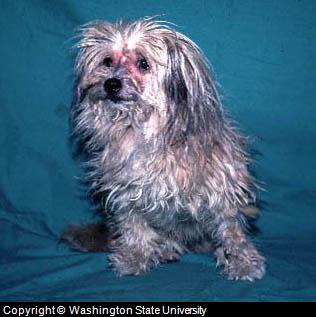
Canine allergy is very common with over 1 in 7 having some type of allergy. The most common type of allergy is an inhaled allergen, with spring allergies often when symptoms start. Allergic reactions in dogs are different than what happens in people. In humans, allergies usually cause problems with breathing. In dogs, allergies usually affect the skin and cause itching.
Causes
There are 3 causes of canine allergy:
- Insects: Fleas (most common allergy, called flea allergy dermatitis) and other biting insects or parasites
- Airborne Allergens: Pollen, Mites, Grass, Mold that are inhaled (canine atopy). These allergens can also be absorbed through the skin.
- Contact Allergies: Allergens that come in contact with the skin (contact hypersensitivity).
- Food and Drugs: called food allergies
Symptoms
Allergic reactions in dogs can either happen immediately after exposure to an allergen (something that causes allergy) or can be from a delayed reaction to an allergen.
Constant licking of paws and belly, rubbing the face and stuffy nose are common symptoms associated with allergy in dogs. Ear infections are also common.
Dog Allergies by Type
Another common symptom of canine allergy is dog skin Itch, which can have several causes. Be sure to note when the itch started to aid your veterinarian with a diagnosis. Canine skin itch can be caused by:
-
Dog Inhaled
Allergies (dog atopy):
itch usually starts with the beginning of a new season, particularly in
the late summer and fall during pollen season. Symptoms that indicate
this type of allergy include belly, and paw licking, face rubbing, dog
ear infection and dog ear scratching.
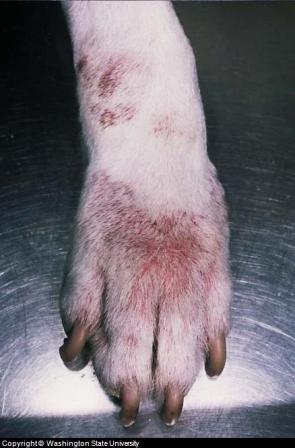
Treatment for dog inhaled allergies involves the use of fatty acid supplements such as Dermaquin and a dog shampoo that contains colloidal oatmeal such as Lambert Kayes Oatmeal & Baking Soda Shampoo. A veterinarian may also recommend antihistamine or corticosteroid sprays. Allergy shots are also used.
(Atopic Dermatitis)
- Dog Food
Allergy: Symptoms of food allergy in dogs include paw
licking, ear infection, recent changes in diet. A dog can develop a
food allergy all of a sudden to a food that they have always eaten.
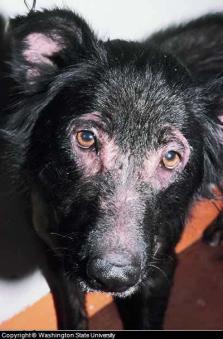
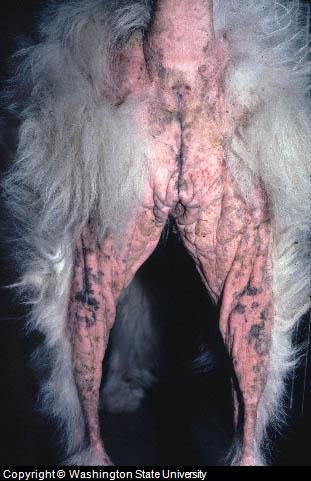
Treatment for food allergy in dogs involves the use of an elimination diet, where a diet is pared back to a one simple protein and carbohydrate. Once allergy symptoms have subsided, new components of food are added until the allergy returns. At this point the last food added would be the cause. This takes from 6 to 12 weeks (called a novel dog diet). As an alternative, some dogs, but not all, benefit from a hypoallergenic diet which uses smaller food molecules to avoid an allergic reaction such as Hill's Prescription Diet z/d or Purina Hypoallergenic HA.
 Dog Food Allergy
 Canine Food Allergy - Dog Rear
- Contact
Hypersensitivity (dog skin rash caused by something that
touched the skin): This type of dog allergy usually occurs suddenly.
Itching on the abdomen, feet and head is common. If itch is
occurring all over the body, then a substance you used on your dog such
as a shampoo could be the problem.
Using a dog oatmeal shampoo and a natural dog anti-itch spray such as Fidoderm can help to reduce dog skin itch symptoms. Your veterinarian can also prescribe a corticostedroid spray, oral medication or injection. - Dog Skin
Parasites: Dog flea allergy and mites (scabies) are the
common causes of this type of this type of canine allergy.
Flea allergies tend to occur in dogs that haven't been
exposed to fleas that often, while dogs that are constantly exposed
develop a resistance.
Flea allergy dermatitis is the most common allergy in dogs. It is a reaction to flea saliva.
Treatment involves the use of a dip such as Naturasil for Mange or Naturasil for Fleas. See our guide to canine fleas. Prevention of flea allergy is achieved with the monthly application of a product like Frontline Plus.
Canine Hives
Dog hives are Immediate allergic reactions (within 30 minutes) usually cause canine hives on the skin. They can appear anywhere and usually disappear in 24 hours. You can recognize hives by a raised appearance, circular shape and itch. Your dog’s hair may also be raised in patches.
Hives are most often caused by insect bites, drug allergy (after vaccination common cause), insecticides (lawn treatments), new foods or soaps.
Treatment of Hives
Hives disappear once the cause is no longer in contact with your dog. Determine what has changed in the past several hours such as a new food or if you took your dog on a walk to a new area.
For food allergies you can give your dog Milk of Magnesia (consult your Veterinarian first, suggested dose 7 to 25 ml. per pound orally once only) that quickens removal of food from your dog's stomach. If hives are caused by soap or insecticide, give your dog a bath using products you know are safe.
Like humans, you can also give your dog Benadryl (2 mg per pound orally every eight hours). For extreme cases your Veterinarian may also prescribe Cortisone treatments. The saliva in the fleas’ mouth causes flea allergies. A typical flea allergic reaction will have your dog itching the moment they come in contact with the fleas with the itch continuing even after the fleas are killed.
Ask a Question or Share Your Story
Have A Dog Allergy Question For Our Editors or Story For Our Readers?
Do you have a Dog Allergy related Question for our Veterinarian? Please include information such as age, sex, breed, medical history, skin and other symptoms, medications your dog is taking, recent changes in behavior, etc. Submitting a picture of any condition will help to provide a more complete answer.
We will do our best to get back to you quickly (depends on how many questions we receive each day). If you do require an immediate response we suggest using this online dog veterinary answer service that is available now.
What Other Visitors Have Asked and Suggestions from our Vet
Click below to see contributions from other visitors to this page...
Canine With Mild Allergies 
Reader Question: My canine has allergies, what do I do?
I have 2 Lhasa Apso dogs, both boys and half brothers. They are just over 16 months old. One …
Canine Suffering From Allergenic Symptoms
Reader Question: Why Does My Pitbull Have A Swollen Nose, and Watery Eyes Everyday?
My red nose pitbull will be two years old tomorrow and for the …
Does Dog Eye Mucus Indicate Canine Allergies
We have a German Shepherd that we found out has a dog food allergy to chicken. Not that she has a real bad reaction, she just gets diaherria.
This …
Skin Problem in Red Nosed Pitbull
Reader Question: Canine back covered with bumps
I have a 1 year old red nosed pit-bull that I got about 3 months ago. Right away he had an ear infection …
Pimples on my Blue Nosed Pitbull Can Be Canine Pyoderma
My blue nosed pitbull has severe canine acne all over the sides of her face and on her back. They are not bothering her but I would like to know what the …

Is This a Dog Skin Allergy or Something Else? Not rated yet
Reader Questions: What Could Cause This Type of Dog Skin Redness, Scabbing and Crusting?
My dog looked I like this when I woke up yesterday. I gave …
Allergies? Not rated yet
She is approximately 7 years old, 46 pounds, and appears to be a (Dakota Sport) which does not sound like a real breed of dog but who am I to decide that. …
Stop Canine Dandruff Not rated yet
Reader Question: How do I stop my dog’s dandruff?
My Rottie is 13 months old and since I changed her food from Blue Puppy Food to the Blue Adult …
Treating Puppy Hives Not rated yet
I have an 11-week-old English bulldog. I noticed the 2nd night we got her that she had one small bump in her side. Just a couple days after she had more …
How To Manage Dog Allergies Not rated yet
Reader Question: How to treat a dog with allergies
My 3-year-old Jack Russell (Chevy) this spring has developed allergies for the first time. She …
Sheltie Dermatomyositis & Coughing, Sneezing Not rated yet
My 6 1/2 yr old Sheltie was diagnosed with dermatomyositis when he was about 6 months old. He exhibits hair loss on his face, I give him a natural supplement …
Can Dogs Be Allergic To Cats? Not rated yet
Can Dogs Be Allergic To Cats?
I just got a new family member, we had her a week and she started coughing so we took her to the veterinarian. She put …
Benadryl For Dog Not Working - Advice From Our Veterinarian Not rated yet
Reader Question: Why doesn't Benadryl work for my dog?
My dog has been itchy since puppyhood, he is now 2 years old. At first, we thought it was …
References
Beale, Karin M. DVM, Gulf Coast Veterinary Specialists – “Atopic Dermatitis: Clinical Signs and Diagnosis”
Giffin, James M. MD & Carlson, Liisa D., DVM “Dog Owner’s Home Veterinary Handbook”.
Lloyd, Professor David, Royal Veterinary College, Hawkshead Campus: “Diagnosis & Management of Adverse Food Reactions in Dogs”
Osborn, Sarah Colombini DVM, Southwest Veterinary College, Houston: “Optimal use of Hypoallergenic Diets”
Ihrke, VMD, Professor of Dermatology, School of Veterinary Meicine, University of California: “Flea Allergy Dermatitis”
Washington
State University College of Veterinary Medicine


