Table of Contents
Overview | Types & Symptoms | Diagnosis & Treatment | Ask A Vet | Brochures
Summary:
"An Abscess in dogs is created by a collection of white blood cells that are attacking bacteria in a cavity. As the white cells die they become puss. There are several types of bacteria or fungi that can be involved in the abscess. It can rapidly appear as a swelling on the skin.
Abscesses in dogs are usually initiated by a scratch, bite, or wound from a sharp object, or something that penetrates the skin when outdoors. Bacteria that enters the skin (Staphylococcus, Escherichia coli, B-hemolytic Streptococcus, Pseudomonas, Mycoplasma and others) and then the skin seals can also be a cause, trapping the bacteria and any purulent exudates (puss).
Abscesses can appear anywhere on body, and affect most commonly:
- Gastrointestinal pancreas
- Eye tissues
- Prostate gland (bacterial prostatitis)
- Skin (any area such as nick or throat), particularly after an injury such as a bite
- Anal sac (anal sacculitis, infection of the anal sac)
- Sinuses
- Lungs
- Mammary glands
- Dental (around tooth root after injury or decay)
Signs and symptoms depend on the area of the body, but usually are seen on the head, followed by the legs, tail base and back. Other symptoms include depression, appetite loss and fever. Most commonly, abscesses appear as lump with reddened and warmer skin, with pus oozing out and generally has foul smell.
The veterinarian will diagnosis the problem by looking at the skin surface. Lab tests are usually not required. Surgery may be required if an anal sac abscess has not ruptured.
While many abscesses naturally dissolve, others need to be lanced and drained. A topical anti-microbial could be of some help although in many cases they are not effective since they do not penetrate the abscess wall."
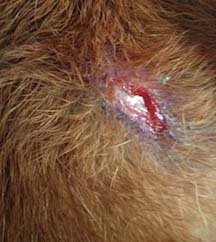
What Is An Abscess on a Dog?
A dog abscess is a cavity that can appear anywhere in the body. In most cases, trauma to the skin such as a dog bite or other puncture wound introduces bacteria under the skin. The body’s immune system then sends extra white blood cells to the area in an attempt to rid the body of the bacteria. Pus is formed when the white blood cells die and accumulate in the affected area.
The immune system also walls off the abscess by forming a fibrous capsule around it. This keeps the pus confined to one area. Over time, the wall of the capsule grows thin and ruptures. Then the pus drains out.
Sometimes an abscess is able to heal without any medical treatment. In these instances, the white blood cells are able to kill the bacteria. The accumulated pus is then absorbed by the body.
In most cases, however, veterinary care is needed.
Types of Abscesses in Dogs
Abscesses can form in many parts of your dog's body including:
- Anal Sac Abscess: Caused by impacted anal sacs (also referred to as being plugged.) If bacteria takes hold (it can travel up the anal duct), enabling an abscess causing infection to take hold and abscesses to form. Anal sac abscess are considered extremely painful and can burst if not treated early.
- Bite Wound Abscess: This type of abscess is caused by an animal bite or if a foreign object enters the body such as a wood splinter. One type of abscess forms behind the eye (called a retrobulbar abscess). Another kind is called submandibular which is an abscess in the lower jaw.The onset of this condition is fast.
- Brain Abscess: A brain abscess is a rare condition where puss forms around the brain and is caused by pyogenic bacteria. It appears similar to a brain tumor with symptoms such as headache, fever, loss of consciousness and visual disturbance along with others. Sometimes, seizures too are noticed. Diagnosis is made via tests such as doing a CatScan or MRI.Treatment involves high doses of antibiotics. It can be cause by an inner ear infection, chronic sinus infection or infection that takes hold deep into the mouth.
- Ear Abscess: If you dog was in a fight and was scratched on the ear an abscess can form. If the swelling was not caused by the accumulation of puss then it could be due to a hematoma (the buildup of blood). Symptoms include a painful reaction to the touch, head shaking and scratching.
- Head and Neck Abscess
- Liver Abscess: Caused by a blood born infection, symptoms include pain in upper abdomen, dark urine, clay-like stools, loss of appetite and vomiting
- Lungs: Caused by an inhaled foreign object or chronic pneumonia. Other reasons include neoplasia and parasites.
- Mammary Glands: Commonly called mastitis and may happen during nursing. It can be bacterial as well fungal infection.
- Pancreatic Abscess: It is commonly complication of pancreatitis, inflammation of pancreas. It can happen over the edges of pancreas and remains sterile. The symptoms may include prolonged vomiting (a month or more) with relatively mild loss of appetite.
- Prostate: Forms when an intact male develops an infection.
- Sinus: When an infection takes hold and is not treated.
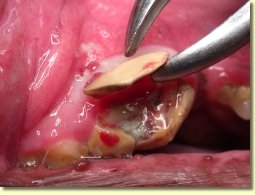
- Tooth Abscess: A dog tooth abscess occurs at the tooth root. It is usually caused by an injured, fractured, or broken tooth (most common cause), or if periodontal disease causes tooth decay. The abscess forms when bacteria can enter the area. Symptoms are reluctance to chew on the side of the mouth where the abscess is located. If left untreated the bacteria can cause the tooth to die. As the tooth decays, bacteria can find its way into the jay through the bottom of the tooth. If bacteria continues to advance you will see deterioration of the gums and possible travel through The first step in treatment is to use antibiotics to kill any spreading infection. Abscesses will need to be drained. Your veterinarian may recommend a root canal to repear any damage. If only the abscess is treated without focus on any dental damage the abscess could return through new bacteria that enters through the teeth and gums.
Causes
There are several types of bacteria that can cause an abscess in dogs:
- Staphylococcus
- Escherichia coli
- Pseudomonas
- Mycoplasma
- Pasteurella multocida
- Corynebacterium
- Actinomyces
- Nocardia
- Bartonella
- Bacteroides
- Clostridium
- Fusobacterium
Canine Abscess Symptoms
Symptoms of dog abscesses include:
- Redness and warm skin
- Swelling at the wound site
- Drainage from
the wound
- Fever
- Irritability
- Limping if on the foot
- Unusual head tilt
- Scratching
- Painful reactions to touch
If the abscess has not ruptured there will be no drainage, just a lump. Hair may fall out around the injured area. Abscesses are usually quite painful, as well. Your dog may try to lick or bite at the injured area. (Don’t let him do this, as it will probably make things worse). If the abscess does not drain and if infection is still present it could result in a fever.
The visceral abscesses such as in lungs, liver, pancreas, brain etc. can cause other symptoms associated with the respective system. This includes systemic symptoms, loss of appetite (anorexia), vomiting, nausea, difficulty in urination/defecation, change in coloration of urine and stools etc.
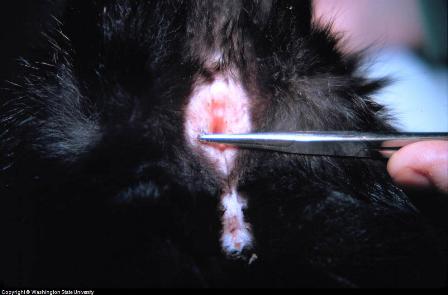
Source: Washington State University, Dr. Barbara Stein
Diagnosis
Your veterinarian can generally diagnose an abscess just by looking at the wound. If the abscess has not ruptured, the vet may insert a needle into the lump and withdraw some fluid using aspiration to ascertain that there is indeed pus in the lump. If the abscess has ruptured, it is easy to see that there is an abscess there. A biopsy can also confirm the presence of any abnormal tissue.
To diagnose an abscess in other areas of the body blood or urine tests may be required.
Imaging tests such as X-Rays, ultrasound echocardiography, CT scans or a MRI may be needed for issues such as a brain abscess, heart abscess or to find a foreign object in a mass.
Differential Diagnosis
When diagnosing an abscess, a veterinarian will need to rule out other conditions such as:
- Cysts (grow slower, sometimes painful)
- Fibrous scar tissue (not painful, scar tissue)
- Granuloma (not as painful)
- Seroma or Hematoma (grows quickly, but once at full size it becomes unattached to surrounding tissue)
- Neoplasia (painful)
Canine Abscess Treatment
Abscess treatment depends on the location. For abscesses caused by bites, the dog can be treated on an out patient basis. If sepsis has set in, then the dog may have to be admitted to the veterinary hospital for treatment and surgery in order to remove infected areas and to maintain wound drainage.
If the abscess has not yet ruptured, it will have to be lanced so that pus can drain from the wound. This may require general anesthesia or at least heavy sedation for your dog. You can sometimes help the natural drainage process for skin abscess by applying a warm washcloth to the area for 10 minutes. Heat helps to liquify the puss.
Once the abscess has ruptured and is draining, it can be flushed with a disinfectant solution such as povidone iodine or chlorhexidine to clean the area and remove any remaining pus.
Antibiotics will be prescribed to help fight infection. Ask your veterinarian about any activity restrictions after treatment.
If surgery is required the veterinarian will use general anesthesia.
You can apply warm compresses several times a day to help increase blood flow to the area. This will draw white blood cells to the area, which will help fight infection and promote healing.
Don’t let your dog lick or chew at the wounded area. If he is persistent about doing so, you may need to use an Elizabethan collar (those conical collars that make your pet look like a satellite dish) to prevent him from reaching the injured area. The skin area should heal in about a week.
Dog Ruptured Anal Gland Abscess Treatment
There are three stages of anal sac disease. The third stage results in the rupturing of the anal glad where it ruptures through the skin resulting in an oozing red hole. The location of the hole is next to the dog's anus. Treatment may require surgery if the abscess has not ruptured. Surgery will be used to clean the area and drain any liquid. After surgery a topical ointment is applied to the skin to avoid any infection.
Future problems are prevent by expressing the anal sacs every couple of weeks. Dietary change to a high fiber diet might also help.
Prognosis
The prognosis depends on the location of the abscess and the amount of tissue that has been disturbed. The question of if an abscess can kill a dog depends on the location and severity of the condition.
Prevention
Skin abscesses can be avoided by eliminating risks such as fighting with other pets.
Anal sac abscesses can be prevented by avoiding impaction. If the problem persists, consider removing the one or both sacs with an anal sacculectomy.
For prostate abscesses, castration may help.
FAQ
What Causes an Abscess in Dogs?
An abscess is caused by bacteria that penetrates the body. It can occur in the mouth, after a wound, or by a foreign object that enters the body to name a few. There are several types of bacteria, with some causing puss and others that grow when there is no oxygen present.
What are Risk Factors for Abscess Formation?
Abscesses can form whenever bacteria enters the body. Common areas are around the teeth (tooth abscess), or after a bite wound.
How are Abscesses Treated?
Dog abscesses are treated with antibiotics to eliminate any bacterial infection. If under the skin the abscess will be lanced and drained.
Does the Condition Recur After Treatment?
Some types of abscesses such as anal sac problems can reoccur depending on the dog.
Ask Our Vet A Question
Have A Question about a Dog Skin Infection for our Veterinarian?
Do you have a question about a dog abscess? Ask it and our Veterinarian will answer it for free.
Please include your dog's age, breed, medical history, medications and if possible, a picture of the abscess.
We will do our best to get back to you quickly (it depends on how many questions we receive each day). If you do require an immediate response we suggest using this online dog veterinary service that is available now. This service will answer short online vet questions for free.
Other Reader Dog Abscess Related Questions and Vet Suggestions
Click below to see contributions from other visitors to this page...
Multiple Abscesses on Dog Not Healing Not rated yet
My dog had developed multiple abscesses on his shoulder (or a singular abscesses that is creating several tracts of infection). These have been treated …
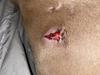
Abscess or healing? Not rated yet
So my girls (dogs) got into it the other day due to fence aggression. One girl got a good bite to the side. It’s been healing great with little draining …
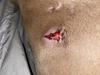
Dog Leg Bite Wound - Abscess or Healing Not rated yet
So my girls (dogs) got into it the other day due to fence aggression. One girl got a good bite to the side. It’s been healing great with little draining …
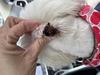
Back of neck dog abscess Not rated yet
Hello, my dog was bit years ago, and it healed up. The groomer has on occasion cut it open. For the most part, it has been fine. But got cut open by the …
Dog Anal Abscess Not rated yet
Is it expensive if my dog has an abscess on his anal area? Any ball park figures?
Cost of Anal Abscess Treatment
The cost of treating a ruptured …
Abscess On Face Not rated yet
What ever is on his face appeared suddenly.....About 2 months ago, a small lump appeared on the edge tip of his ear. It now looks like a wart, and does …
Brochure
Free brochures on abscesses including the definition, signs, treatment and prevention.
Brochure on the three stages of dog anal sac infections including dog ruptured anal gland abscess treatment.
References


