Table of Contents
Overview | Diagnosis | Natural Remedies | Q&A
Summary:
"Symptoms such as a canine cough are not as common in dogs as you might think. Minor causes include getting excited or when a hair gets into the throat. A cough can also be a warning sign of more chronic problems that require veterinary care including heart disease, asthma, pneumonia and bronchitis.
If the coughing persists for more than 24 hours see a veterinarian to get a specific diagnosis. since this indicates a problem that needs to be addressed by a health professional. In general, a cough is triggered by irritation in the lungs, airways and throat. A veterinarian may be able to suspect a possible cause based on the sound of the cough, frequency, when it occurs such as time of day or night, age and breed. Problems such as kennel cough or dog bronchitis are caused by infection.
Treatment involves the use of specific medications such as cough suppressants, antibiotics for bacterial causes and steroids for allergy."
Overview
A dog cough occurs when a dog's throat, airway or lungs are irritated. It is a way for your dog to protect itself against something that may cause your pet harm by expelling foreign particles out of the bronchi and trachea. There are so many causes of a cough that it is tricky to determine its exact cause. The range of causes includes irritation in the branches of the lungs (trachea or windpipe) to heart disease (associated with heart rhythm issues).
The causes of the cough also varies by breed, age and size of your dog. These include:
- Tuberculosis
- Internal Parasites
- Distemper
- Coccidiosis Dogs
- Heart Disease
- Canine Kennel Cough
- Dog Bronchitis
Keeping a diary when your pet coughs is helpful. Did it happen at mealtime, level of activity, certain times of the day or night, out or indoors all provide clues for diagnosis. Time the length of coughing if several happen in a row and then stops.
Be sure to take your dog to the veterinarian if dog cough symptoms such as problems breathing, the gums look off color (dog gums should look the same color as human gums), or if a dog is lethargic (weak), the cough is moist and if mucus is present, or if the condition is not getting better.
Diagnosis of Dog Cough
Part of the canine and cough diagnosis is to match the nature of the cough with common ailments. Here are some general guidelines:
- Dog Night Time Cough
Coughing at rest is associated with heart problems (sometimes failure), trachea issues and lung problems. - Dog Cough when excited
Collapse or irritation of the trachea (branches of the lungs) - Dog Cough when drinking water
Collapse or irritation of the trachea, also called Kennel Cough or tracheabronchitis. Kennel cough is the most common cause of laryngitis in dogs. A dog may have laryngitis and a coughing condition for years occurring when your dog pulls on its leash or other activity. - Cough During or after eating
Larynx or esophagus disease. The larynx prevents food from entering the trachea. If the larynx doesn't close food enters causing disease. - Dog Cough when outdoors
If the dog continually breathes in things that are naturally outdoors such as leaves or grass, it could cause a lung infection or pyothorax. - Cough in Overweight Small Dog
Caused by tracheal collapse (sounds like a goose when coughing).
Canine Cough Medicine varies based on the type of diagnosis. It ranges from cough suppressants to prescription drugs. Veterinarian's have many options for treatment including cough medicine, cough suppressant, antibiotics (bacterial infection) and allergy medications (steroids).
Tests for Canine Cough
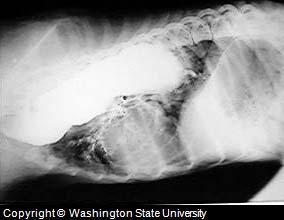
Tests of the blood, stool and x-rays of the chest and trachea are all common diagnostic approaches. To check the airways, a bronchoscope is used.
Canine Cough Home Remedies
Natural remedies are formulated to support the body's ability to fight disease. Products such as KC-Defense Formula are formulated to naturally treat and immunize your dog against causes of cough in dogs such as acute kennel cough and other respiratory infections. The manufacturer of this particular product provides clinical studies that support the ingredient selection.
When first treating a mild dog cough, consider adding a vitamin supplement to the dogs diet. Try a vitamin c (5-10 mg/pound, 2x to 3x/day) and a vitamin e (3 - 5 mg/lb, 1x per day) supplement.
Further Reading:
Hamilton, Don DVM
Homeopathic
Care for Dogs & Cats
Ask a Question or Share Your Story
Have A Dog Cough Related Question For Our Editors or A Story to Tell About This Topic?
Do you have a Dog Cough Health Question for our Editors or a Helpful Story to Share? Please include information such as age, sex, breed, medical history.
We will do our best to get back to you quickly (depends on how many questions we receive each day). If you do require an immediate response we suggest using this online dog veterinary service that is available now.
Vet Suggestions and Other Reader Questions
Click below to see contributions from other visitors to this page...
Can Humans Conract Upper Respiratory Infections from Dogs? 
Reader Question on Transmission of Respiratory Infections to Humans
I have two dogs - a 7 year St. Bernard mix and 7 month old Toy Chihuahua. The …
What Causes a Dog Cough at Night or Early Morning Not rated yet
Dozer is a 1 yr old bull-boxer dog, very playful and friendly, loves to snuggle and cuddle when sleeping, he wakes at night to go "pee" and starts gagging …
Cause of a Dog with Hacking Cough: Reader Question, Vet Response Not rated yet
My Morkie is 2 years old. She coughs in the morning a few times, every morning. It is a simple hacking noise, almost as though she is clearing her throat. …


