Table of Contents
Summary | Signs of Aggression | Aggressive Dog Breeds | Medical Causes | Types of Aggression | Training and Behavior Modification | Vet Q&A | Aggression and Strangers
Summary:
Dog aggression behavior is a natural canine behavior that exists in all dogs, some more than others. It is usually provoked by a specific circumstance such as confusion regarding the status of a stranger and is often related to a dog's herding/chasing behavior or prey drive. Most dogs become socialized when on a leash and learn how to control the prey drive. Also herding behavior sometimes looks like predatory behavior when all this type of dog wants to do is to move other animals to a location of their choosing (see our tips for this behavior below). Others don't learn the lesson or act out of fear as a driver of the behavior.
In general there are five categories of aggressive behavior in dogs:(6)
- Conflict aggression (toward familiar humans, also referred to as dominance aggression)
- Interdog housemate aggression
- Fear aggression to humans
- Fear aggression to other dogs
- Predatory aggression (chasing other animals)
Review the proposed dog aggression training solutions below. Other treatment options include modification of the environment and animal handling, drug therapy, or surgery. Any sign of aggressive dog behavior should be addressed to ensure that it doesn't lead to an unacceptable dog behavior problem.
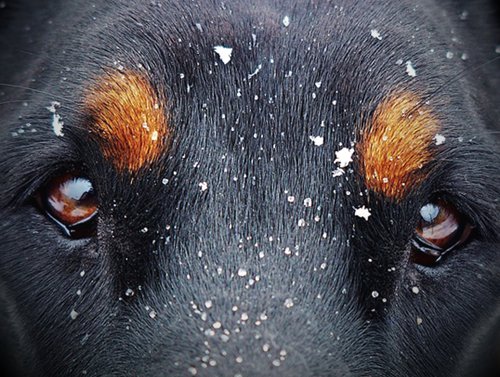
Signs of Dog Aggression Behavior
There are many signs of aggressive dog behavior. These include:
- Baring teeth
- Growling
- Snarling
- Lifting a lip
- Snapping
- Nipping (biting without causing a break in your skin)
- Biting
- Refusal to Allow a Human to Touch a Possession
such as a Dog Dish
In most cases, there is a clear and identifiable reason for aggressive behavior in a dog, although it can be difficult to understand and diagnose.
Aggressive Dog Breeds
Understanding which dog breeds are aggressive is harder than you think. Dogs tend to be bred for a purpose. For example, if an owner wants a quiet dog, then a Beagle is not a good choice. If you want a dog that does not exhibit herding behaviors, then avoid dogs such as Border Collies and Australian Shepherds. Studies have not shown inheritability of unpredictable aggression. Said another way, aggression is more specific to an individual dog, then it is to an entire breed. In terms of temperament, research has also shown that there is greater individual variability between dogs across litters than there is for a specific breed. For the most part, behavior is a sign of a dog's individuality.(1) Using dog bite databases, research has shown that the propensity of a dog to bite is in line with the number in the population, indicating that no one breed is more aggressive than another. Studies have not conclusively shown that breeds widely thought to be more aggressive such as Pit bulls are in fact no more aggressive than other breeds.
The American Temperament Test Society does publish a list of dogs and the percentage that failed a temperament test which measures how dogs relate to humans. Note that the majority of dogs in each breed passed the test! Dogs with the lowest scores are:
- Chihuahua (68% passed, 42% failed)
- Dachshund (68% passed, 42% failed)
- Chow Chow (71% passed, 29% failed)
- Doberman Pinscher (78% passed, 22% failed)
- Dalmation (83% passed, 17% failed)
- Rottweiler (84% passed, 16% failed)
- Jack Russell Terrier (84% passed, 16% failed)
- German Shepherd (84% passed, 16% failed)
- American Staffordshire/Pit Bull Terrier (87% passed, 13% failed)
- Siberian Husky (87% passed, 13% failed)
Medical Causes of Aggression in Dogs
When a veterinarian sees an aggressive dog, they will do a thorough physical and neurological examination. Medical conditions that can cause aggression in dogs include:
- Parasitic and Infectious Diseases (distemper, rabies)
- Endocrine or Metabolic Disorders (Cushings Disease, Hypothyroidism, Encephalopathies or diseases that impact the brain such as injury to the head)
- Neurological Problems (Convulsive disorders, Hydrocephalus, CDS)
- Diseases that cause discomfort, itching and pain
Types of Dog Aggression Behavior
There are five primary types of dog aggression behavior. These are listed and described below.
- Dog Dominance Behavior
- Dog Fear Aggression: Characterized by stressful encounters with feared people, unfamiliar people, other dogs and certain situations.
- Territorial Dog Aggression: Territorial dog behavior occurs when defending an area containing something important to the dog. Often encouraged through selected breeding in some breeds.
- Predatory Aggression: Displayed by any breed presented with fast moving objects or squeaky noises. Encouraged in some breeds by selective breeding.
- Aggression With Another Pet: Complex form of aggression where a dog's status, learned behaviors, play, fear, hormones or redirected aggression may play a role.
Forms of aggression can include:
- Maternal Aggression where a dog is hormonally driven during pregnancy or false pregnancy.
- Play Aggression: When a dog bites and scratches during play. This can lead to learned aggression.
- Pain Aggression: developed when a dog is injured or uncomfortable. This can also lead to learned aggression. Pain is by a mile the most common form or cause of aggression.
- Protective Aggression: When defending a resource such as another animal or person.
- Redirected Aggression: When a dog is frustrated due to being denied a toy, play, food or toys.
- Food Related Aggression: When a dog acts out when they believe that they will be losing something valuable such as food. Involves learned aggression.
- Canine Possession Aggression: Possessive aggressive dog behavior occurs when a dog wants to keep something such as a toy, sleeping area. Often related to status related aggression. Similar to food related, protective and territorial aggression.
- Status Related Aggression: When a dog has learned behaviors regarding its' position in a group and the acceptable social behavior. It is related to a dog expressing leadership and protection vs. domination. In this case dominant dog behavior modification is needed.
- Medical or Idiopathic Aggression: Related to unpredictable and extreme displays of aggression. It is rare but can be dangerous. Some causes are pain or dysfunctional or a degenerating nervous system.
- Learned Aggression: Occur over time when a dog learns what forms of aggression lead to a desired outcome. Some dogs are taught to be aggressive by being rewarded for exhibiting these types of behaviors.
Most forms of aggression can be helped by following a training program that involves behavioral modification. This means simply that you reinforce positive behaviors with rewards and remove any actions on your part that can be confusing.
Dog Dominance Behavior
Dogs are pack animals, and your dog views you as a
member of his pack. There is always a "pecking order" in the pack. If
your dog views you as a step below him in the pecking order, he may
respond to what he perceives as challenges to his position with what is
called dominant dog behavior. If he is bothered while sleeping or if he
is made to move off the bed or couch, he may perceive that as a threat
to his dominance. He may also perceive physical restraint, even in the
form of a hug, as threatening. Your dog may also be aggressive toward
other dogs in order to establish his dominance.
Dogs who display dominance aggression are generally very nice and friendly when they do not feel they are being challenged and they are often described as having a "Jekyll and Hyde" personality.
Tips for dealing with dog dominance behavior involve behavior modification:
- Make sure your dog is getting exercise. Do not play games that involve struggle such as tugging on a rope or racing to see who can grab a ball first.
- Consider something called a head collar when walking your dog or even what not walking him. It has been shown that these collars have a calming effect without being harmful to your dog. Consider brands such as the Gentle Leader Dog Training Collar and the Pet Harness Training Collar by Company of Animals.
- Get your dog into the habit of following your commands and the rewards associated with doing so. Work on commanding your dog, Have each member of the family do this individually. Reward your dog with a treat when they do what you ask.
- Ask your dog to do something before you reward for your dog. For example before you go for a walk or provide food, ask for obedience with a command such as sit.
- Keep some parts of the house off limit to your dog. For example, do not allow your dog to go up on a bed or couch. Teach that their are places that are not acceptable.
- Don't pet your dog when your dog asks. This is a form of control. Pet your dog when you want to.
- Ignore your dog when he is exhibiting a negative or dog aggression behavior. Do not reward his behavior by acting in the way your dog wants. Do not fight your dog, just walk away.
- If all this doesn't help, then their are some medications made for dog aggression behavior that might help. Your veterinarian can discuss anti-anxiety, anti-depressants and anti-obsessives.
Fear-Motivated Dog Aggression Behavior
Fear-motivated aggresion occurs when your dog perceives a threat of
being harmed. There may not actually be a risk, but your dog perceives
it that way. For instance, if you raise your arm suddenly, your dog
might be afraid of being hit. He may bite you to protect himself. This
type of aggression is particularly common in dogs who have been abused
in the past. The key is not to put your dog in crowds or situations that
induce fear, but to work up to these situations so that they do not
trigger the fear response.
Learn more and dog bites, prevention and legal issues if someone is bitten by your dog.
Solution
First, make sure you have a good harness so that you can keep your dog from lunging at others. You need to be able to control your dog and move her away from dangerous situations. We recommend the Freedom No-Pull Harness with a separately purchased Double-handled Leash. This type of leash makes it easier to quickly turn a dog away from another dog or person. The two handled leash allows for one end to be attached to the halter and the other attached to the side of the halter.
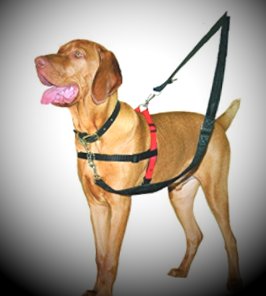
Excellent Choice When Training A Dog to Avoid Situations That Trigger Aggressive Behavior
The key to helping your dog is to identify what is
causing the fear and then using behavioral modification techniques to
help him get over this fear. A typical situation is that your dog is
nice to you, but barks at any visitors. Some dogs are only fearful of
certain types of people such as children.
To help with this kind of behavior you will need to follow the steps for behavior modification. Be sure not to yell at your dog for exhibiting the wrong behavior as this will enhance his anxiety.
Three Step Aggressive Dog Behavior Training Solution (Signal-response Reward)
- If you pass a dog or person that usually triggers your dog to act aggressively, and the dog does not react, give your dog a treat and affirm the behavior verbally by telling your dog what a good boy he is.
- If your dog does start to go after something or someone that he shouldn't be going after, firmly and evenly say "leave it." If your dog responds by backing off, then provide some verbal affirmation and move away from whatever triggered the behavior.
- If the second step is not effective, and your dog continues to go after another dog, don't yell. Instead step close to the dog touching him with your leg. Hold the leash attached to his back with a hand on his side. Hold the leash attached to his chest with your hand on the other side of him. Then pivot the dog away from the trigger until it is out of sight. Then walk away and praise the dog. You are teaching the appropriate behavior, which is to turn away and walk away. The positive praise creates an incentive for the "ignore and avoid" behavioral approach.
Other ideas to try:
- Make sure you take your dog out for walks or exercise.
- Work with your dog on obedience commands at least 15 or 20- minutes each day such as sit or lay down. Reward behavior that meets your request including a pat on the chest or a food treat.
- Behavior modification (desensitization and counter conditioning): Desensitize your dog to whatever is triggering the behavior. For example if your dog dislikes other adults, then have an adult that causes your dog to bark say hello to you and the dog from a distance. The next time have the adult come closer when saying hello. Continue this process until the adult volunteer is near you. Have this person give you a treat for the dog so that the dog sees that it came from the trigger person. With patience this should start to associate the person with a reward or positive behavior.
- You can also consider medications that might calm the dog aggression behavior. You might also consider a natural remedy that contains ingredients known to calm anxious dogs such as PetAlive Aggression Formula.
Protective, Possessive, and Territorial Dog Behavior
These are all similar forms of dog aggression behavior. Being protective of your family or his space is a natural behavior of dogs. Protective aggression occurs when your dog perceives a threat towards you and becomes aggressive in order to protect you. Possessive aggressive dog behavior occurs when he feels the need to protect his food, toys, or other important things. Territorial aggression occurs when he feels the need to protect his territory. It's important to understand that he not only feel your house and yard is his territory, but other areas as well. If you walk your dog around the block and he urine marks the area, he may feel the whole block is his territory.
The key to treating territorial behavior is to change your dog's perception of what needs to be protected. Steps you can take include:
Exercise with your dog for an hour.
- As mentioned for other forms of aggression, use commands to teach your dog obedience. Reward your dog with a treat and affection when he follows your command to sit or stay.
- Isolate your dog in a room of the house where he will not be distracted by things that trigger that unwanted behavior. Block any windows that provide access to outside intruders.
- If expecting company, and if that is the cause, use a new toy or a toy filled with treats such as a Kong Toy to distract your dog.
- Desensitize your dog to the thing that is causing the behavior through exposure to the object at a distance. Then bring the trigger closer and closer such as a car or another animal.
- Try to intervene after one bark with a treat. This will train your dog to limit the number of barks without having to eliminate or work on your dog's natural instinct.
- Try and avoid situations where you have to grab your dog by the collar or yank him or her away. This could be perceived as joining your dog in the behavior vs. preventing it. A better approach would be to move your dog from the room if you know that people are visiting and your dog will react.
- Prescription medications may help with this behavior or a natural remedy made for this purpose.
Dog Aggression Behavior Toward Owner
Complaints of aggressive behavior toward the dog owner is the most common behavioral problem brought to veterinarians. There can be several causes for your dog exhibiting this type of behavior:
- Medical cause: something is medically wrong with your dog that needs to be addressed.
- Dominant Attitude: a need to be the dominant or most important member of the family "pack".
- Fear: Your dog assumes an aggressive posture because of fear. The look and posture of your dog is a way to distinguish between a dog that feels the need to dominate vs. one that is acting in fear.
Aggression Toward Repairmen and Strangers in the Home
One approach is to teach your dog that there is a secure location in your home wehre she can rest comfortable without anyone touching her or giving her eye contact. Once you select an area in your home, train your dog with treats to lie down quietly in this location. She should have a long-lasting food dispensing toy such as those made by Kong that is filled with peanut butter or cheese.
Before your guest comes to your home, redirect your dog to the secure space and reward the compliance with treats. If you can, alert your guest not to use the door bell, since the bell could be a trigger for the aggressive behavior (indicates something unpleasant or scary is about to happen). Let visitors know with a sign or by responding to the text that your dog is in training, please wait and you will come to the door.
Over time your dog will learn that when people come to the house she gets treats and that the new people will not bother her in the safe zone. Over time you will want to teach her to go to a mat on command by walking her to the mat and rewarding her when all four paws are on the mat. After leading her to the mat about a dozen times, you can say the word "place." Now you can ask her to sit an stay on the mat when the bell rings. These are behaviors she already knows, but you should practice as you move farther from her and as you answer the door.
Next, practice ringing the door bell and tossing her a treat if she remains sitting. Do this several times each day. If you have a hook with her leash attached you can go to the door without her when real guests come. Remember to use commands in a happy voice and to give tiny but favorite rewards as soon as she sits and after she has waited for the correct amount of time.
There is also a medication you can use sertaline (Zoloft is the generic name, prescription required). There are side effects such as gastrointestinal upset, trembling, sedation and loss of appetite. If you see these side effects then discontinue and ask your veterinarian for instruction. If you dog is on a sertaline product do not use products that contain Amitraz such as Merial Certifect or Preventic tick collars. Other types of tick/flea products or heartworm products are safe.
Predatory Dog Aggression Behavior
Some dogs have a strong predatory drive. They might perceive a cat or squirrel as being possible prey. To prepare your dog for another pet in the house consider doing the following:
- 1 hour of exercise a day.
- Buy a comfortable fitting head collar and try it on your dog.
- Practice having your dog follow your commands such as sit or stay. Reward positive behavior but do not punish for bad behavior.
- Separate your dog from any new animal in separate, but adjoining rooms. Use a gate such as a baby gate so the two animals can see each other but not go near each other. Another approach is to have one pet in a room and then take it out. Then bring in the next pet into the same room once the 1st pet has been removed, so that he can smell that the other pet was there. The idea is to familiarize each dog or cat with the other animal and then gradually allow them to be closer together. If both pets ignore each other then you can introduce them to each other in a safe way; such as having each on a leash at a safe distance.
- Although this isn't a comfortable decision, if your dog continues to lunge at the new pet and show dog aggression behavior, then your dog may need a muzzle whenever he is a potential threat. Safety is always the first priority.
Dog Aggression Behavior and a New Baby
Babies can be confusing to dogs since they are different then the types of people they are used to. Your dog may not even consider your baby a person.
Introducing a baby starts before the baby actually comes home. Bring home a piece of the baby's clothing so your dog gets used to the scent. When you arrive home have one adult that is not holding the baby greet the dog first. Consider a head collar if your dog is acting aggressively.
Over time allow the dog to come closer to the baby when it is being held in your arms. Be sure that your dog is on a leash and only let him smell, not lick.
If your dog gets jealous provide a Toy by Kong which is a treat filled to keep him distracted and busy. Do not allow your baby and dog to be alone in the same room. Work with a dog behaviorist if their are any signs of aggression or if you are concerned.
Coping with Dog Aggression Behavior
- Visit your vet to rule out any medical problems that might be causing your dog to behave aggressively.
- Get professional help as soon as you realize your dog has a problem. Don't expect your dog to grow out of it. Dog aggression behavior will not go away by itself, and will likely get worse over time.
- Take safety precautions. Keep your dog confined as necessary. Don't expose him to people if he is at risk of biting them. Remember, you are liable for your dog's behavior.
- Avoid situations where your dog is more likely to become aggressive.
- Have your dog neutered or spayed. He or she will be less likely to be aggressive afterward.
- Don't punish your dog. It won't help, and will likely make matters worse. It will likely cause your dog to become more aggressive.
Moving From On Leash to Off Leash
Obviously, a dog needs to be well trained and behaving on-leash before moving off leash. Try following the three step solution above first so that your dog runs to you for a treat every time they see another person, animal or dog instead of a fear lunge reaction.
For dogs that need more work, consider limiting off-leash activities to areas such as the woods so that they can get some "off-leash" time to balance out the time in civilization where you need your dog to behave on a leash. An alternative is to try some structured activities such as earth dog courses, lure courses or flyball classes.
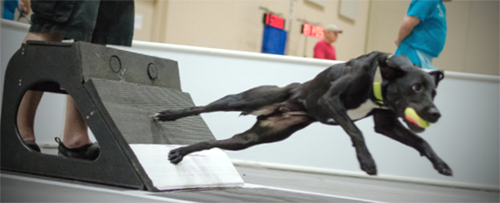
Flyball Courses
Flyball is a sport where four dogs relay a ball to each other as they jump over hurdles. Each dog parent races the dog through as fast as possible so that in catching the balls, the dog finds himself in a fun activity of jumping and running. Getting their mouth on a ball is similar to getting the mouth on prey.
Lure Courses
Lure courses help dogs go for "the kill." In a fenced in area a plastic bag is attached to a machine and the dog is let off leash to track the bag as it is pulled along a long line, zigzagging like prey trying to escape.
Earth Dog Courses
Earth dog courses are for hounds and small terriers. The course can be a 10-foot tunnel or a long tunnel with turns and twists. An odor is placed along the course leading the dog to a hole to a mock den in the ground that has whatever is being smelled. Dog's do barking and digging to get to the smell.
Agility courses might also be a good option for a dog exhibiting predatory behaviors.
Herding Dog Behavior
Herding behavior, such as what is seen in Corgi's, can look like aggression behavior. If this is the problem, then consider a herding class. The class will fulfill the dog's need to herd and might provide some relief from the behavior when away from class.
Dog Aggression Medications - Indications
There are three indications for the use of medication when treating dog aggression:
- Violence or high impulsivity
- Signs of anxiety related to the aggressiveness
- Worsening problem or one that has lasted a long time after trying other methods of behavior modification
Dog Aggression Medications
Frequently used medications or drugs are inhibitors of serotonin reuptake (SSRI). The medication is called fluoxetine at a dose of 1-2 mg/kg every 24 hours for a minimum period of 2 to 3 months. Medication doesn't solve the problem, but will reduce any intensity of the aggressive dog behavior.
Surgery for Dog Aggressive Behavior
Males
Neutering males is a first step in treating aggression. The age when neutered does not influence the effectiveness of the surgery, so it is never too late.
Females
Females are sterilized if the aggression has not appeared before the first heat and if when the aggression appears is clearly associated with the entry into estrus, pseudopreganancy or pregnancy, and the aggression reduces when these conditions are no longer present.
Effectiveness Research Data
A recent study (2022) collected data from 963 dog owners with aggressive dogs. Most owners that sought the help of a board-certified behaviorist found it to be helpful in reducing aggressive behaviors.
Those that used equipment such as muzzles, anti-bark collars, saw a lower probability of successful treatment. In cases of fear aggression toward other dogs, modification training such as response blocking also decreased the probability of success.
The techniques that did more frequently work include:
- Better communication between the pet parent and the dog
- Habituation
- Relaxation protocols
- Shorter, but frequent training sessions
Owners report that medications such as trazodone and fluoxetine were not as helpful, although this was attributed to owners not getting help early enough when the aggressive behaviors first started to appear.
The hardest type of aggression to treat was anxiety and fear when they occur together. Changing how a dog is managed also when treating aggression between dogs that are familiar with each other was also a negative. It is suspected that use of "time-out" techniques disrupt the hierarchy that exists between dogs that live together.
Dogs that were treated for predatory issues such as preventing access to animals being chased is effective and important..
Conclusion
Some Dogs have genetic propensities for certain behaviors that make it hard for them to adjust to a crowded human world without a little help. Take the time to teach the right reaction or behavior with positive reinforcement. We do not condone the use of shock collars or punishment, but instead encourage owners to find positive ways to teach their dog the most rewarding reaction to a situation. If your dog bites it obviously can be dangerous and must be addressed appropriately.
FAQ
Can an aggressive dog be cured?
In many, but not all cases aggressive behavior can be cured or reduced with behavior modification training. Understanding the trigger for the aggression could help address common causes such as territorial, protective, possessive, fear, defensive, social, frustration, redirected, predatory and other forms of aggressive behavior. The frequency and incidence of some aggression types can be reduced or eliminated. There are no guarantees and owners should proceed with caution as dogs after being trained can revert back to behaviors.
Why is my dog aggressive all of a sudden?
Some medical conditions can cause sudden aggression. Pain is the most common cause, followed by some sort of brain injury, fear of danger or possessiveness.
What should you do if your dog is aggressive?
Visit a veterinarian to rule out any sudden medical causes. Once medical causes are ruled out, work with a professional behavior expert who can teach you behavior modification techniques. The professional will work out an individualized treatment plan and can help you monitor your dog's progress.
Why do dogs become dog aggressive?
Dog on dog aggression can be due to poor communication possessive behavior over a family member, or territorial issues. Prevention starts by working with a behavior professional who can put together a training plan. These types of problems can escalate if not addressed. The goal is to always maintain control of your dog.
Ask Our Vet A Question, We'll Answer It For Free
Have A Dog Behavior Question or Story?
Do you have a question for our veterinarian about Dog behavior? If yes, we will answer it for free.
We will do our best to get back to you quickly (depends on how many questions we receive each day). If you do require an immediate response we suggest using this online dog veterinary service that is available now.
References for Dog Aggression Behavior:
- Update on Behavioral Genetics by Karen Overall
- A Behavioral View on Dog Aggression, Barbara Nibling
- American Temperament Test Society
- ASPCA
- Owner-Directed Aggression in Dogs' J. Fat, M. Amat, X. Manteca; Unitat de Fisiologia Animal, Facultat de Veterinaria
- Clinician's Brief; Dinwoodie IR, Zottola V, Dodman NH. An investigation into the effectiveness of various professionals and behavior modification programs, with or without medication, for the treatment of canine aggression. J Vet Behav. 2021;43:46-53.


