What You Need to Know About Dog Skin Pimples:
Dog skin pimples (also called canine acne) have multiple possible causes including parasites (fleas, mites), infection, fungus, allergy and skin tumors. A dog’s breed and age can also indicate the possible canine skin condition (see next page for a list of skin conditions by breed). Pimples can appear anywhere on a dog’s body, but are more likely on dog’s skin of muzzle and around lips. Identifying and treating dog's acne early is essential to prevent further complications such as infection or more severe skin conditions.
Several possible causes need to be considered by determining a diagnosis. More common causes are:
- Hormonal imbalance: This can occur in puppies as they grow and their bodies change.
- Poor hygiene: Dogs that aren’t regularly cleaned can develop skin issues like pimples.
- Trauma: This could be from a minor injury, excessive scratching, or rubbing the face on the ground.
- Allergies: Some dogs may react to certain foods, environmental factors, or materials with acne.
- Blocked hair follicles: This can occur when the dog’s hair follicles get blocked with dirt, oil, or dead skin cells.
To prevent dog acne, it's important to maintain regular cleaning routines, especially for dogs prone to skin issues. Using special wipes to clean the dog's face and folds, and switching to stainless steel or ceramic food and water bowls can help minimize the risk. Consulting with a veterinarian for the best prevention strategies tailored to your dog's specific needs is also recommended.
When a dog suffers from itch, scratching can introduce bacteria into the skin, resulting in pustules and puss-filled papules referred to as pyoderma.
Treatment for dog skin pimples will depend on the severity and the cause. Here are some general treatment approaches:
- Regular Cleaning: If the acne is caused by poor hygiene, regular cleaning with a mild soap can help. Avoid scrubbing as this can irritate the skin further.
- Topical Treatments: Medicated ointments, creams, or gels containing benzoyl peroxide or chlorhexidine can be effective in treating acne. These should be used under the guidance of a vet. Medicated shampoos can be used for full coat, but herbal shampoos should be preferred for preventive measures.
- Oral Medications: If the acne is severe or doesn’t respond to topical treatments, a vet may prescribe oral antibiotics or corticosteroids. In some cases, anti-histamines are also prescribed if allergy is diagnosed.
- Change in Diet or Environment: Similarly, if the acne is caused by allergies, identifying and removing the allergen is recommended. This may require a change in diet, bedding, or a move to a different environment.
- Prevent Trauma: If the dog is rubbing its face on the ground or scratching excessively, measures should be taken to stop this behavior. This may require behavioral training or the use of a cone.
It’s crucial to remember that while a pimple like bump on a dog might seem like a simple issue, it could be a symptom of a larger underlying problem, such as an immune disorder or infection. It is always recommended to consult with a veterinarian if you notice your dog has pimples anywhere on the body. Never try to pop or squeeze the pimples, as this can lead to further inflammation and potential infection.
We suggest comparing the pictures and descriptions found on this and the following pages to narrow down the possible cause of any dog skin condition.
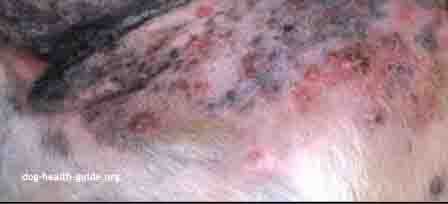
Overview
Do dogs get pimples? The answer is Yes! There are many possible reasons for dog skin pimples. Each cause is categorized by the size of the skin bump. Causes of pimples on dog skin papules (elevated skin lesion that does not contain pus) and pustules (does contain pus) under 1 cm ( or 0.39 inches) and causes over 1 cm are described below.
Causes of Dog Skin Bumps and Pimples
(Under 1 cm - .39 inches)
Allergy
The three main types of allergy that affect dog skin are flea allergy, atopic dermatitis (allergy to environmental allergens, pollen, mold, dust, mites) and allergies to dog food. Dog pimples can be a side effect of allergy as well. A veterinarian will also differentiate symptoms from mange, secondary pyoderma (pus filled skin pimples) and yeast infections (ringworm). It is also possible for dogs to suffer from more than one type of allergy.
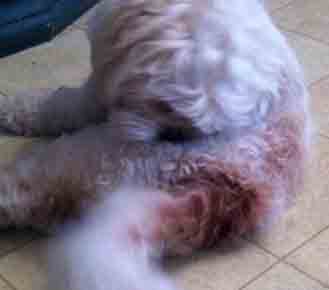
Source: Washington State University
- Dog Food Allergy - Skin reaction to one of the 40 ingredients in the typical dog food can cause dog skin pimples. Symptoms can start even if a dog has been using the same food or treat for one or more years. The most common allergens in dog food can be possibly proteins, particularly those from beef, dairy, eggs, chicken, wheat gluten or soy.
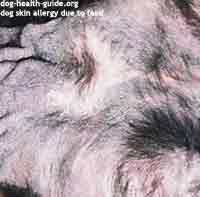
(called cutaneous adverse food reaction).
Source: Washington State University
- Canine Atopic Dermatitis (Canine Atopy) - CAD - A seasonal response to allergens in the environment such as pollen or mold. This response is usually because of genetic disorders in certain dog breeds or families which are predisposed to the condition and it is a life-long condition.
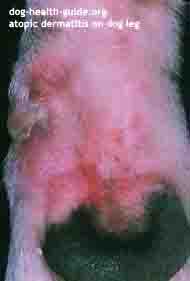
Source: Dr. Dandace Soursa, DABVP, DACVD, Sr. Veterinary Specialist, Pfizer
Dog Skin Infection (Pyoderma)
Dog skin infection occurs when bacteria or fungus is able to colonize or grow on the skin. This is often a secondary condition. For example, itch associated with allergy can result in scratching the skin. These scratches can lead to wounds, which make it easier for a bacterial infection to take hold. The bacterial infection can be an inflammation over skin or can affect follicles or base of hair, thus termed folliculitis.
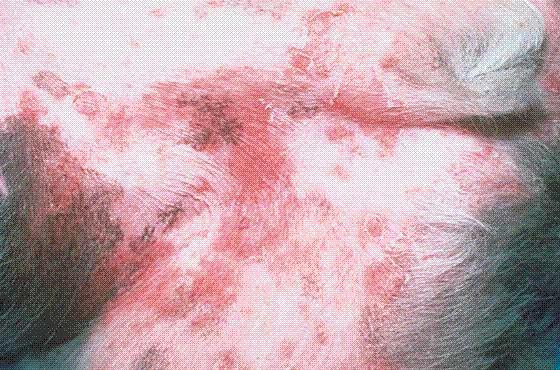
- Pyoderma (skin pustules)
Caused by a bacterial skin infection. Primarily seen in short-coated dog breeds that have skin folds and German shepherds.
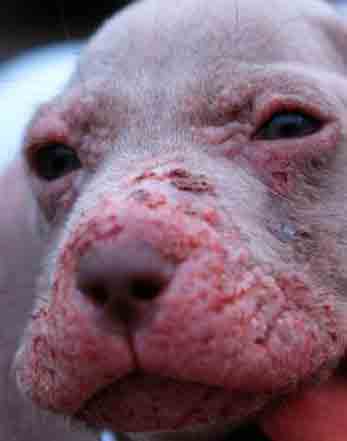
Source: Washington State University
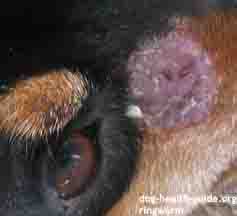
Source: Washington State University
Canine Mast Cell Tumor
Mast cells are present on the skin's surface and throughout the skin. Allergic reaction is one type of problem that can occur with these cells. Another is when they begin to grow abnormally, resulting in benign (not cancer) or cancerous tumors (also called neoplasms).
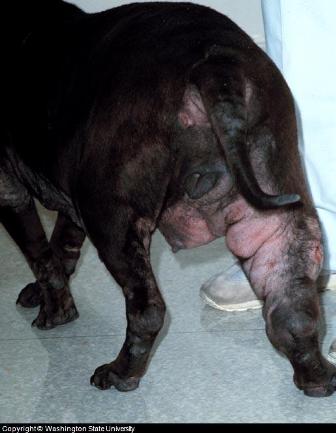
Source: Washington State University
Other Causes
- Parasites (demodicosis): an increase in mites that are burrowed into the skin and dog hair follicles. It occurs when face mites get out of control while multiplying.
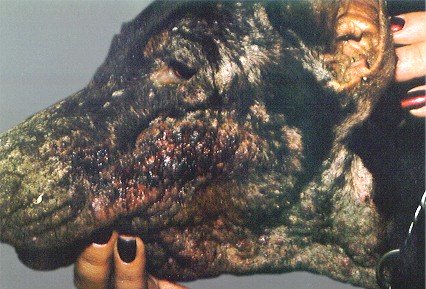
Source: Naturasil
- Skin inflammation (Rhabditic dermatitis is caused by contact with decaying organic matter such as straw or hay)
- Exposure to sunlight (Actinic dermatitis seen in short haired dogs)
- Acne in Dogs
- Sebaceious adenitis (lymph node inflammation)
- Genetics (see chart for breeds prone to skin disease)
Causes of Dog Skin Bumps and Pimples
(Over 1 cm in size)
- Amyloidosis: It is a rare disease where abnormal deposits of protein collect on the skin and in organs.
- Calcium deposits: It's also called Calcinosis Cutis, where calcium salts accumulates on skin and subcutaneous layers of skin. The condition is characterized with skin lesions and rough surface which is itchy.
- Reaction to a foreign body such as concrete dust or fiber glass that gets under the skin
- Granuloma: These are skin nodules, which are formed due to excessive licking of injured parts on skin. Most granuloma occur on parts of body which are easily accessible to dog for licking. Forelegs are most common sites in such cases.
- Malignant Histiocytosis: Histiocytosis are skin tumors and can be benign and malignant in nature. The benign histiocytosis may appear and disappear at their own and doesn't cause any external or internal damage. However, malignant histiocytosis (also called systematic reactive histiocytosis) are the tumors that can spread on skin and progress to vital organs and bone marrow. Most of the times, malignant histiocytosis is unresponsive to treatment.
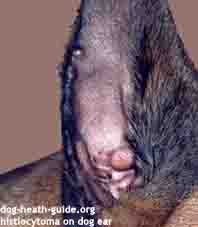
that are more common in dogs under 3 years of age.
Source: UC Davis/Peter Moore
- Sterile nodular panniculitis: inflammation of the skin membrane, which is usually resulted after a disruption in blood flow through fats that underlies the skin.
- Xanthomas: skin lesions that are the result of fat accumulation in skin immune cells. The condition is commonly reported in dogs suffering from diabetes mellitus or the ones fed excessively with diets rich in high-cholesterol.
Diagnostic Approach
A veterinarian starts an examination by looking for the most common cause of dog skin pimples, which is dog flea allergy. Don't underestimate this as a cause. Fleas are notorious as hiding and can even infect indoor dogs exposed to fleas brought into the house by another pet or even a person.
Once fleas are ruled out, the vet will take a skin scraping. The scraping will show if problems such as mange, bacterial skin infection , yeast infection or a fungal infection are the underlying cause.
Other causes such as ringworm require a 2 to 3 week test, so in the interim a Vet might recommend a parasiticide such as Revolution. This would address problems caused by mites. Tests in general are low cost, so are worth performing.
If all tests come back negative then additional testing in needed
including a biopsy of one of the dog skin pimples. It also makes sense
to rule out food allergy by switching to a hypoallergenic diet.
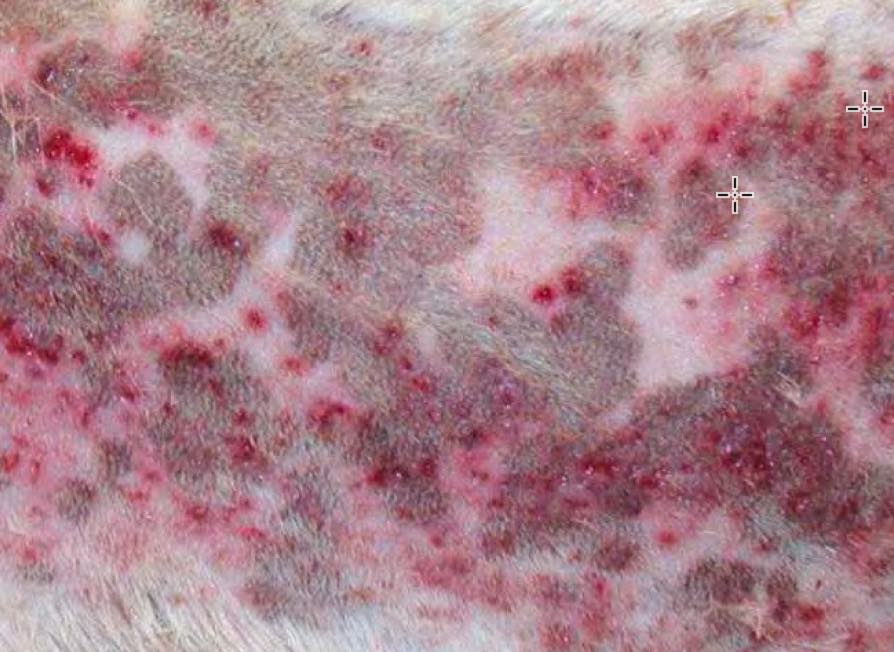 Dog Pimples on Back Caused by Pyoderma (Bacterial Infection). Pyoderma is Referrred to as Superficial, Surface, or Deep Pyoderma.
Treatment
Treatment of any dog skin disorders involves addressing symptoms while removing the underlying cause. Most cases are treated as an outpatient. Infections are treated with oral antibiotics for 3 to 4 weeks.
In the case of puppy skin pimples (see third page), conditions can be caused by puppy pyoderma (mild skin bacterial infection), puppy warts (virus), dog acne, demodex mites and puppy strangles.
| Treatment | Description |
|---|---|
| Regular Cleaning | If the acne is caused by poor hygiene, regular cleaning with a mild soap can help. Avoid scrubbing as this can irritate the skin further. |
| Topical Treatments | Medicated shampoos, creams, or gels containing benzoyl peroxide or chlorhexidine can be effective in treating acne. These should be used under the guidance of a vet. |
| Oral Medications | If the acne is severe or doesn't respond to topical treatments, a vet may prescribe oral antibiotics or corticosteroids. |
| Change in Diet or Environment | If the acne is caused by allergies, identifying and removing the allergen can help. This may require a change in diet, bedding, or a move to a different environment. |
| Prevent Trauma | If the dog is rubbing its face on the ground or scratching excessively, measures should be taken to stop this behavior. This may require behavioral training or the use of a cone. |
Natural Remedies for Problem Dog Skin
If your dog continually has problem skin such as dog skin pimples, you might want to experiment with a natural remedy designed to promote healthy skin. The following ingredients have a history of helping the skin:
- Equisetum arvense: Has high silica content which essential in the maintenance of healthy and strong skin, bones, claws.
- Taraxacum officinalis (Dandelion): source of vitamins and minerals, including Vitamin A, D, C, various B Vitamins, iron, lecithin, silicon, potassium, magnesium, zinc and manganese.
- Arthrospira platenis (Spirulina): contains protein, vitamins (including B12 and folic acid) and carotenoids.
- Fucus vesiculosis: is a sea vegetable that is a concentrated source of minerals. Regular use will also promote skin and coat condition.
- Kalium sulphate (Kali. Sulph.): is a biochemic tissue salt that keeps cell membranes in peak health. Kali. sulph also helps maintain balance in the skin and underlying tissue.
A good product to research is PetAlive
Skin and Coat Tonic, which was made specifically for this purpose.
Discuss this and other options with your veterinarian.
Ask Our Vet A Question or Share Your Story
Have A Question about Your Dog's Skin Condition? Our Team Will Answer It for Free!
Do you have a question or comment? Share it!
Our editors will pick 1 question to answer each week. Please include your dog's age, breed, medical history, medications and if possible, a picture of the condition.
We will do our best to get back to you quickly (it depends on how many questions we receive each day). If you do require an immediate response we suggest using this online dog veterinary service that is available now.
Other Reader Dog Skin Related Questions and Vet Suggestions
Click below to see contributions from other visitors to this page...
Treating Dog Pimples on Schnauzer 
My 15 mon. old, min. schnauzer has had dog pimples for about 2 months. They appear to be dry and located on her back and head. I thought perhaps they were …
Unidentified Puppy Acne 12 weeks Not rated yet
Reader Question: Causes of Pimples on a Pups Skin
Yoda is 12 weeks old and has been a healthy pup. But lately I've noticed these little white "pimple …
Puppy Strangles Not rated yet
Hello I have a 9 month old teacup chihuahua and I have taken him into vet three times in the past month. My puppy who is 3 pounds stopped wanting to play …
Bumps On My 6 Year Old Yorkie Not rated yet
My dog has a few of these little bumps on her. She 6y old and they look like pimples or skin tag. Do I need to worry?
Editor Suggestion Regarding …
Causes of Skin Bumps on Pitt Bull Not rated yet
I’ve got a pit bull Boston terrier mix. He is 9 months old. I’ve noticed the past week maybe week and a half that he has got bumps on his sides and back. …
Scaly and Black Dog Skin Bumps Not rated yet
Our dog is a 6yr old cocker spanial and just in the last 6 months he started to get these bumps all over his body. At first they are kind of sticky and …
Many Chronic Canine Skin & Ear Problems Require a Simple Switch in Food Not rated yet
I just wanted to contribute that I have found in approximately 9 out of 10 cases where dogs are experiencing chronic hot spots, minor consistent ear irritation/itching/te …
Boxer Skin Problems Not rated yet
My female boxer mix (1 year on 12/8/10) has had vaginitis since 3 months of age. They said it would go away after we got her spayed, but it has not. It's …
References For Dog Skin Pimples
The Dog with Papules, Pustules and Crusts
The Merck Veterinary Manual (11th Edition)
Mueller, R.S.
Department of Clinical Sciences
College of Veterinary Medicine and Biomedical Sciences
Colorado State University, Fort Collins, CO, USA


