Table of Contents
Overview & Symptoms | Diagnosis | Hotspot vs. Ringworm | Symptoms | Treatment | Q&A
What You Need To Know:
Ringworm in dogs is an infection caused by a kind of fungus is spread easily in environment and by other infected animals. People too can easily get infected with these fungi. In young and weakened dogs, the infection is usually persistent and widespread. The fungus causes one or more skin lesions that can appear in many different ways, but commonly results in patches of hair loss along with crusted skin. Symptoms are often found on the feet, face, underbelly and if on the feet, in the nail beds, causing dry and cracked nails. Puppy ringworm can cover the entire face and all over the feet. It is also possible for a dog to be carrying or spread ringworm without showing any symptoms.
Ringworm caused by dermatophytosis is frequently misdiagnosed as are actual cases.(1) Other causes of similar symptoms are pyoderma and folliculitis.
The condition is contagious and easily spread between pets and humans. Many cases in humans are tracked back to their dogs, which is why a diagnosis of human ringworm comes with a suggestion to have your dog tested as well. The ringworm diagnosis is made in a vet's office with a special lamp and a fungal culture (takes several weeks to read results).
There are many treatment
options including prescription oral medications, shampoos and topical skin treatments. See multiple
ringworm in dogs pictures below. In adult dogs, the infection should go
away on its own in 1 to 3 months. However, it can make dogs
uncomfortable and itchy with bare skin patches, while the ringworm may turn severe in young or weakened dogs. Also, the treatment is usually recommended not only for a speedy recovery, but also to slow down or prevent the spread of fungi in environment. Besides, humans too can be at risk. Because of this, it is
best to at least initiate the treatment with either a home remedy such as an over
the counter medicated spray, shampoo or for advanced cases a
prescription medication such as an ointment. Ointments are often prescribed in addition to a shampoo.
If using a medicated antifungal shampoo such as Davis Miconazole Pet Shampoo (miconazole) your dog will need to be bathed for 6 weeks. Bathing removes spores from the coat (preventing new lesions) and treats the ringworm lesions. Shampoos are usually used for full coat.
As a preventive measure, all household areas
where the dog lives will need to be vacuumed daily (throw out vacuum bag after cleaning area) and disinfected since ringworm spores can live in the environment for up to 1 year. A good veterinary disinfectant is F10. Also steam clean any carpets and furnishings. Clean any dog bedding as well.
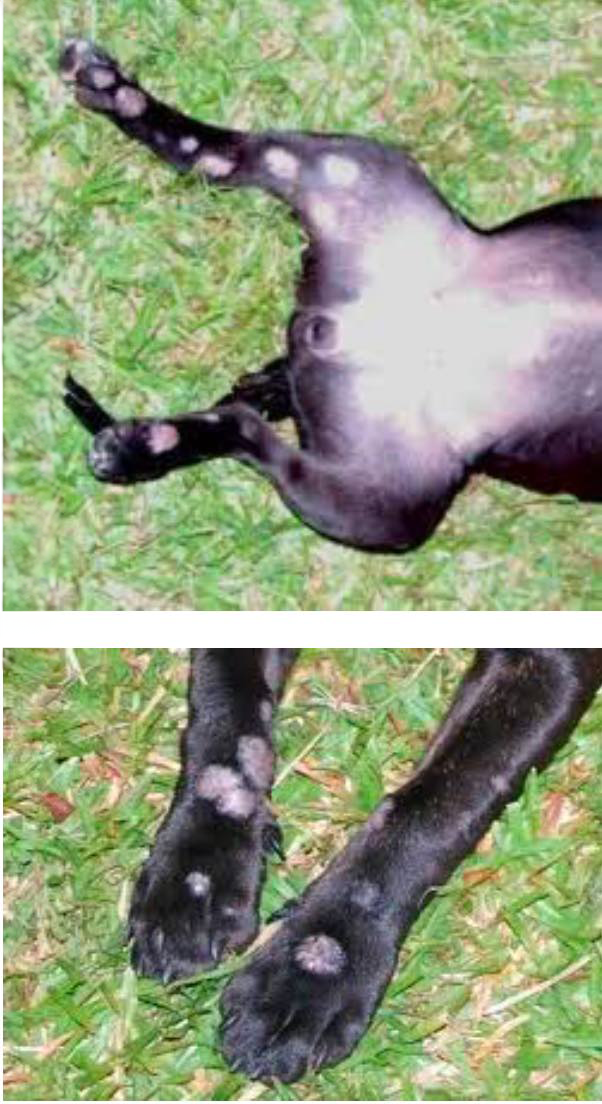 Ringworm on Dog Leg, Paw and Belly
How Do Dogs Get Ringworm?
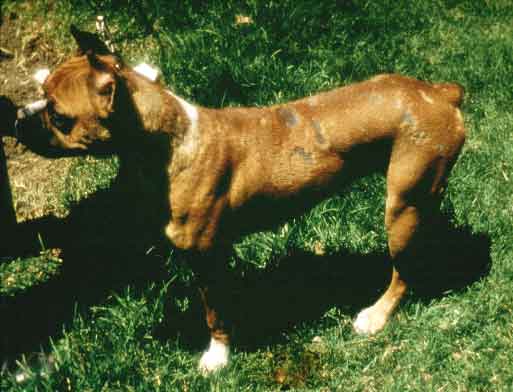 Picture of Ringworm on Dogs Belly
Dogs get ringworm when they are exposed to a fungus. Ringworm in dogs is not caused by worms. It's called 'ringworm' because it can cause a circular rash (like a ring) and is red and itchy. It can be spread when an infected dog, puppy cat, pet or human comes in contact with another dog or is exposed to an environment contaminated with spores. The fungus lives in hair follicles, causing the hair to break off. It is most common to see the disease on the head, ears, tail, underbelly and front paws in the nail beds.
The disease looks like a circle on the dog's skin with raised edges, but it can take on a wide variety of appearances. It looks like the hair has been removed in a circle or patch with a pale spot at the center. Common ringworm in dogs symptoms include crusty skin, scaling and some redness. Odd shapes usually mean that multiple lesions joined. It is easier to see lesions on younger dogs.
The disease usually occurs ten days after exposure.
When To See the Vet
See a veterinarian if the ringworm infection has spread all over the dog's body and an infection is suspected, with severe discomfort. Also see a veterinarian if the bald spots are large, red and showing signs of infection such as pus.
Ringworm on Dogs and Humans
Ringworm in dogs can be spread among dogs, cats, and humans. Children are more likely to get the disease than adults. Once someone gets the fungus, the spores can spread in bedding and blankets. If this is the case, you need to wash exposed garments in bleach and water.
Ringworm Symptoms in Dogs
The following are common ringworm symptoms in dogs:
- Skin scaling and crusting. Can be severe or minimal.
- Hair Loss in a circular patch with a red border (erythematous)
- Infected hair at the border of the bald skin patch are broken and thickened
- At the hair roots (follicles), pus filled bumps (pustules) may appear
Uncommon dog ringworm symptoms:
- Pain
- Itch
- Kerion - when the skin takes on a honeycomb appearance. Could indicate an innue system problem. Usually seen in one location, but in rare cases can be seen in many
- Superficial Pustular Dermatophytosis - seen on the face. The fungus attacks teh skin surface resulting in pus filled bumps (pustules), and skin plaques or crusts that become red and inflamed.
Areas where symptoms appear are usually skin that is exposed to the environment:
- Ringworm on dog's nose, muzzle, and face
- Forelegs
- If the cause is the fungus M. Gypseum or T. Mentagrophytes, there could be a symmetry to the condition when seen on the muzzle, face or ears
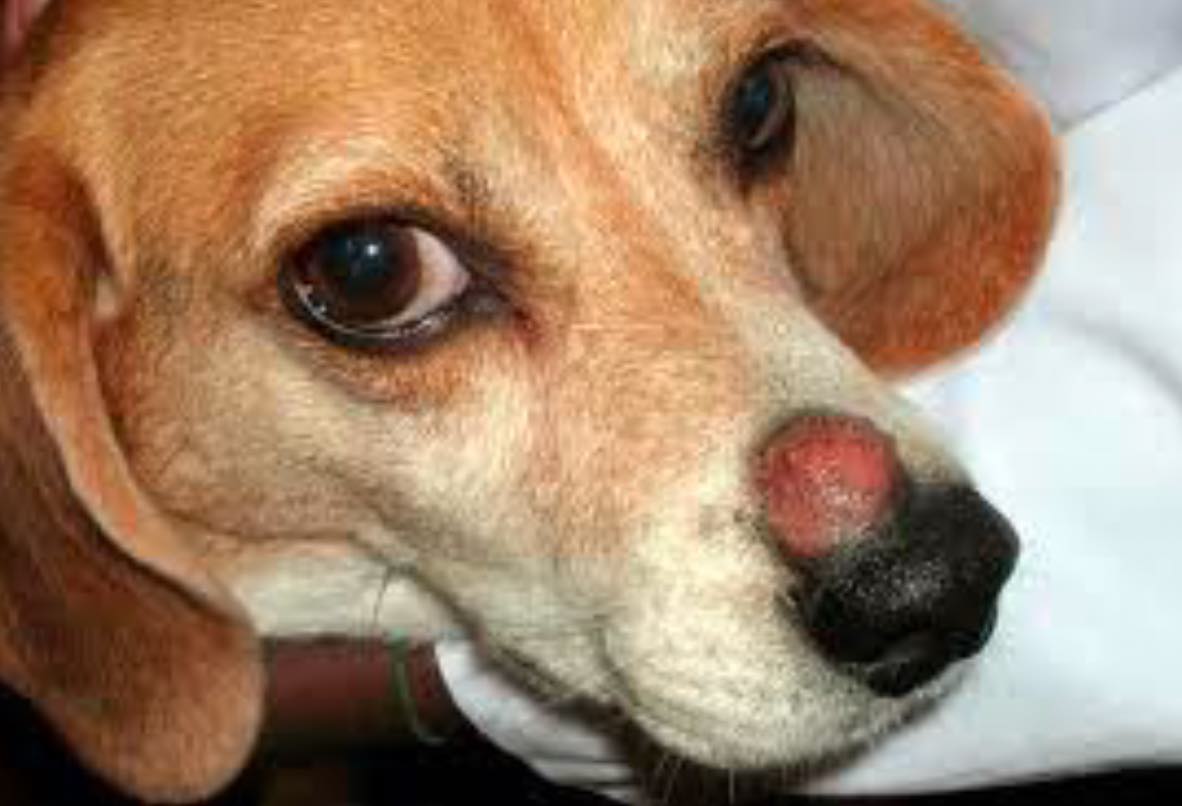 Ringworm on Dog Nose
Dog Hotspot vs. Ringworm
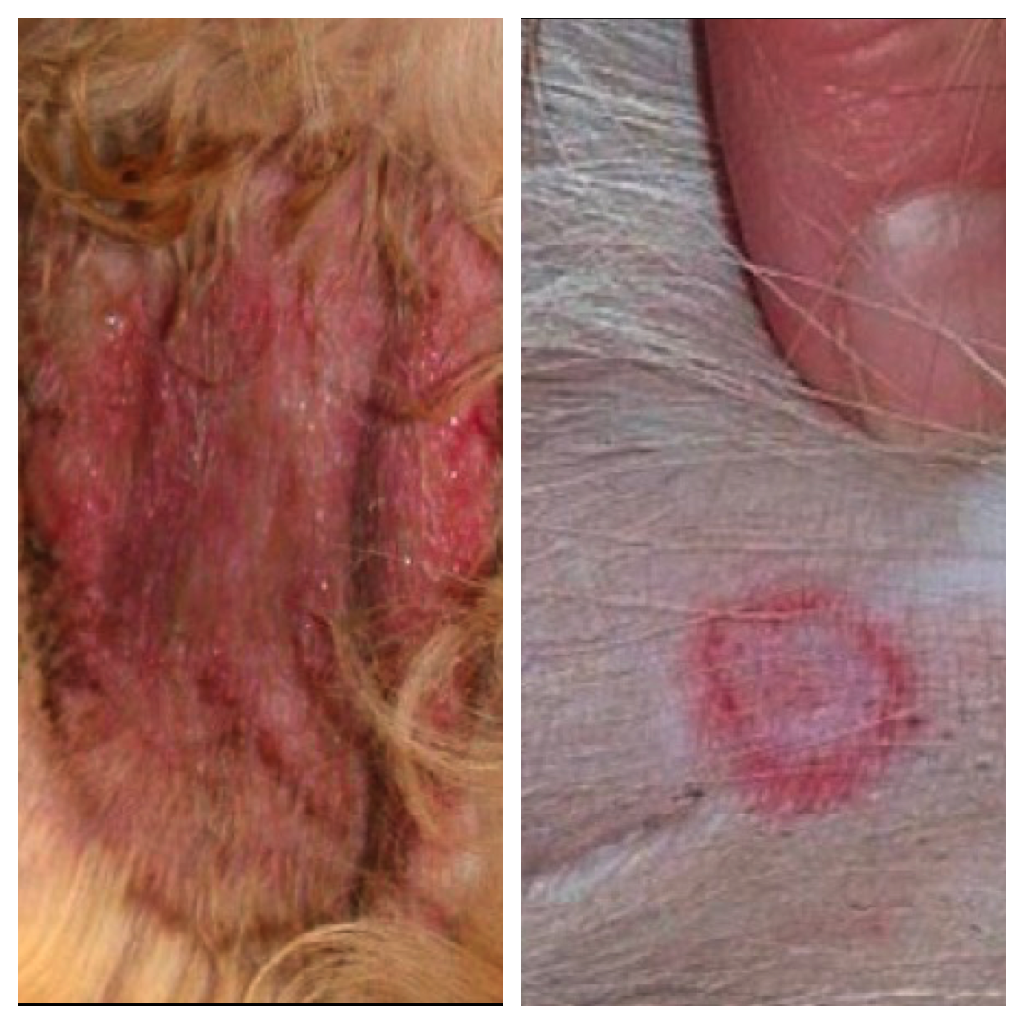 Dog Hotspot (left) vs. Ringworm (right)
Ringworm and hot spots are different in terms of the cause, appearance, and treatment.
Here's a brief comparison:
- Ringworm (Dermatophytosis):
- Cause: This is a fungal infection caused by dermatophytes. Contrary to its name, it is not a worm.
- Appearance: It often appears as a circular, hairless, red lesion, sometimes with a ring-like pattern (hence the name "ringworm"). The infected area might be itchy.
- Treatment: This typically involves antifungal medications which can be applied topically or given orally. In some cases, a medicated shampoo or dip might also be used. It is important to note that ringworm is zoonotic, which means it can be transmitted from animals to humans. Hence, good hygiene is crucial when handling a dog with ringworm.
2. Hot Spots (Acute Moist Dermatitis):
- Cause: Hot spots are localized areas of skin inflammation and infection. They can be caused by anything that irritates the skin and initiates an itch-scratch cycle, including allergies, insect bites (e.g; fleabites), poor grooming, etc. Hot spots start when the kin is irritated, causing the dog to scratch or lick the spot.
- Appearance: Hot spots are red, moist, hot and irritated lesions that can rapidly grow if left untreated. The dog may incessantly scratch, lick or bite the area, worsening the condition.
- Treatment: Treatment usually involves clipping and cleaning the area, along with the application of a topical treatment to soothe the skin and prevent infection. In severe cases, systemic antibiotics and anti-inflammatory drugs might be used.
Both conditions should be diagnosed and treated under the supervision of a veterinarian, who can recommend the best course of action based on the individual dog's condition and overall health.
Diagnosis of Ringworm on Dogs
Your Veterinarian can diagnose Ringworm by looking at the skin of your dog, looking at the skin under a special ultraviolet light (called a woods light), or by examining a sample of your dog’s hair using a special test (fungal assay test called at Trichogram). Taking a fungal culture is the most accurate testing method. Tests using dogs hair usually take 1 to 2 weeks.
Since not all types of ringworm can be detected under the woods light, additional tests are often needed. Once your dog is diagnosed, treatment should immediately begin. In chronic cases, it is important to identify the kind of dermatophyte causing ringworm to initiate proper treatment through prescription.
Differential Diagnosis
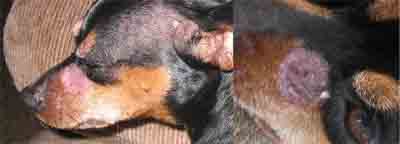
Dog ringworm is frequently mis-diagnosed or not diagnosed at all. Similar conditions that need to be ruled out before making a diagnosis are pyoderma and staphylococcal folliculitis.
Ringworm Treatment in Dogs
Ringworm treatment in dogs is based on the severity of the condition. It is a considered self-limiting meaning that most dogs will self-cure in 2 to 3 months.(1)
Since this can take months, treatment is used to speed up the process and to limit the opportunity for ringworm to spread to other pets or to humans. Dogs tend to respond quickly to treatment.
Treatment involves the following steps:
Follow these tips for mild conditions with more chronic conditions (your dog's hair looks like a golf course) requiring veterinary care.
- Medicated Dips, Bathing or Shampoo: Mild cases require the use of a topical such as a medicated shampoo which contains miconazole as the active ingredient. You will need to bath your dog weekly for about 6 weeks to remove spores from the entire coat (particularly if you have a long haired breed).
- Ointment: If your dog only has one lesion your veterinarian will likely prescribe an ointment (Griseofulvin) in addition to bathing.
- Shaving: Shaving your dog's hair around the bald
spots will also help to get rid of the
fungus by keeping it from spreading. Repeat trimming using an electric
trimmer (to avoid scissor cuts) every two weeks until the condition is
gone.
- Grooming: brush your dog 1x a day and frequently
clean the brush in a solution that is 1 part bleach and 32 parts water
(dip it several times and air dry before using).
- Keep the environment clean, that means regular vacuuming and washing the beddings etc. in bleach.
You may see more hair loss before it gets better. If you do not see improvement in 2 weeks, revisit your Veterinarian. If after treatment the Ringworm comes back, it means the original treatment was too short.
It also may be a good idea to quarantine your dog in one room until treatment is completed.
Tip: Put a blanket or sheet over any dog bedding. This helps to keep any contagious hairs off surfaces such as the dog bed, carpet or furniture. Wash the sheet every other day.
Prescription Treatment
Azole Systemic Antifungals
Medications in this class include Fluconazole, Itraconazole and Ketoconazole. These medications can be expensive but are available in generic forms. All are given by mouth 1x a day.
Griseofulvin
Griseofulvin for ringworm is taken orally with a fatty meal. Ask your veterinarian about side effects such as idiopathic bone marrow irreversible suppression and teratogenicity (this mean that THIS APPROACH SHOULD NOT BE USED DURING EARLY PREGNANCY IN YOUR DOG.)
We suggest avoiding if possible the use of prescription tablets such as Griseofulvin as these can have side effects. These tables are given to your dog every day for 30 days. There has to be fat in your dog's stomach for the pills to be absorbed. You can give your dog a canned dog food or a small amount of fat from meat to ensure that the treatment works.
If a prescription medication is recommended by your vet, Itraconazole is preferred because it has fewer side effects, but like all good things, it is more expensive than other treatments.
Terbinafine
Terbinafine was created to treat human nail infections. The medication is sued for nail bed fungal problems in dogs.
Prevention of Ringworm in Dogs
An infected dog can spread fungus spores throughout the house. These ringworm spores are a risk for reinfection and to humans that live in the home. Spores can survive for and up to 1 year!
To prevent reinfection, it is necessary to clean all exposed areas with a 10% bleach solution. Do the same to any fabrics that your dog came in contact with such as blankets or bedding.
Tips For Disinfecting Carpets
Carpets can be the cause of the reoccurrence of infection since they are harder to clean. Research on the topic shows that vacuuming alone or vacuuming plus one shampoo treatment is not enough. Carpet shampoo is only effective for removing fungal spores if applied twice. The first application brings infected hairs and spores to the surface, while the second treatment removes the spores from the surface. Pre-treatment with disinfectants is effective, but disinfectants frequently discolor carpets (make sure products are labeled for use against Trichophyton spp).
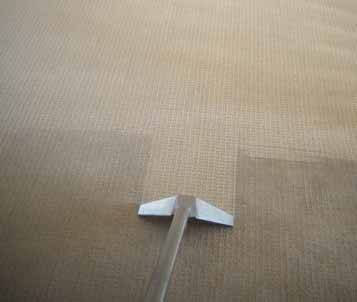
Instead we suggest cleaning any carpets using the commercial hot water extraction method (also known as steam cleaning.) This method is somewhat of a misnomer since it involves the use of soap. The steam cleaning process uses hot water and cleaning agents that are injected into the carpet under high pressure. The pressure loosens any infected dog hairs and dirt. A high-powered vacuum sucks up the hot water, dirt, fungal spores and hair. You will only need one treatment. To find a local steam cleaning professional, we suggest requesting a free quote from Home Advisor (or call 866-431-6989).
Brochures
Brochure on dog ringworm infection control
Available in a free Ebook (PDF download):
Guide to ringworm in dogs infection control.
Written by:
Ask a Question or Share Your Story
Have A Question or Story About Dog Ringworm or Other Canine Fungal Infections?
Do you have a Dog Ringworm or Canine Fungus related Question for our Editors or a Helpful Story to Share? Please include information such as age, sex, breed, medical history, skin and other symptoms, medications your dog is taking, recent changes in behavior, etc. A picture of the condition would also be helpful.
We will do our best to get back to you quickly (depends on how many questions we receive each day). If you do require an immediate response we suggest using this online dog veterinary service that is available now.
What Other Visitors Have Said
Click below to see contributions from other visitors to this page...
How To Treat a Spot on Dog Nose Not rated yet
I have a 1 yr old male great Dane that has a spot on his nose. It's been there for like a week and half. He doesn't have a history, he has been fixed. …
References
(1) Dermatophytosis: Still Under-diagnosed and Over-diagnosed; Dr. Peter J. Ihrke
animalaid.org.au - Animal Aid
e-News
IVIA - Ringworm Infection in Dogs and Cats
White-Weithers N, Medleau L.
Department of Small Animal Medicine, College of Veterinary Medicine,
University of Georgia, Athens 30602, USA.


