Table of Contents
Overview | Symptoms | Diagnosis | Treatment | Vet Questions
Summary:
"Canine kidney failure (renal failure) can develop immediately, or over months or years. It can occur suddenly, referred to as acute kidney failure, or over time, a condition referred to as chronic kidney failure (CKD). When a renal disease lasts for more than 3 months it is considered to be chronic. All breeds, sexes and ages can be affected.The kidneys remove waste and toxins from the blood. When the kidneys aren't working, these accumulate in the body, causing problems such as increased urination and thirst.
Causes of acute or sudden kidney failure include dehydration, poisoning
or a blockage and are reversible in some cases. The chronic form
of the disease has an unknown cause (although damage to the renal tubes
is suspected) and is not reversible, resulting in death in months or up
to four years. Dietary change is the only affordable treatment that has
been shown to slow down the progression of the chronic form of
the disease. Dialysis, or as a last resort, kidney transplantation can
save the patient, although the costs can be prohibitive for most owners
(see below)."
Renal Failure in Dogs Overview
Canine kidney disease is diagnosed when the kidneys are not removing toxins from the bloodstream as well as they should. If toxins build to dangerous levels it becomes a condition called azotemia. A case is chronic is it lasts for more than 3 years. Other terms for the disorder are renal insufficiency or renal failure. The percentage of dogs with the condition increases with age, with the highest incidence in dogs over 15 years of age.
It is very difficult to treat existing kidney damage once it is discovered.
There are four stages of canine kidney disease determined by tests conducted over several weeks after a patient is hydrated and is coming off of a fast. Dogs in stages 1 and 2 may not show any symptoms.
Stage 1: Toxins in the blood have not reached dangerous levels.
Stage 2: No symptoms, but there are toxins in the blood
Stage 3: When your dog is showing symptoms of kidney disease
Stage 4: Kidney damage is advancing and your dog is showing significant symptoms such as lethargic behavior.
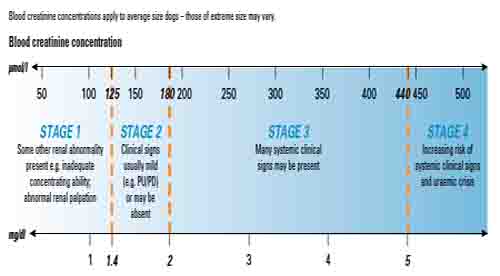 Staging System
for Chronic Kidney
Disease(2)
Staging System
for Chronic Kidney
Disease(2)There are two types of kidney failure (dog renal failure): the type that happens suddenly (sudden onset kidney failure) and the kind that happens gradually (called chronic kidney failure, called CKD).
Causes of Acute Dog Kidney Failure (Sudden Onset)
Canine kidney failure that happens suddenly is usually caused by one of the following:
- Dehydration
- Shock
- Congestive Heart failure
- Poisoning - licking small quantities of antifreeze from a puddle on the street
- Infection
- Heat Stroke
- Blood clots in the kidney
Causes of Chronic Dog Kidney Failure
Chronic Kidney failure can occur slowly over months or years without showing any symptoms. While the exact cause is not known, it is suspected that damage to the renal tubes is the underlying cause. Health problems in dogs that can lead to chronic dog kidney disease include:
- Canine Kidney Stones
- Kidney dysplasia (defect in the kidney that is not genetic)
- Inborn kidney defect
- Diseases that effect the Immune system
- Cancer
- Parasite Problem - giant kidney worm called Dioctophyme renale
- Birth defects
- Bacterial infections
- High blood pressure
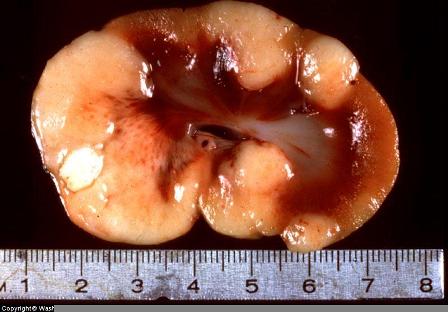
Washington State University
Breeds and the Incidence of Chronic Renal Disease or Failure in Dogs
Across all breeds the incidence of kidney failure is 9 cases per 1,000 dogs.
There are several breeds that have a higher incidence of canine kidney
failure due to genetics:
- Bull Terriers
- Cairn Terriers
- German Shepherds
- English Cocker Spaniels
- Samoyed
Abnormal kidney growth due to genetics (renal dysplasia) is seen in the
following breeds:
- Shih Tzu
- Lhasa apso
- Golden retriever
- Norwegian elkhound
- Chow chow
- Standard Poodle
- Soft-coated Wheaten terrier
- Alaskan malamute
- Miniature Schnauzer
- Dutch Kooiker
Dog Kidney Failure Symptoms
In most dogs, symptoms appear suddenly. The canine kidney failure symptoms associated with kidney disease are also common in other diseases. Several body systems are affected including the cardiovascular, endocrine, immune, gastrointestinal and neuromuscular systems.
Symptoms that occur with greater frequency/early signs:
- Urination due to the body's inability to concentrate urine
normally, indicates an approximate 75% reduction in renal function
- Water consumption increases to combat dehydration caused by
increased fluid loss via urination
Other symptoms that indicate more advanced forms of dog renal failure:
- nocturia (urination at night)
- digestive system problems
-- constipation
-- diarrhea
-- vomiting
-- nausea
-- anorexia (appetite loss)
- very bad breath
- weight Loss
- fatigue/lethargic behavior
- high blood pressure
- acute blindness (related to hypertension)
- seizures/coma (late stages of disease)
Diagnosis of Dog Renal Failure
Dog kidney disease is diagnosed through routine blood and urine tests. Results of the tests will indicate if a patient even has kidney disease and how far and how fast it is progressing (called a renal evaluation). The average age at diagnosis is 7 years old.
Tests measure if the urine is of the proper consistency, blood urea
nitrogen (BUN) levels and creatinine levels. Even kidneys that are
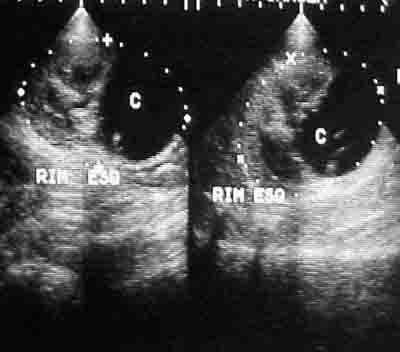
functioning as low as 25% of normal might not be a problem. X-rays and ultrasound tests will indicate the shape of the kidneys.
A veterinarian will look for many of the aforementioned symptoms,
reduced body temperature and changes to the shape of the kidneys
(enlarged, small). Signs of acute renal failure in particular are
enlarged kidneys and a short time span for symptoms.
Before reaching a specific diagnosis, diseases with similar symptoms need to be ruled out such as a urinary tract infection.
Treatment
Treatment options for canine kidney disease usually depends on the severity of the condition (stage that the disease is in) and the underlying cause. Patients that have toxins in the blood at critical levels will be treated to address fluid and electrolyte deficiency (called a uremic crisis).
Dogs in stage 3 or 4 kidney failure are monitored every 1 to 3 months. If only one of the two kidneys is diseased, just one kidney can be removed, a procedure called a nefrectomy.
Cost of Treatment
The cost of canine kidney disease treatment can vary based on the progression of the problem. This can range from several hundred dollars a month for supportive care to thousands of dollars for dialysis or transplantation.
Prescription Medications
Medications such as antihypertensive agents with specific intrarenal
effects such as ACE inhibitors have had a positive impact on renal
diseases.
- Famotidine: to address nausea and lack of appetite
- Aluminum Carbonite: to correct hyperphosphatemia (excessive phosphates in the blood)
- Amlopidine: for hypertension (high blood pressure)
- ACE inhibitor (benazepril/enalapril): to address proteinuria (excess proteins in the urine)
Acute Kidney Disease Treatment
For acute forms of the diseases, the first step is to eliminate anything that may be causing the kidney disease such as:
- Medications - that may be damaging the kidneys (eg; the
antibiotic gentamicin).
- Stress - the introduction of new pets and changes in your dogs environment, also extreme weather such as heat or cold
The kidney's could be helped by:
- Drinking more water; make water available throughout the day
- Antacids (tagamet or zantac for canine)
- Natural Medicine: there are several herbal ingredients that can address some of the issues associated with kidney health. Herbs such as burdock (for digestion and blood sugar regulation), dandelion (helps with fluid balance and is a good vitamin source) and cleavers (lymphatic cleanser). Pet Alive Kidney Support is made specifically for this purpose and is worth further research and discussion with your veterinarian.
If the kidney disease is reversible then your veterinarian may recommend an expensive treatment option such as dialysis. This is used in cases such as antifreeze poisoning. It is possible for dogs to receive a kidney transplant.
Chronic Kidney Disease Treatment
The veterinarian will address any symptoms with the condition possibly stabilizing for weeks or months at a time. The veterinarian cannot stop the deterioration of the kidneys, however, the condition of the patient can be improved with care.
Treatment for canine kidney disease can include:
- fluid therapy for dehydration
- a switch to a special kidney diet (see below)
Dog Dialysis in Cases for Chronic and Acute Kidney Disease
Hemodialysis for canine kidney failure is available to treat acute and chronic cases of the disease. In this procedure a catheter is attached to the dog while the dialysis machine removes toxins from the blood (dogs need to tolerate having a catheter attached). The cost of care is estimated to be between $20,000 to $25,000 for the initial 2 to 3 weeks of treatment. Owners also need to live near the dialysis center.
For chronic kidney disease a dog would need lifetime dialysis, resulting in even higher costs. For acute kidney failure, dialysis can make more sense since the treatment is short term.
Dog Kidney Transplants
Several veterinary hospitals can perform kidney transplants in dogs. Unfortunately survival rates in 50% of patients are 2 months or less.(1) Transplants can cost as much as $15,000, preceded by dialysis and other forms of supportive care (before and after) that can bring the total to $100,000 (U.S.).
Post surgery medications such as rejection prevention medications are required for the life of the dog and will cost more in larger breeds.
Dog Kidney Disease Diet
Recent research studies show that dietary change to a commercial food made for kidney or renal problems can both improve your dog's quality of life and extend the number of years your dog can live with the disease. The diets work by decreasing phosphorus levels and by supplementing the diet with omega 3 fatty acids. The results is longer survival times, although researchers have not identified the specific part of the diet that is leading to the improvements in lifespan. See our guide on diets for Canine Kidney Disease (CDK).
More Information on Kidney Failure and Dogs
Ask Our Vet A Question, We'll Answer It For Free
Have a Dog Kidney Disease Question For Our Editors or A Story to Tell About This Topic?
Do you have a dog kidney related question for our editors or a helpful story to share? Please include information such as age, sex, breed, medical history, symptoms, diet, changes in behavior and medications.
We will do our best to get back to you quickly (depends on how many questions we receive each day). If you do require an immediate response we suggest using this online dog veterinary service that is available now.
What Other Visitors Have Said and Responses from our Vet
Click below to see contributions from other visitors to this page...
Treating a Dog With CKD (Chronic Kidney Disease) Not rated yet
My jack Russel has been diagnosed with CDK, showed protein in urine did creatinine Ratio showed 5.88 which is bad, couldn't afford Renal Ultrasound, Vet …
References for Canine Kidney Failure
(1) Dog Watch, Cornell University School of Veterinary Medicine
(3) Washington State University School of Veterinary Medicine
(4) Chronic Kidney Disease (CKD) in Dogs & Cats -
Staging and Management Strategies
Dennis J. Chew, DVM Diplomate ACVIM (Internal Medicine)
The Ohio State University College of Veterinary Medicine
Columbus, Ohio, USA
(5) Acute Renal Failure: Prevention, Diagnosis and
Management
Scott A. Brown, VMD, PhD, DACVIM
University of Georgia
Case-Control
Study of Risk Factors Associated with Feline and Canine Chronic Kidney
Disease
Bartless, Paul C; Van Buren, James W; Bartlett, Andrew D; Zhou, Chun
Merck/Merial Manual for Pet Health
Medical Management of Chronic Kidney Disease
Scott Brown, VMD, PhD, DACVIM and Cathy Brown, VDN, PhD, DACVP
Department of Small Animal Medicine and Surgery
College of Veterinary Medicine, University of Georgia


