Table of Contents
Overview | Podcast | Biology
| Risk Factors & Types
| Pictures
| Causes | Treatment Options Along with Pros and Cons | Sample Exercise Program | Medicines | Brochures | Vet Q&A
Related Pages: Canine Arthritis Symptoms and Diagnosis
| Treatment and Pain Relief
Summary:
Dog arthritis is diagnosed for 1 in 5 pets over the age of 1. The most common type is osteoarthritis, which is seen in most senior dogs. The condition is also referred to as osteoarthrosis (OA), degenerative arthritis, or degenerative joint disease (DJD). Other types include immune-mediated (canine rheumatoid arthritis, plasmacytic-lymphocytic synovitis and Idiopathic polyarthritis), and infectious arthritis. OA is a slowly progressive joint degeneration characterized by cartilage loss and exposure of subchondral bone.This eventually results in a dog's painful joint.
Causes of osteoarthritis are either unknown (idiopathic) or are triggered by secondary causes such as bone abnormalities, hip dysplasia or other inherited problems. Immune-related arthritis is thought to start with the tissue around the affected joints. Infectious arthritis is the result of a bacterial infection. The condition usually results over time from normal loading on an abnormal joint or abnormal loading on a normal joint. Regardless of the cause, changes in joint function lead to changes that result in the dysfunction of cartilage and bone structures.
This progressive disease results in the breaking down of joint cartilage. The result is bones that can rub together, joint pain, and increasing levels of joint damage. Specific problems include thinning cartilage, bony outgrowths around the joint, and fluid buildup. Byproducts are symptoms such as swelling, joint scarring, restricted motion, and varying degrees of lameness and stiffness.
Dogs at higher risk include a senior dog, working dogs, overweight dogs, extremely active dogs, or those that have one of the disorders that affect cartilage or collagen in the joints. When seen in young dogs, it is usually due to some type of congenital problem such as an elbow or hip dysplasia.
Problems in puppy's are seen when a dog fails to maintain a health weight.
Diagnosis is via observation such as a reduction in a dog's mobility, changes in a dog's behavior, and X-Ray of the affected joint.
The treatment goal is to improve the quality of life by slowing down the progression of the disease with medications, surgery, and supplements while addressing any symptoms. The recommended treatment may differ depending on the cause. Some dogs, such as those with hip dysplasia can be treated with a variety of non-surgical options prior to considering surgery such as hip replacement. Other dogs with cranial cruciate disease will do better when surgery is used to stabilize an unstable joint. Usually osteoarthritis is managed with targeted physiotherapy, exercise modification, joint supplementation, weight control and controlling pain through pain management. Non-surgical approaches use cold, heat, light, electricity and sound waves. Most dogs will do best using a combination of approaches. "
Video on Treating Arthritis in Dogs
Overview
Like humans, arthritis can be caused by an injury or disease. Unlike humans where an injury doesn’t immediately manifest itself as arthritis, in dogs symptoms can be seen within several weeks (called secondary arthritis). Most arthritis cases are due to an inherited cause and are triggered by problems such as hip dysplasia, joint injury, or ruptured cruciate ligaments. Other causes are infection or some type of immune system disorder that affects the joints. Arthritis can be found in 1 out of 5 dogs, yet only 50% of those who have arthritis receive treatment.
Dog Arthritis Podcast
Here's a helpful podcast on arthritis in pets from the American Veterinary Medical Association. The podcast features Dr. Craig Prior from the Murphy Road Animal Hospital. The discussion reviews the causes of arthritis and approaches for treating arthritis in dogs.
AVMA Podcast
Dog Hip Replacement (Left) and Hip With Osteoarthritis (Right)
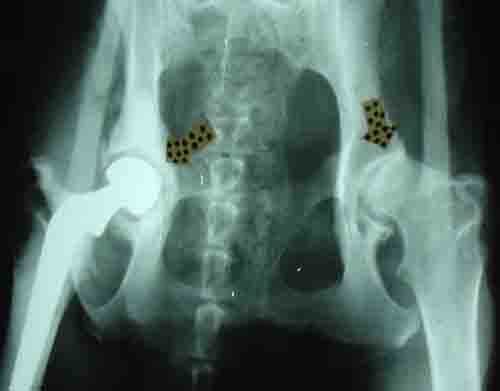
The left hip has hip dysplasia with osteoarthritis and remodeling of the head of the femur.
Photo Credit: Joel Mills
The Biology of Arthritis (Pathophysiology)
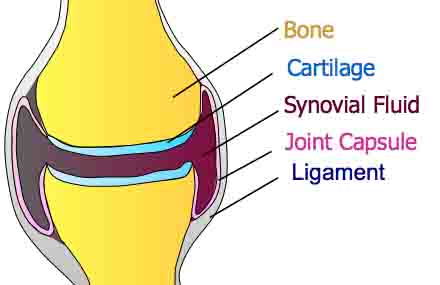
The disease starts with some type of stress on the joints. This can be caused by an injury, unusual activities or abnormality in the way the joint is formed. The stress damages chondrocytes, which causes the loss of collagen (fibrous protein constituent of bone). When the collagen is altered, other problems occur such as the release of nitric oxide, which causes inflammation, and the breakdown of cartilage. The synovial fluid in the joint loses some viscosity, reducing lubrication. The decline in fluid quality also lowers oxygen levels and the amount of nutrients that reach the chondrocytes (the cells found in healthy cartilage). The bone tissue hardens stimulating pain receptors in the tendons, ligaments, bones and joints.
Synovial Joint Diagram
Risk Factors
Dogs are at higher risk when one of the following factors are present:
Dogs with a disease that affects the cartilage or collagen:
- Diabetes mellitus
- Hypothyroidism
- Hyperlaxity
- Prolonged use of steroids
- Cushing's Disease
Dogs that put more stress on the joints are also at risk:
- Overweight dogs
- Working dogs
- Athletic dogs
- Large breed dogs (45% of dogs with arthritis are large breed dogs, of these greater than 505 are giant breed, 28% medium breed and 27% small breed)
Puppies with OA are usually obese and suffer from overfeeding.
Dog's Age: over 50% of arthritis cases are seen in dogs that are between the age of 8 and 13 years.
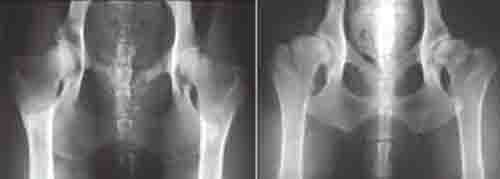
Normal Dog Hips (left) and Dog with Hip Dysplasia (right)
Types of Arthritis in Dogs
Degenerative Joint Disease (osteoarthritis)
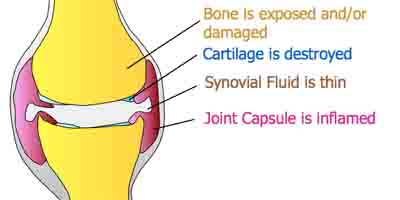
Osteoarthritis is the most common form of arthritis seen in both people and pets. It is a condition in which the cartilage between bones wears down. Without the cartilage padding, bone rubs against bone, causing inflammation and arthritis pain.
Osteoarthritis Joint Diagram
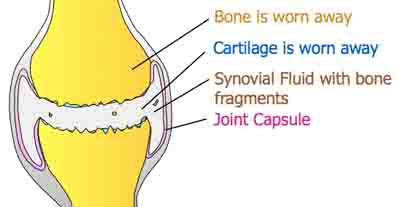
Normal stress on a joint problem or too much stress on a normal joint can be the cause. This stress causes a reduction in cartilage that protects the bones in the joint. If your dog is constantly jumping or exercising, this could be the cause. If you can pinpoint the cause and you caught it early, surgical solutions could stop or slow the disease.
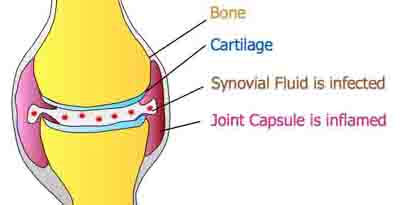
Inflammatory Joint Disease
This type is usually caused by infection and is seen in several joint locations. Symptoms often include fever and anorexia. Fungus, ticks and bacteria are common causes.
Infectious Arthritis
Immune-Mediated Arthritis
There are three types of canine immune-mediated arthritis. These include:
- Canine Rheumatoid Arthritis: results in swelling and joint inflammation. The cause is thought to be immune complexes that are in the tissue around the joints. Areas commonly affected include the dog's wrist (carpal), ankle (tarsal), and toe joints. Symptoms associated with rheumatoid arthritis in dogs includes pain, shifting from leg to leg, trouble getting up, climbing, or everyday walking. Other signs are joint swelling and joints that are warm to the touch. Some dogs may experience fever. A veterinarian will diagnose the condition using X-Rays and various lab tests. Treatment includes medications formulated for rheumatoid arthritis.
- Plasmacytic-lymphocytic
synovitis: This is considered to be a
form of canine rheumatoid arthritis. It is more commonly seen in larger
dogs. Symptoms include a tendency to demonstrate lameness in the hind
limbs since the knee is often the problematic joint. The
condition is treated with medications that reduce joint inflammation.
- Idiopathic polyarthritis: Idiopathic indicates that the cause of arthritis in several joints is unknown. Symptoms often start with a frequent fever that does not improve after therapies such as antibiotics. The veterinarian will look for other symptoms of arthritis such as lethargy, lack of appetite, and physical characteristics such as stiffness or lameness. Idiopathic polyarthritis can be controlled with the use of corticosteroids over a 3 to 5 month period. Other medications may be required.
Dogs affected with canine arthritis are larger breeds such as:
- German Shepherds
- Spaniels
- Toy Poodles
- Yorkshire Terriers
- Chihuahuas
- Doberman Pinschers
- Retrievers
Pictures of Immune-mediated Arthritis in a Canine Patient
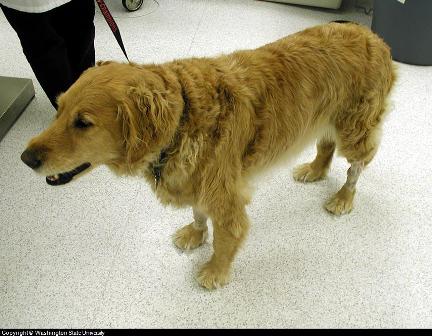 The Golden
Retriever pictured above
has immune-mediated arthritis in
the carpus or wrist.
The Golden
Retriever pictured above
has immune-mediated arthritis in
the carpus or wrist.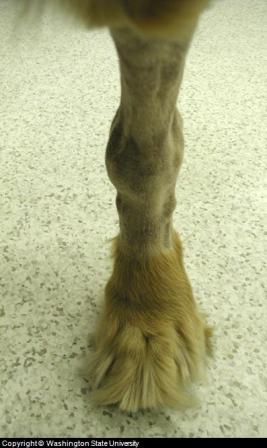 Immune-mediated arthritis of carpus (knee) in a Golden Retriever Dog
Photo Credit: Washington State University School of Veterinary Medicine
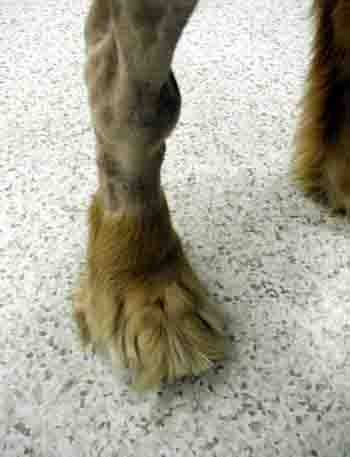 Immune-mediated
arthritis in tarsus
(toe joints)
Immune-mediated
arthritis in tarsus
(toe joints)Causes
It is extremely rare for canine arthritis to be a primary condition. Instead, other problems in the musculoskeletal system trigger the degenerative joint disease. These include:
Dysplasia:
Hip and elbow dysplasia in dogs is an inherited condition that results in a dog's arthritis pain caused by malformation in bone development. It can lead to crippling lameness and painful osteoarthritis.
Hip Dysplasia
Hip dysplasia occurs when the femoral head does not sit properly in the socket of the hip joint. Dysplasia can affect arthritic dogs of any size but strikes 50% of certain large breeds including:
- Golden Retriever
- German Shepherd
- English Springer Spaniel
- English Setter
- Chesapeake Bay Retriever
- Brittany
- Boxer
- Bloodhound
- Bernese Mountain Dog
- Saint Bernard
- Alaskan Malamute
- Bulldog
- Collie
- Old English Sheepdog
- Rottweiler
Hip dysplasia is characterized by joint instability.
Canine hip dysplasia (CHD) is diagnosed using X-Rays. The condition can be prevented if any joint incongruity is diagnosed before the start of degenerative joint changes, such as during a dog's early growth period.
Elbow Dysplasia
The elbow joint is one of the most complex joints in a dog's body. lt is an inherited developmental defects and is referred to an an un-united anconeal process, fragmented (un-united) coronoid process, osteochondritis of the medial humeral condyle, and radio-ulnar incongruence. The condition tends to occur in young, actively growing, large breed dogs. Elbow dysplasia causes lameness and then arthritis of the elbow, usually in the front legs.
Overfeeding foods with a high calcium content and injury can also play a role. The condition is seen more often in males (75%) than females.
Breeds affected include:
- Golden Retriever
- Labrador Retriever (In Labrador Retrievers over 8 years of age, OA in the elbow, shoulder, hip and knees is typical)
- German Shepherd
- English Setter
- English Springer Spaniel
- Rottweiler
- German Shepherd Dog
- Bernese Mountain Dog
- Chow
- Chinese Shar-Pei
- Newfoundland
Osteochondrosis Dissecans
Osteochondrosis Dissecans (the formation of a separate center of bone and cartilage on an epiphyseal surface. An epiphyseal surface is the expanded articular end of a long bone)
Patellar luxations (dislocated kneecap)
Congenital Shoulder Luxation
Congenital Shoulder Luxation involves the joint connecting the leg to the
torso.
Legg–Calvé–Perthes Syndrome
This syndrome is a form of osteochondritis of the hip joint, where growth/loss of bone mass leads to some degree of collapse of the hip joint and to deformity of the ball of the femur and sometimes the surface of the hip socket.
Cranial Cruciate Ligament Rupture (CCLR)
This ailment involves a pair of ligaments that cross over one another, specifically the cranial and caudal cruciate ligaments which tie the femur to the tibia. This is the most common cause of lameness, pain and osteoarthritis in dogs.
Predisposing factors include a dog's age, genetics obesity and immunity.
Pros and Cons of Different Arthritis Therapies and Medicines
The best treatment for your individual dog depends on the underlying condition. For example dogs with the cranial cruciate disease can often benefit from surgical stabilization of the joint. Instability in the joint leads to the osteoarthritic environment.
Dogs with hip dysplasia are treated with non-surgical options first, followed by surgery. Non-surgical options include:
- pain management
- weight control
- joint supplementation
- modification of the exercise routine
- physiotherapy
Cutting edge techniques promote healing using of cold, heat, electricity, light and sound waves. Often multiple approaches are used.
Planet rich Plasma (PRP)
Planet Rich Plasma (PRP) involves taking a blood sample and then separating the blood cells from the protein-rich fluid (plasma) and platelets. The plasma and platelets are injected into the dog's joint. The procedure combats inflammation and promotes healing.
Pros
Blood plasma is drawn from your dog. The procedure can be done at your veterinarian's office.
Cons
The area on your dog where the plasma and platelets are injected needs to be shaved in order to provide a sterile field. There is a low infection risk at the injection site. A dog will need several injections provided over a specified time period.
Stem Cell Therapy
Stem cell therapy involves cells that can be developed into different types of tissues. The procedure involves harvesting adult stem cells from fat in your dog's body. The fat is sent to a laboratory to be concentrated and isolated. The cells are then injected into the joint.
Pros
Your dog supplies the stem cells that are used. Therapy can rebuild ligaments, bone, and cartilage.
Cons
There is a small infection risk at the site of injection. The procedure requires anesthesia both when the stem cells are harvested and when treatment is applied.
Extracorporeal Shockwave
Extracorporeal Shockwave therapy involves the use of high pressure sound waves applied to the joint. The sound waves travel through the tissue and release energy as they hit the targeted location. The result is reduced pain and healing stimulation.
Pros
Benefits are supported by extensive research. The procedure is non-invasive. A dog will feel relief for up to 6 months after therapy.
Cons
A dog may need to be sedated. The procedure could cause bruising in some dogs. The targeted area needs to be shaved. The procedure is not available everywhere.
Therapeutic Ultrasound
Therapeutic ultrasound involves the use of sound waves to heat the tissue. The procedure stimulates circulation and makes it more comfortable for your dog to move.
Pro
Very fast treatment
Con
Cannot be used in dogs with surgical implants. Targeted area must be shaved.
Therapeutic Laser Therapy
In this dog arthritis therapy a laser is used to penetrate the tissues. Cells are stimulated with the laser energy, stimulating energy production, cell regeneration and blood flow. The procedure also mediates inflammation.
Pros
Quick treatment. Pain relief reported in anecdotes.
Cons
Not much scientific evidence that the procedure improves osteoarthritis in dogs. May need to shave treatment area.
Underwater Treadmill
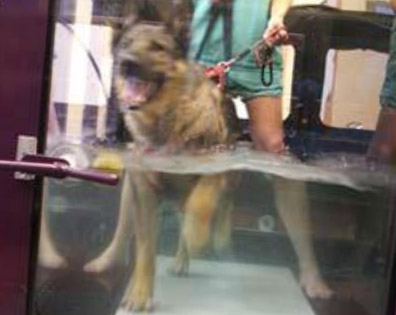 Canine Hydrotherapy Can Help a Dog Improve Strength While Limiting the Impact on Joints
Underwater treadmill is a form of physical therapy therapy that uses the buoyancy and viscosity of water to give your dog a workout. The water supports the dog's weight, easing pain and making it easier to move.
Pros
Safe way to exercise your dog.
Cons
Some dogs are reluctant to use a treadmill. Requires equipment designed for this purpose.
Non-Steroidal Anti-Inflammatory Drugs (NSAID Therapy)
NSAIDs are dog arthritis medications that reduce inflammation and reduce pain. Popular types are:
- Carprofen (Rimadyl)
- Meloxicam (Metacam)
- Grapiprant (Galliprant)
- Dexacoxib (Deramaxx)
These pain prescription medications are available through a veterinarian.
Pros
Multiple dog arthritis medicines available. A veterinarian can test different medications to see which one is tolerated by the patient.
Cons
Possible side effect that impact the Gastrointestinal system (GI), liver or kidney function. The dosage may need to be increased over time. Health is monitored by testing bloodwork.
Joint Supplements
There are several types of over-the-counter dog arthritis supplements available. These supplements are designed to support joint health and reduce inflammation. Options include:
- glucosamine chondoitin
- methylsulfonylmethane (MSM)
- omega fatty acids (omega-3)
- hyaluronic acid
- cetyl meristoleate
- CBD
- boswellia
- avocado/soybean unsaponifables (ASU)
Pros
These dog arthritis supplements are available over-the-counter. They are easy to give at home. There is strong anecdotal reports of success from dog owners.
Cons
The supplement industry is not regulated. Buy dog arthritis supplements from your veterinarian or a reputable source. Ask your veterinarian about risk of interaction with other medications taken by your dog. Fish oil products can result in dog weight gain.
PEMF Treatment
A new form of treatment for osteoarthritis in dogs is pulsed electromagnetic field therapy (PEMF). PEMF words by pulsing electricity through a coil to create an electromagnetic field. When near a body, the field can induce an electrical current in the tissue. This causes chemical and physical changes in teh body. The dog doesn't feel it working, making the treatment low stress for addressing pain control, bone or tissue healing.
Dog studies have shown some improvement for dogs with osteoarthritis and help for delated healing and fractures.The product uses a simple loop (Assisi loop) placed over the area to be treated. Treatments last for 15 minutes and the device turns itself off when done. The Assisi Loop has been evaluated in two peer-reviewed studies. For more severe pain the product is used along with other chronic pain management techniques.
Exercise as Part of Dog Arthritis Treatment
Changes in a dog's exercise routine is one of the first questions asked after arthritis is diagnosed.
This can be a difficult question to answer since exercise may put too much strain on arthritic joints, while no exercise may contribute to weight gain, muscle weakness and decreased joint flexibility.
The goals of any canine arthritis exercise and physical therapy program is to find an exercise routine that protects the joints from excessive mechanical stress, while providing dogs with the exercise they need to maintain good health.
Recommended periods of rest and exercise depend on each dog's clinical signs and level of pain. Approaches such as swimming offer dogs the best of both worlds, the ability to exercise along with a minimal load on the joints. In addition to swimming, walking is a preferred form of exercise for periods of 20 minutes or more depending on your pet's strength. Some exercise, even if it is slow and steady, is always better than no exercise. Consider making accommodations where needed such as soft surfaces like grass instead of pavement.
Benefits of Low Impact Dog Exercise For Dogs With Arthritis
According to advice provided by the manufacturer of the dog anti-inflammatory drug Zubrin(tm), a low-impact canine arthritis exercise routine has the following benefits for dogs with arthritis:
- Exercise increases strength and stamina
- It helps joint mobility
- It aids weight management
- Exercise stimulates joint cartilage metabolism
- Decreases the need for pain relieving medications
This is different that what was once thought to be true, where exercise was often restricted in patients with arthritis. However, recent studies show that mild to moderate exercise helps to reduce dog arthritis pain, and improves a dog's quality of life. Exercise should be lower impact which includes walking and even swimming.
According to an article published by Denis J. Marcellin-Little DEDV, dogs with osteoarthritis will benefit from activities such as "walking and trotting, walking with resistance provided by water or elastic bands, sit-to-stand exercises, swimming, and walking on an underwater treadmill."
Low Impact Exercise Program Suggestions
A low impact canine arthritis exercise routine such as walking is an option. Start with short walks on a leash for 10 to 20 minutes. Add time as your dog is able. If your dog is unable to walk or has trouble standing, you can help by slinging a towel under the belly and then pulling up on both ends, lifting the dog into a standing position.
If your dog has osteoarthritis, it is possible that your dog's level of pain will change depending on the day. You know your dog and can see if he or she is excited to go for a walk or is acting lethargic.
Until you know your dog's condition you want to avoid activities that strain the joints such as jumping (onto or off a couch for example), stairs, running on hard surfaces such as the street, soft surfaces such as sand, catching games or spinning.
Many dogs just want to have fun, but health comes first, so you need to be the parent of an active dog.
Sample Dog Arthritis Exercise Routine
- 10 Minutes - Warm Up - Spend 5 to 10 minutes in a slow warm up such as a slow paced walk
- 20-30 Minutes - Aerobic - Match activities to your dog's ability such as a fast leash walk. Your dog could accompany you while you jog or even bike. Build up to 5 days per week.
If you have access to a place where your dog can swim, it is an excellent way to introduce low impact aerobic exercise. - 20-30 Minutes - Play - Play is a great way to keep your dog active. Go with your dog's favorite game, or play with a ball, Frisbee or anything else that keeps your dog's interest.
- 5-10 Minutes - Cool Off - Slow down the pace with a gentle walk and be sure to give your dog water.
Arthritis-friendly exercise for your dog is an important part of their arthritis treatment plan.
Physical Therapy
Many types of conditions including degenerative joint disease (osteoarthritis or DJD) can be helped with physical therapy. Each program is tailored to the dog's specific needs using sessions that last from 30 minutes to one hour. In addition to exercises, these trained therapists are able to utilize tools such as underwater treadmills that can, for example, compensate for 60% of the dog's weight.
Massage
Canine massage may help to decrease muscle tension and pain. It can also help to warm and relax tissues, decrease muscle spasms, improve blood flow and improve flexibility. Massage can also promote joint range of motion. In addition to the massage, the use of a warm water bottle can help.
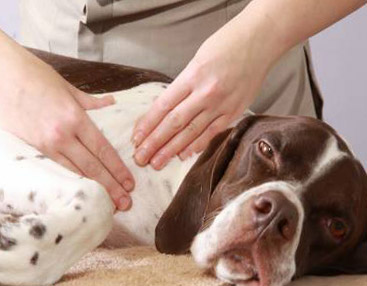 A Dog Massage Can Provide Some Arthritis Relief by Warming the Muscles, Improving the Range of Motion, and by Reducing Stiffness
Dog Joint Mobilization
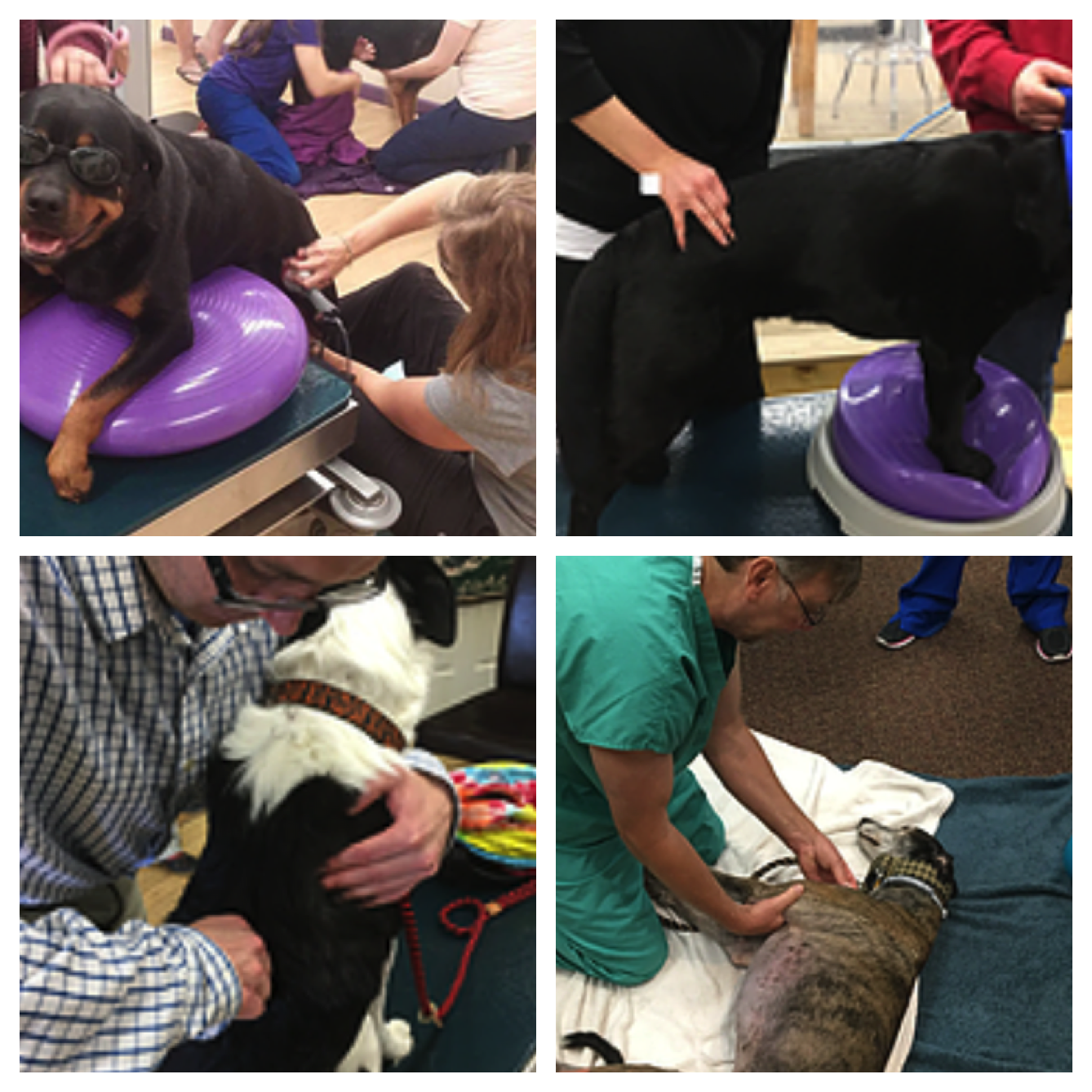 Four Examples of Dog Joint Mobilization
This approach is involves the manual displacement of one bone to another. Human studies have shown this approach to be helpful in osteoarthritis of the knee.(8)
This approach uses manual hand movements to:
- Reduce soft tissue restriction, inflammation and swelling
- Modulate pain
- Manipulate or mobilize joints and soft tissues
- Induce relaxation
- Improve range of motion
- Improve tissue extensibility
Your registered CCMT (Canine Manual Therapy) professional will develop a custom treatment plan for your dog.
Acupuncture and Acupressure for Dogs
Acupunture
Acupuncture is often used in addition to other therapies in dogs. Acupuncture is a form of Traditional Chinese Veterinary Medicine that focuses on energy balance and to promote healing. The approach involves using fine needles inserted where the blood vessels and nerves converge. These locations are called meridians, the point at which energy is transmitted throughout the dog's body.
The needles move energy (called "chi") through the body. Acupuncture is thought to help release pain relieving substances in the body and as a stimulant to the nervous system. Combined these work to reduce pain and discomfort.
Acupuncture also lowers waste products produced and improve the amount of metabolic waste the body can remove. The procedure relaxes muscles, relieving pain.
The types of canine arthritis treated with acupuncture are dogs that have spinal cord conditions, chronic back pain, hip dysplasia or degenerative joint disease.
Note that traditional methods such as NSAIDs and other dog arthritis medicines are the first line of defense. Acupuncture is often used in addition to these traditional approaches. (7)
You can find one of the 150,000 registered dog acupuncture professionals through the International Veterinary Acupuncture Society.
Acupressure
Acupressure refers to the application of pressure to locations where blood vessels and nerves converge. This approach is best for areas which cannot be accessed with a needle.
Brochures on Treating Arthritis in Dogs (PDF Download)
Ask Our Vet A Question About Treating Arthritis in Dogs And We Will Answer It For Free
Have a Question for our Editors and Readers about Canine Arthritis or have some helpful advice?
Do you have a story, suggestion or question about Arthritis in Dogs? Share it! Our editors select several questions a week to answer for free. Just provide your dog's breed, age, sex and medical history.
We will do our best to get back to you quickly (depends on how many questions we receive each day). If you do require an immediate response we suggest using this online dog veterinary service that is available now.
What Other Visitors Have Asked and Suggestions from our Vet
Click below to see contributions from other visitors to this page...
Hip Dysplasia or Early Onset of Arthritis 
Reader Question: Our 5-year-old Golden Retriever went for a long (though not unusual walk) and the next day we noticed he was having a difficult time sitting …
Can Dogs Take Human Glucosamine Chondroitin Arthritis Supplements
Reader Question on Canine Arthritis and Human Glucosamine/Chondroitin supplements
Can human glucosemine condroiton with the same milligrams as the …
Dog Elbow Arthritis Treatment Suggestions Not rated yet
Reader Question: Best treatment and medications for dog elbow arthritis.
My 9 year old dog has suspected elbow arthritis (vet). He limps in the evening, …
Suggested Non-Surgical Dog Arthritis Treatments Not rated yet
I have a Border Collie, Red healer Cross: Female 8 yrs, in very good health on natural food diet and not over weight.
Problem: deteriorating and painful …
For Additional Information on Diagnosis, Symptoms, Therapies and Treatment
Options for Canine Arthritis
- Canine Arthritis Symptoms and diagnosis
- Dog Arthritis Medications, Treatment and Therapies
- Exercise and therapy
References
1) Bone, Joint and Muscle Disorders in Dogs, Merck
2) Epidemiology of osteoarthritis, Esteban Mele, DVM
3) American Veterinary Medical Association
4) Pain Management for Canine Osteoarthritis; P. Roudebush, Hill’s Pet Nutrition, Inc. Topeka, KS, USA
5) Benefits of physical therapy for osteoarthritic patients; Denis J. Marcellin-Little DEDV, Diplomate ACVS, Diplomate ECVS; College of Veterinary Medicine, North Carolina State University; Raleigh, North Carolina, USA
7) Acupuncture and Acupressure for Dogs


