Table of Contents
Overview | Steps to Brushing Dog Teeth | FAQ: Canine Tooth Brushing | Natural Care
Summary:
"Canine tooth brushing is as important as brushing human teeth since many tooth problems are irreversible. Dog teeth are susceptible to the same types of illnesses and brushing helps protect the gums and prevent dog dental problems such as gingivitis and periodontal disease."
Overview
Canine tooth brushing is very similar to how you brush human teeth. To introduce your dog to to the daily ritual of canine teeth cleaning, it is best to step them into it. The entire job should take no more than 30 seconds and will go a long way toward prevention. Your dog's teeth should be brushed between 2x to 7x a week. We prefer daily brushing.
Steps for Brushing Dog Teeth
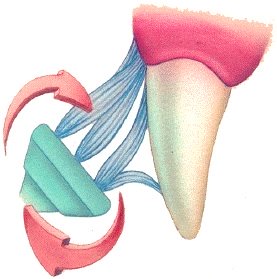
Steps for brushing your dog's teeth are:
- Start fresh - This means have your Veterinarian do a thorough teeth cleaning.
- Taste - To familiarize your dog with the toothpaste (use
specially formulated toothpaste for dogs) - available in multiple
flavors (beef, poultry and malt flavor is popular - yummy - from most
Veterinarians) have your dog taste a small amount.
Another option for canine tooth brushing is to introduce the brush first. Try using the brush without paste 2x a day for two weeks. Once your dog is comfortable with the brush, add toothpaste. See below for different home made and store bought toothpastes. Do not use human toothpaste. Unlike ourselves, human toothpaste requires someone to spit it out. Unless your dog can spit on command (which would be a neat trick), avoid it. - Touch - The next time, have your dog taste the toothpaste
and then run your finger along his upper gums. Give your dog a treat or
some loving afterward. Use gauze or a nylon stocking around one
finger to get them used to the idea of brushing. Try not to go longer
than a minute.
- Brush the upper teeth - Get a soft toothbrush with bristles
and use along the gum line instead of your finger. Use circular motions
with the brush from back to front along the gum line. Hold the brush
at a 45 degree angle (slightly tilted). You can use a soft human
child's brush or one made for dogs. For many dogs a child's toothbrush
is still too hard, so stick to one made for dogs. They also sell
brushes that fit onto the index finger.
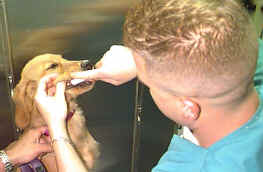
An alternative to a brush is your finger. Wrap a cloth around a finger, put a bit of paste on the end, lift the dog's lips and rub in a circular motion along the teeth and gums. Focus on the outside of the teeth as your dog's tongue does a pretty good job inside. Canine tooth brushing should use 10 up and down motions, covering 3 to 4 teeth at a time. - Brush all the teeth - Always start with the upper since these are more vulnerable to plaque. After the top, go ahead and brush the bottoms. Put the toothpaste between the bristles instead of on top of the bristles. This will allow more of the toothpaste to come in contact with the teeth.
Tip: Make your canine tooth brushing routine part of your own. Let your dog see you brush before your brush theirs. They will see it is a normal part of what your dog's best friend (you) does.
Often Asked Questions: Canine Tooth Brushing
Electric Dog Toothbrush for Canine Tooth Brushing
The problem with using an electric toothbrush made for people when canine tooth brushing is that the bristles may be too hard. If you do decide to use one, select the softest child brush head available. Avoid brushes that make a lot of noise since it might turn your dog off to brushing.
Bleeding Gums After Canine Tooth Brushing
If you see bleeding after canine tooth brushing there may be some periodontal disease. Brushing tightens the gums and bleeding should stop. If it does not see a Veterinarian.
Canine Toothpaste
The best dog toothpastes contain ingredients that fight plaque such as enzymes and fluoride to combat bacteria. Here are some commonly recommended types of toothpaste:
- OraVet Plaque Prevention Gel™ - recommended by Washington State University College of Veterinary Medicine Community Practice Center
- CET Pet Toothpaste - Combines calcium and silicitate
- Maxi/Guard - contains escorbate to heal the gums, works without brushing
Toothpastes made for dogs are preferable to home remedies. We suggest avoiding toothpastes made at home with baking soda, however, it is preferred by some owners. For this reason, a few homemade dog toothpastes are described below.
Homemade Dog Toothpastes
You can make toothpaste at home using one tablespoon baking soda with one teaspoon of water. Use potassium chloride instead of baking soda if your dog has a problem with salt. You can also mix equal amounts of hydrogen peroxide and water with some baking soda to make the paste.
Although paste is preferred, you can also try dipping a toothbrush in chicken or beef broth.
Natural Care for Dog Teeth
Natural Dog Toothpaste
A natural dog toothpaste (labeled for people), but that is recommended by homeopathic veterinarians is a product sold in health food stores called Dentie. It is made from charred eggplant and salt and was first formulated in Japan.
Homeopathic Dog Dental Care
The most common ailments seen in dogs by vets are dental problems. More than half of all dogs suffer from gum disease, dental calculus or similar dental problems.
Calculus is the brown build-up of plaque found extending downwards on the tooth from the gum line. Calculus is a haven for bacteria which can have serious consequences for your pet's general health. These bacteria can not only cause abscesses and tooth loss, but can have effects further afield - even resulting in organ damage as the bacteria are carried from the mouth, through the bloodstream.
Damage to the teeth and gums in pets is permanent and irreversible - as it is in humans. What's more - pets can't wear dentures! Therefore, the best thing you can do for your dog or cat's dental health is to embark on a prevention program and look out for your pet's teeth and gums before it's too late.
Natural supplements with herbal and homeopathic ingredients can help to prevent gingivitis (gum disease) and tooth decay as well as improving general dental health in dogs. Herbs to look for include:
- Arthrospira platenis (Spirulina):
is a single celled micro-organism found in the sea and known to be an
excellent source of chlorophyll. Widely used for its nutritive
properties, Spirulina contains high concentrations of protein, vitamins
(including B12 and folic acid) and carotenoids. Spirulina also makes
vitamin A available for use in the body. Vitamin A is essential for
healthy eyes, teeth and immune functioning.
- Equisetum arvense (Horsetail):
This medicinal herb is an effective tissue healer due to its high
silica content. Silica is essential in the maintenance of healthy and
strong teeth, skin, bones, claws and fur and is the main component in
all connective body tissues including the myelin sheaths around nerve
cells and the membranes of the brain and spinal cord.
- Taraxacum officinale (Dandelion): Dandelion is a rich source of vitamins and minerals, including Vitamin A, D, C, various B Vitamins, iron, lecithin, silicon, potassium, magnesium, zinc and manganese. These vitamins and minerals are all essential for the health of the digestive system, bones, teeth and gums.
- Silica (6c): is also known as the 'homeopathic surgeon' due to its unique ability to cleanse the cells of toxins and rid the body of bad odors. Silica is naturally occurring in the body, especially in hair, nails, skin, nerve sheaths and all mucous membranes, including the mouth and digestive tract. This biochemic tissue salt is also frequently prescribed for gum disease (including gum boils and mouth abscess), mouth ulcers and chronic mucous infections. Silica acts as a natural cleanser and purifier and will also eliminate all foreign matter in the body.
- Calc. Fluor. (6C) (Calcium fluoride): is a biochemic tissue salt which is important for teeth, skin and bones. Calc. Fluor. is also useful for teething pain and toothaches. It is found in the enamel of teeth and bone surfaces and is excellent for maintaining the health and integrity of teeth.
- Calc. Phos. (6C): is also a biochemic tissue salt useful for healthy teeth and gums and is particularly important in times of growth and development. This salt is found in the bones, connective tissue, teeth etc. and is necessary for providing the strength/solidity of these tissues. Calc Phos. is excellent for improving circulation, bones and teeth.
A good supplement from a reputable manufacturer that contains many of these ingredients is Pet Alive for Gums-n-Teeth.
Reference


