Table of Contents
Overview | Tick Identification | Symptoms | Diagnosis | Treatment | Vaccine | Brochure
What You Need To Know About Lyme Disease in Dogs:
"Cases of Lyme disease in dogs (Borrelia burgdorferi infections) are caused by infected ticks that attach to a dog to feed for at least 24 hours to several days. Once the tick attaches and feeds on the dog host, a spirochete or infectious agent moves from the tick's gut to the salivary gland, where it is then passed into the dog. Even if your dog has been exposed to Lyme disease, you and your family are not at risk of catching the disease from your dog.
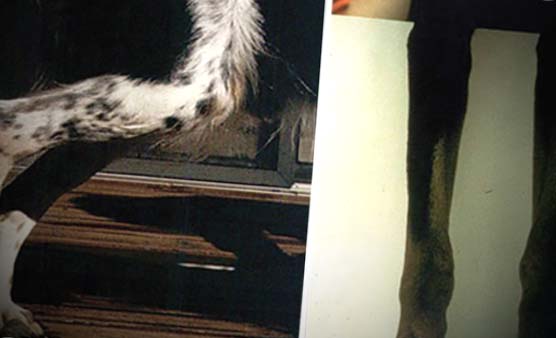
At first, the bite will cause a skin infection. As the infection progresses it causes symptoms such as joint inflammation (polyarthritis) and in very rare cases liver and kidney disease (glomerulopathy). The bitten dog limb is the first to show symptoms such as as lameness or limping. The "bull's eye" rash seen in humans is not seen on dog skin.
Laboratory SNAP or ELISA tests are used to see if a dog has been exposed, but does not prove that the dog has the disease. Dogs that test positive, but show no symptoms, are not treated for the condition since most dogs remain asymptomatic. 95% of exposed dogs do not show any dog Lyme disease symptoms(3). In these cases tick control products that protect or repel tick attachment are prescribed.
If a dog shows symptoms, the prescription medication Doxycycline is used for 1 month. Dogs with canine Lyme disease start to show improvement in 1 to 2 days. Lyme Nephritis, a kidney disease, is generally fatal if left untreated.
The use of a lyme disease vaccine is considered by the American College of Veterinary Medicine to be controversial and are not generally administered. While the risk of side effects from the vaccine is low, many veterinarians believe that does respond quickly to sale oral antibiotics, making the disease less of a risk. Two doses of vaccine are given to dogs that have been treated with Doxycycline.(2)Up to 75% of unvaccinated dogs in endemic areas will eventually test positive for Lyme disease. One approach is to vaccinate dogs in areas where there are higher incidences of Lyme, and use tick and flea control products in other areas.(7)"
Overview
Dealing with Lyme disease in dogs is not one of my most pleasant experiences. The thought of a parasite drinking the blood of my dog like Dracula is enough to make me squeamish. But with the risk of disease and infection it is important to look for ticks daily and to quickly remove them.
There are many effective ways for Lyme disease dog treatment, tick removal, and prevention including Lyme disease vaccines.
Lyme disease in dogs is caused by a bacterium that is carried by ticks. They attach to your dog and feed on its blood until the tick becomes enlarged. Ticks can cause local irritation, infections and Lyme disease.
Tick season tends to be highest in the spring and autumn. To survive at each stage of their lifecycle, a tick needs to attach itself to a host such as a deer (their favorite), a dog or a person. When they get their fill of blood they drop off until it is feeding time again. This is why ticks cannot be passed from one dog or person to another, but a dog can pick up a tick in one area and cause an infestation in another, including your home (not the most pleasant thought).
Ticks looks for the thinnest skin on the dog so they tend to attach themselves to the face, ears and abdomen. Ticks are difficult to remove because once they attach themselves they release a substance that glues their body to your dog. This is why the when removing a tick it is difficult to remove the body and the deeply attached head.
Dogs outside of high-risk regions have a 1% chance of getting the disease and are generally not given the Lyme Disease Dog vaccine. Only 5% of dogs in a high-risk area show any symptoms with 80% of dogs showing Lyme disease bacterium (called B. Burgdorferi). Note that it is not clear if in the long term being infected with no symptoms is a problem later in your dogs life - such as future joint problems.
A study by the Mayo Clinic College of Medicine and Science and Carnegie Mellon University predicts that rising temperatures related to global warming could increase the cases of Lyme disease by more than 20% by mid-century.(1)"
What Does a Tick Look Like?
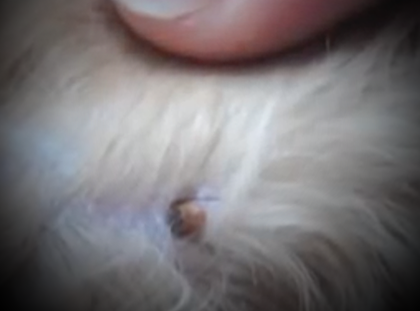
A tick that just attached itself to your dog will look like a
small gray dot on the skin of the dog. As the tick grows it looks like
a mark that just happens to appear such as a mole. The tick will attach
itself for 5 to 7 days. You can tell it is a tick by the scales at its
hind legs. As the tick drinks the dog’s blood it gets enlarged. When
the tick is done drinking, it will fall off, consume the blood it
drank, and then look for a new host such as another animal or person.
See our guide to tick and tick bite pictures.
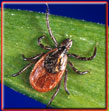
(Called Deer Tick or Black Legged Tick)
It is important to distinguish between the Black Legged Tick and the Dog Tick. The Black Legged Tick carries Lyme disease and can attach to both humans and dogs. The Dog Tick, (also called a wood tick), prefers to attach to dogs and DOES NOT carry Lyme disease. Pictures of both types of ticks are below:
Nymph (baby ticks) to Engorged Female After Blood Meal
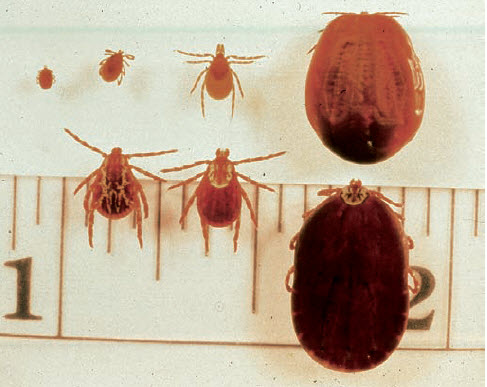
Bottom Row: Dog Tick Commonly Found on Dogs But Does Not Cause Lyme Disease
Riskiest Areas to Contract Lyme Disease
Lyme disease dog is prevalent in the following areas:
High Risk
- East coast from North Carolina to Maine
- New Hampshire
- Pennsylvania
Moderate Risk
- Wisconsin
- Minnesota
- Michigan
- Illinois
- Missouri
- Iowa
- California
- Oregon
All other states are low risk.
Symptoms
Symptoms of lyme disease in dogs usually appear 2 – 5 months after your dog is infected. 95% of dogs that are exposed do not show any symptoms.
If your dog shows any of the following symptoms, they may be been bitten by a tick:
Dog Lyme Disease Indicators
- Fever (some dogs do not develop a fever)
- Loss of Appetite
- Pain in the legs or body
- Arthritis or joint swelling
- Lethargic behavior
- Depression
- Cough
- Enlargement of the lymph nodes (deer ticks)
Symptoms such as heart disease, renal issues, seizures and aggressive behavior are extremely rare. Research conducted at Cornell Veterinary College exposed 6- to 12-week-old Beagle puppies to the bacteria. They had no signs of illness until 2 to 5 months after exposure followed by a 4-day illness that went away without treatment.
Dogs are also different than humans in that dogs do not show symptoms such as flu-like signs or a rash soon after the tick bite. Canine Lyme arthritis is very responsive to a short course of inexpensive, safe, oral antibiotics (doxycycline).
Some breeds are predisposed to Lyme disease nephritis (kidney disease) such as Labradors, Golden retrievers, and Shelties. Most others will not show any symptoms, or if they do they will be over a week at most.
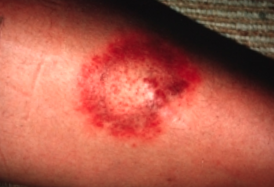
Stages of Lyme Disease in Dogs
There are three stages or states of lyme disease in dogs:
- Acute Lyme Disease: signs of swollen joints, swollen lymph nodes, appetite loss, depression, fatigue
- Subacute Lyme Disease: Lameness, changes in the joints, signs of arthritis
- Chromic Lyme Disease: Heart arrhythmia, kidney damage, arthritis
Diagnosis
Blood tests are not particularly helpful in determining if your dog has Lyme disease as there may not be any change in the standard readings. 80% of dogs in high infection areas respond positively to tests for B. burgdorferi (lyme disease bacteria). At a minimum your dog should wear a protective collar or use a spray. If your dog frequently goes outside unprotected, consider a vaccination.
Instead your Veterinarian will use a four step checklist to make a determination including:
- Has your dog had Lyme disease or a tick bite before
- Symptoms
- Responds to Antibiotic
- Serology Test (test of the fluid portion of blood for antibody
content. Antibodies are your dogs way of fighting foreign cells such as
bacteria)
Other diseases that look like Lyme include:
- bacterial endocarditis rheumatoid
- infectious or immune-mediated arthritis (lupus erythmatosis)
- osteopathies
- degenerative joint diseases
- Rocky Mountain spotted fever and ehrlichiosis.
Dog Lyme Disease Test
The Serology test looks for enzymes in the blood associated with Lyme disease. The problem is that there are two types of vaccines (whole cell/killed Lyme or subunit). The ELISA test can tell if your dog has the disease only if it has not been vaccinated or it if had the subunit vaccine. If your pet had the whole cell the test cannot tell if your dog has the disease or a reaction to the vaccination itself.
A newer test called the Canine SNAP 3Dx or the C6 SNAP test. It is done in your Veterinarian’s office and if positive a follow-up test is done and sent to a lab to confirm the findings.
Treatment
Lyme disease dog treatment is with derivatives of the antibiotic tetracycline or amoxicillin. There are different strains of lyme disease making it difficult to know exactly how long a dog with need the medication. Many veterinarians provide doxycycline at 10 mg/kg PO q24h for a minimum of 1 month. Longer treatment may be necessary for dogs suffering from kidney disease or inflammation. You should see improvement in your dog 1 to 2 days after treatment begins.
Treatment will eliminate clinical signs of the disease, but will not completely eliminate the infection. Future testing will remain positive for years. A case by case decision is made if a dog should be treated that is seropositive (shows signs of disease), but is not exhibiting any symptoms.
How Long Can A Dog Live With Lyme Disease
Both treated and untreated dogs generally recover from B burgdorferi lyme disease exposure and infection without complications. For this reason the life expectance of a dog with lyme disease is about the same as a healthy dog. In rare cases, the disease can progress to lyme nephritis (kidney failure) which is uniformly fatal within weeks to months after diagnosis.
Lyme Disease Dog Vaccine
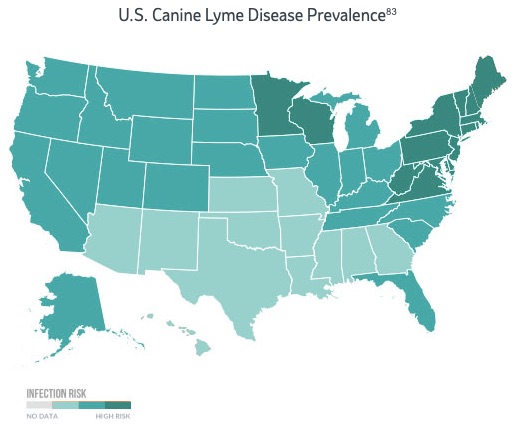 Map of United States Dog Lyme Disease Prevalence
Canine tick vaccines and vaccination are one possible approach for avoiding future cases of Lyme disease. However, not every veterinarian is in agreement as to whether or not they are necessary, even in areas with a high incidence of Lyme. Those that support the Lyme vaccine believe that it has no side effects and will prevent a dog from from problems that can be caused by Lyme such as arthritis and swollen joints.
There are two types of Dog Tick and Lyme disease vaccines:
- Whole Cell - Made with dead B. burgdorferi, the disease causing bacteria found in ticks. This vaccine is considered to be safe and has been around for 10+ years. Recent studies in other animals show that it may not be as effective as originally thought.
- Subunit - Vaccine works by killing the B. burgdorferi in the tick before it reaches your dog. The way it works is that when the tick takes its first drink, your dogs blood kills any bacteria inside the tick. This vaccine has also been available for 10+ years.
Those veterinarians that are opposed to recommending a Lyme vaccine for dogs believe that most dogs have minor symptoms that can be easily treated with antibiotics. They prefer to recommend over the counter dog tick medications that can keep ticks from remaining on your dog. According the Merck, the company behind the dog Lyme Vaccine, the vaccine is proven well tolerate and effective in a "safety trial of more than 600 dogs. The vaccine itself has been administered to more than 4 million dogs.(7)
Prevention and Protection
Dog tick prevention can be effectively accomplished with the purchase of a collar or topical treatment. These will cause ticks that are already on your dog to fall off.
There are 5 steps that can be taken to reduce tick exposure:
- Trim High Grass If you Live in an Area with Deer: The favorite host for ticks is deer. No deer means fewer ticks.
- Avoid Areas that Attract Ticks: Keep your dog out of wooded or high grass areas.
- Tick Repellent: Use a tick repellent collar.
- Check your pet for ticks
- Insecticide: Use a specialized product that is pet safe.
How to Check Your Yard for Ticks
It is possible for a dog to be infected outside of your property or yard and then for the dog to bring the tick back to your yard or home. The unfortunate outcome is an infestation of ticks at home. This happens when a tick is on your dog, finishes feeding and then naturally falls off.
If your dog is suddenly picking up ticks, there is a simple way to determine if you have a tick infestation.
To check for your home or yard for ticks, take an old white pillow case. Drag the case through various places around the house and through different types of plants and grass. Ticks will think the case is a host and grab hold. If you see little gray specs on the case, you probably have ticks.
Call or contact an exterminator to determine the best insecticides and pet safe approaches.
How to Prevent or Kill Ticks on Your Dog
Product Type |
Popular Brand |
Active Ingredient |
Additional Information |
|---|---|---|---|
|
Collar |
Preventic® | Amitraz |
Kills ticks on dog and prevents future infestations for up to 90 days. Not for dogs under 3 months old. |
| Top Spot/Topical | Frontline Plus | Fipronil (plus also has mthoprene) | Protects dogs for 30
days. Apply to back.
Plus version kills fleas. Does not repel ticks which is a negative and
protection is decreased if your dog goes swimming. Overall, a good
choice.
|
| Topical | K9 Advantix™ | Imidacloprid, Permethrin | Dog must be 7 weeks or
older. Protects dogs
for 30 days. Decreased protection if used when swimming or when gets
wet. Overall a good choice.
|
|
Spray |
Frontline | Fipronil & S-Methoprene |
More labor intensive than other approaches. Good to kill large infestations. Protects for up to 2 months. |
How to Remove Ticks From Your Dog
When removing a tick from a dog be sure to grasp the tick by the head and pull firmly straight from the dog. Dispose of the tick in a clear sealed container and save the tick in case it needs to be tested for Lyme or other tick borne diseases. There are inexpensive tick removal tools such as a Ticked Off that can be used to quickly and easily remove ticks.
 An inexpensive Tick Removal Tool such as this one is under $5 and makes checking and removing dog ticks easy.
Shown: Ticked Off from Amazon
Brochure
This brochure on lyme disease in dogs provides information on how lyme disease is transmitted, how it infests a dog, testing methods, clinical signs, and when to treat or not to treat.
References
(1) Dumic I et al. Ticking Bomb: the Impact of Climate Change on the Incidence of Lyme Disease, Canadian Journal of Infectious Diseases and Medical Microbiology, 2018; 2018 1 DOI: 10.1155/2018/5719081
(2) ACVIM Small Animal Consensus Statement on Lyme Disease in
Dogs: Diagnosis, Treatment, and Prevention
Meryl P. Littman, Richard E. Goldstein, Mary A. Labato, Michael R. Lappin, and George E. Moore
(3) Appel JMG. Lyme Disease. In Blackwell’s Five-Minute Veterinary Consult: Canine & Feline. Eds. Tilley LP, Smith FWK. 2007, 4th ed. Blackwell Publishing, Ames, Iowa. pp.784- 785.
(4) Lyme Disease: What to Do When the Snap Is Positive
M.P. Littman
School of Veterinary Medicine, University of Pennsylvania, Philadelphia, PA, USA.
(5) Center for Disease Control


