Table of Contents
Overview | Symptoms & Diagnosis | Treatment | Natural Treatments/Preventatives
Summary:
"Dog ear infection medicine is used to treat infections caused by yeast, mites or bacteria. Infections are usually seen in dogs with floppy ears or breeds that have hair around the ear canal, or that swim frequently. Treatment options include antibiotics and natural remedies."
Overview
Dog ear infection medicine is usually called for when an ear infection is caused by bacteria, yeast or mites. Infections are common in dogs. The two most common ear infections are otitis externa, infection of the ear canal, and otitis media, infection of the middle ear.
Otitis externa may be a bacterial or yeast infection. Waxy build-up and dense, matted hair may also lead to an infection. It may also be an infection of ear mites.
Middle ear infection usually results when ear canal infection spreads, or when improper cleaning or foreign bodies rupture the ear drum, spreading infection to the middle ear.
Dogs with pendulous ears, like cocker spaniels and basset hounds, and dogs with hairy inner ear flaps, like miniature poodles and schnauzers, are more susceptible to ear infections than other breeds. Allergy may play a role in dog ear infection, but it is less common.
Symptoms Where Dog Ear Infection Medicine is Needed
There are many symptoms that would indicate a dog ear infection, including:
- Shaking of the head
- Frequent ear scratching
- Tilting the head from side to side (middle ear)
- Reddened ears
- Inflamed ears
- Yellowish drainage from the ear
- Bad smelling ears
- Bleeding from the ears
- Sensitivity to touching in the ear area
- General irritability
Diagnosis of Canine Ear Infection
It is typically a simple matter to diagnose whether your dog has an ear infection. Your vet will look inside your dog’s ears and will be able see if the ear looks infected and if the ear drum is intact. He or she will use a cotton swab to take a sample of material from inside your dog’s ears and examine it under a microscope. If there is an infection, it will be readily apparent.
Your vet may take an x-ray to see if there is a foreign body in your dog’s middle ear, because that may not be visible just by looking into the ear.
Dog Ear Infection Treatment
Your vet will thoroughly clean your pet’s ears at the time the diagnosis of an ear infection is made. If there is a foreign body in your dog’s ear or if the ear drum has ruptured, surgery may be required.
Antibiotics will probably be necessary to treat the infection. These will be given orally, usually for a period of fourteen days. You will also need to clean your dog’s ears daily and may need to administer medicated ear drops. Your vet will show you the proper way to clean your dog’s ears.
If your dog's environment is contaminated (eg; mites) then an insecticide will be recommended such as Benzarid Environmental Spray.
It is generally recommended that you clean your dog’s ears weekly when he is healthy. Your vet can recommend a cleaning solution for you to use to do this. Regular cleaning can help prevent infection in the future.
Natural Remedies for Dog Ear Infection
Natural ear drops can safely be used to treat and prevent ear infections. Look for ingredients such as:
- Melaleuca alternifolia (Tea Tree Oil) - widely used for external inflammation and to treat skin conditions. Has anti-bacterial, anti-fungal and healing properties. It will soothe and reduce inflammation in the ear as well as treat any bacterial, fungal or mite infection that is present.
- Rosmarinus officinale (Rosemary) - well-known topical pain reliever and antiseptic/disinfectant herb. Compounds in rosemary have also been shown to have anti-inflammatory effects.
- Calendula officinalis (Marigold) - herbal ingredient used to treat skin problems and promote healing of wounds. Excellent anti-inflammatory properties and prevents infection. Anti-bacterial, anti-viral and anti-fungal properties. Marigold assists in the healing of damaged skin tissue.
- Verbascum thapsusis - anti-inflammatory and antiseptic herb. Verbascum thapsus is also good for healing of skin when applied topically and has a long history of use for ear conditions and in ear drops.
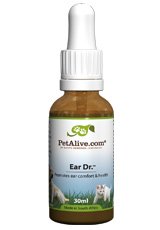
One product that is formulated using all of these ingredients is Pet Alive Ear Dr. for dog ear mites and ear infections.
References
doctordog.com
healthypet.com
Diseases of the Outer Ear
Haar, G. Ter DVM


