Summary:
"Detectable thyroid cancer in dogs is in the form of a large tumor (>3m) which can be identified via touch by a veterinarian during an in-office examination. Most cases are found during an ordinary veterinary visit.
Thyroid tumors account for 1.5% to 3.8% of all tumors in dogs. Most dogs contract the disease between ages 5 and fifteen years old with a median age of 9.
Dogs with the condition do not always exhibit symptoms. The disease can affect the cardiovascular (rapid heartbeat), endocrine/metabolic (hyperthyroid, hypercalcemia) and respiratory systems (difficulty breathing). Cancer starts in the parafollicular cells (5% of cases) or more commonly the follicular cells. The latter often spread to the lungs, lymph nodes and other organs. (1)
Any malignancy will be diagnosed with a cell biopsy, with most neoplasms found to be cancerous. Treatment options include surgery and radiation."
Overview
Thyroid cancer in dogs is not very common. Because dogs show few symptoms, it can be easy to miss. Catching it early makes all the difference when it comes to treatment and survival. The thyroid gland produces thyroid hormones that maintain your dog's metabolic rate. Any change in the functioning of this gland can have varied effects on your pet's health.
A veterinarian will need to determine if any mass detected in the neck is caused by a thyroid cancer tumor or one of the following alternative causes:
- abscesses (inflamed area filled with pus)
- hematomas (swelling due to a swollen blood vessel)
- lymphoma (cancerous/malignant tumor in a lymph node)
- lipomas
- Other types of tumors
There is a higher incidence of malignant thyroid tumors in Golden Retrievers, Boxers and Beagles (high correlation with untreated hypothyroidism). The tumors cause hyperthyroidism in 10% of cases which is caused by lymphocytic thyroiditis (inflammation). Another 10% have hypothyroidism.
Symptoms
Most dogs (about 60%) with thyroid cancer don't show many symptoms and have a normally functioning thyroid (called euthyroid). Some symptoms of dog thyroid cancer may include:
- urinating more than usual
- weight loss
- increased appetite
- nervousness
- coughing
- respiratory distress
- difficulty swallowing (dysphagia)
- vomiting and regurgitation
- anorexia
- facial swelling
- hoarseness (dysphonia)
- difficulty breathing (dyspnea)
- Horners syndrome - seen in rare cases (drooping eyelids and other
symptoms)
- facial edema (large fluid volume in the tissues of the body)
- neck pain
The thyroid gland, located at the base of the neck, may appear enlarged. Thyroid cancer in dogs caused by parafocllicular cells can cause diarrhea resulting from the production of abnormal proteins in the C-cells. Some breeds of dogs are more susceptible to thyroid tumors than others, including beagles, boxers, and golden retrievers.
Dog Thyroid Carcinoma Diagnosis
Based on your pet's symptoms, your vet will suspect thyroid problems. However, that does not necessarily mean cancer. Your vet can determine through an examination that the thyroid is enlarged. With x-rays or an ultrasound, your vet may be able to visualize a tumor of some sort growing on the thyroid gland. To make an accurate diagnosis, your vet will need to take a tissue biopsy of the tumor. This is a surgical procedure where a small bit of the tumor is removed and then studied under a microscope. If it is cancerous, sometimes the entire tumor can then be removed at that time.
The status of the thyroid tumor in dog case can be determined by measuring TSH plasma and T4 levels. 35% to 45% of dogs when diagnosed have a tumor that has spread to other parts of the body.
Dog Adenocarcinoma Thyroid Treatment
There are many options for treating thyroid cancer in dogs. The best option will depend on the size of the tumor, how it is attached to the surrounding tissue, and whether or not it has spread to other parts of the body.
If it is possible to separate the tumor from other tissues without damaging any major blood vessels or other vital parts, surgery is the best treatment. This is the case whether or not the cancer has spread to other parts of the body. When tumors are freely movable, complete surgical excision is recommended.
If the cancer has spread to other parts of the body, additional treatment will be needed, however. Surgery can cause side effects such as laryngeal paralysis and bleeding during surgery (intraoperative hemorrhage). Patients with tumors that are highly invasive may require blood transfusions during surgery and more care after surgery. There is also a risk of damage the the parathyroid glands, which are responsible for the metabolism of calcium and phosphorus.
If the tumor involves the surrounding tissue and therefore cannot be removed surgically, external beam radiation therapy is often used. Radiation is directed at the tumor, causing it to shrink. Sometimes after it shrinks sufficiently, the remaining tumor can then be surgically removed. Side effects of radiation consist of mucus in the digestive and respiratory tract (oral mucosa) and skin lesions.(2) Radiation has the potential to control tumor growth and lengthen survival time.
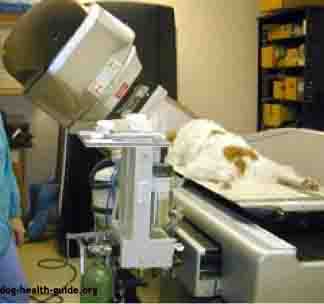
Source: Kawakami, Vance; Kender, Kristin
Finally, there is chemotherapy. Chemotherapy (Cisplatin or
doxorubicin) is often prescribed
along with surgical or radiation therapy. It is used when cancer has
spread to other organs of the body to slow its growth and is also used
to prevent the recurrence of cancer. There are possible side effects
when chemotherapy is used including gastrointestinal issues and
concerns with the cardiovascular system.
Early diagnosis and treatment is key to survival. There is a high
rate of success in treatment that is begun in the early stages of
thyroid cancer in dog. A veterinarian will want to follow up with the
patient every 3 months to check for any changes in condition.
Dogs suffering from hyperthyroidism need to control the patients heart
rate using a beta blocker.
A natural supplement you might want to try for added thyroid support is PetAlive Thyro-Pet. It is a herbal remedy that mixes with your dog's food and is designed to improve thyroid function and address some of the symptoms of a malfunctioning thyroid.
Prognosis
The prognosis after surgery for thyroid cancer in dog depends on if the tumor was completely removed. Complete removal is the same as a cure whereas if any part of the tumor was missed, the cancer could continue to spread.(3).
The median survival rate after surgical removal of a freely movable thyroid is greater than 36 months. 80% of dogs treated with external beam radiation therapy survive for 1 year, with 72% at 3 years. Dogs that were only treated with chemotherapy (Cisplatin) survived for a median of 202 days. Chemotherapy for all dogs, regardless of response is 98 days.
More Information
Ask Our Vet A Question or Share Your Story
Have A Question For Our Veterinarian About Cancer in Dogs?
Do you have a question or story about canine cancer? Share it! Our editors will try their best to answer your question for free.
Please include information such as age, breed, sex, medical history, medications, diagnosis, cancer stage,has it spread and anything you believe that will help us answer your question.
We will do our best to get back to you quickly (depends on how many questions we receive each day). If you do require an immediate response we suggest using this online dog veterinary service that is available now.
Reader Questions and Vet Suggestions
Click below to see contributions from other visitors to this page...
Large Knot on Left Side of Dog Neck 
My younger dog Thor has a large knot on left side and not the right side. I noticed a few days ago, he is only a year and 8 months old. His DNA came back …
References For Thyroid Cancer In Dogs
(1) Leav I, Schiller AL, Rijnberk A, et al. 1976.
Adenomas and carcinomas of the canine and feline thyroid.
Am J Path 83:61-122.
(2) Théon AP, Marks SL, Feldman ES, et al. 2000.
Prognostic factors and patterns of treatment failure in dogs
with unresectable differentiated thyroid carcinomas treated with
megavoltage irradiation.
J Am Vet Med Assoc 216:1775-1779.
(3) The Role of Surgery in the Treatment of Thyroid
Disease in Dogs
Marijke Peeters, DVM, PhD, Diplomate ECVS
Department of Clinical Sciences of Companion Animals
Faculty of Veterinary Medicine Utrecht University
Utrecht, The
Netherlands
Management of Endocrine Neoplasia
Withrow, Steven
External Beam Radiation Therapy for Thyroid Cancer in the Dog
Mayer


