Summary:
"Skin infection in dogs can be caused by bacteria (pyoderma, impetigo, superficial bacterial folliculitis), fungus (yeast, ringworm) or skin parasites. Bacterial infections are referred to as being superficial (on the surface of the skin) or deep, which means that it has penetrated deeper than the hair follicles.
The best approach is to visit a veterinarian who can examine a cell skin sample in order to understand the cause of the condition. Infection does not always result in symptoms, but the infected dog can still spread the infection as a carrier. The results of any testing will direct the course of treatment which can include one or more medications such as topical creams, oral medications or an injection.
If the case is uncomplicated, any infection on the dog's skin will respond quickly. If there is another underlying cause that results causes an infection, then that will need to be addressed as part of the treatment plan."
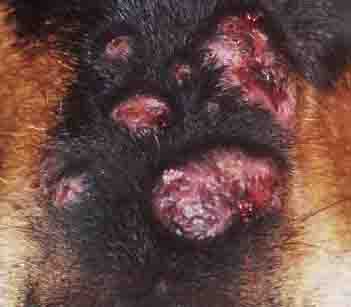
Overview
Canine skin infection can occur in a variety of forms, including both fungal and bacterial infections and parasites. Not every dog skin disorder is caused by an infection, however; there can be other causes. These include:
- Allergy accompaned by itch and skin rash can cause scratching which results in recurrent superficicial folliculitis.
- Endocrine gland disorder (hormonal problem)
The response to treatment further confirms the cause of the dog skin condition. For example, if being treated for bacterial infection and if the patient does not respond, then the veterinarian should double check to determine if yeast or ringworm is the underlying cause. (1) When dogs have healthy skin, fungus colonizes in low numbers. In dogs with skin allergies, the yeast population can dramatically increase in the ear canals and on the skin.(4)
Symptoms
Canine skin infection can have a variety of symptoms, depending on the type of infection.
Dog Skin Infection Causes and Symptoms |
|
|---|---|
| Cause |
Symptoms |
| Bacterial Infection |
Symptoms usually occur on areas with sparse hair such as the trunk
|
| Ringworm
(dermatophytosis) |
|
| Candida
(candidiasis) |
|
| Yeast
infection (Malassezia Dermatitis) |
|
| Blastomycosis
(type of yeast infection) |
|
| Scarcoptic
mange |
|
| Demodectic
mange |
Dog Mange Mange on Dog Body (3) |
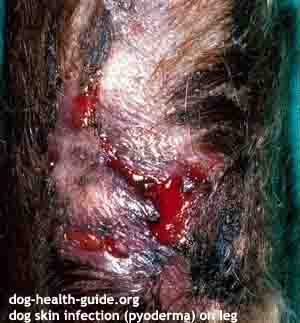
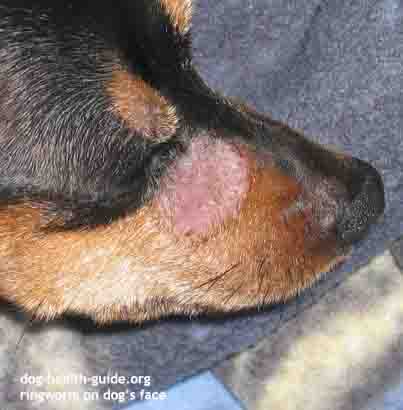
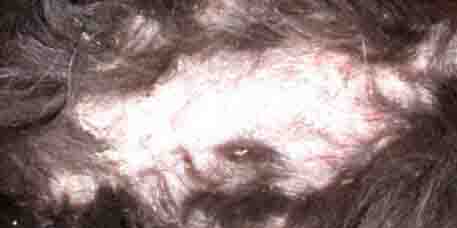
With any type of canine skin infection, you may notice bald patches, and your dog may also scratch excessively or lick or bite at his skin.
Call your veterinarian immediately if your dog's face is swollen or puffy.
This could be a symptom of a dangerous hypersensitivity allergic reaction.
Diagnosis
The canine skin infection will need to be diagnosed by a vet. In some cases, the veterinarian will be able to diagnose the infection just by looking at it.
In other cases, tests will be needed in order to determine the exact nature and cause of the infection. Tests may include examining the affected area under a special ultraviolet light, taking a swab of any seepage from the area to be examined under a microscope, and/or blood tests.
Sometimes the dog skin infection is secondary to another condition. This means that your dog has another problem that causes his skin to itch and he has scratched so much that it has caused the area to develop a bacterial infection. In that case, the skin infection must be treated, but the underlying cause of the itching must also be determined and treated as well.
Treatment
The treatment of dog skin disorders depends on the cause of the infection. If it is a bacterial infection, oral antibiotics are prescribed for a minimum of three weeks. It takes two weeks for the skin to clear and one week to ensure the condition is cured. If the bacterial skin infection returns, then dogs are treated for another 6 weeks. In the majority of cases this results in a complete cure. If it does not, a veterinarian will look for an underlying cause.
Some veterinarians prefer not to repeat the antibiotics and instead manage the condition using long term topical prescription shampoo therapy. The shampoo is left on the dog for 10 minute in order to penetrate the skin and canine skin infection.
If it is a fungal infection, oral anti-fungal medications are usually prescribed, along with medicated shampoos. There are also natural dog ringworm treatments. Other options are topical antibiotics and anti-fungal creams, but your dog will probably lick these off before they can be effective.
You will need to discourage your dog from scratching or licking the affected area so that it can heal without further irritation.
If your dog frequently suffers from skin problems you might want to try a homeopathic supplement like PetAlive Skin and Coat Tonic which is designed for this purpose. Ingredients to look for include Equisetum arvense (Horsetail), Taraxacum officinalis (Dandelion), Arthrospira platenis (Spirulina), Fucus vesiculosis and Kalium sulphate.
Further Reading:
Ask Our Vet A Question or Share Your Story
Have A Question about a Dog Skin Infection for our Veterinarian?
Do you have a question about a dog skin infection or canine dermatological issue? Ask it and our Veterinarian will answer it for free.
Please include your dog's age, breed, medical history, medications and if possible, a picture of the canine skin condition.
We will do our best to get back to you quickly (it depends on how many questions we receive each day). If you do require an immediate response we suggest using this online dog veterinary service that is available now. This service will answer short online vet questions for free.
Other Reader Dog Skin Infection Related Questions and Vet Suggestions
Click below to see contributions from other visitors to this page...

Causes of Dog Skin Sore on Dog Muzzle: Reader Question and Vet Suggestions Not rated yet
I noticed a few days ago that my dog Felix had a sore on his muzzle. It is now aggressively getting worse.
I took his collar off today and noticed …
How to Treat a Dog Skin Infection Under the Eyes Not rated yet
Reader Question: Dog Skin Infection Treatment Under the Eyes
I have a 2-year-old Shih Tzu and the groomer told me that she has a little infection …
References and Sources
(1) Diagnosis and Treatment of Superficial and Deep
Bacterial Pyoderma
K. Marcia Murphy, DVM, DACVD
Department of Companion Animals and Special Species
North Carolina State University
College of Veterinary Medicine
4700 Hillsborough Street
Raleigh NC 27606
(2) Washington State University
School of Veterinary Medicine
Dr. Candace Souza
(3) Naturasil
(4) Malassezia pachydermatis
Carriage in Dog Owners
Daniel O. Morris, Kathleen O'Shea, Frances S. Shofer, Shelley Rankin
Recent Advances In Canine Infectious Diseases
Carmichael, L.
Muller and Kirk's Small Animal Dermatology
Scott, D. W., Miller, W. H., Griffin, C. E.


