Table of Contents
What You Need to Know About Sores on Dogs:
There are number of conditions in dogs, which may result in skin sores. In fact, sores on skin is among the most common conditions at veterinarian's office. Thus, there are multiple underlying reasons as well for dog skin sores including but not limited to:
- Allergies (food, environmental): The allergic reaction caused by a response to the environment (dust mites, grass, pollen) or food. This causes itch in one spot on the body such as the paws or all over the body.
- Flea Allergy: In extra sensitive dogs can cause irritation, starting at the base of the tail. Symptoms include scabs, hair loss and itch.
- Hot Spots: Any skin irritation can cause a sore which forms after a dog itches or scratches the spot causing bald patches. Common causes are infection, matted hair, fleabites or allergy.
- Parasites (fleas, mites which cause mange): there are two types of mange, sarcoptic and demodectic. Symptoms include itching, skin redness and hair loss.
- Poor grooming: hair matts can form trapping moisture leading to infection or sores from skin irritation.
- Dog skin infections: common causes are bacterial pyoderma, or fungal infections such as ringworm, endocrine diseases, skin or hair follicle disorders such as seborrhea, medication side effects (from corticosteroids) and allergy. To help with the diagnosis, the table below details canine sores by body location such as the dog's belly or legs, paws, ears or face.
Treatment for any of the described dog skin conditions involves addressing any symptoms such as itch, the use of antibiotics for infections and identification and removal of any underlying cause. Homeopathic products can provide added support. See your veterinarian for an accurate diagnosis.
Causes, Types and Treatment of Common Canine Skin Sores
There are many possible causes for dog skin sores. The treatment and recovery depends on the type and cause of the sore. Anytime your dog has a sore that doesn’t go away in a few days or that oozes yellow or green-colored puss, see your veterinarian.
Acute Moist Dermatitis or "Hot Spots"
Video: Dog Skin Sores, Lesions and Skin Infection
Video review of the causes and treatment of a dog hot spot sore on the back. These types of dog skin sores are caused by self trauma, allergic reaction, fleas, grasses, pollens or even an insect bite. Treatment starts by cleaning any sores on the dog with soap and water. Then apply an antibiotic ointment and cortisone ointment. If the condition worsens see a veterinarian to learn more about the condition.
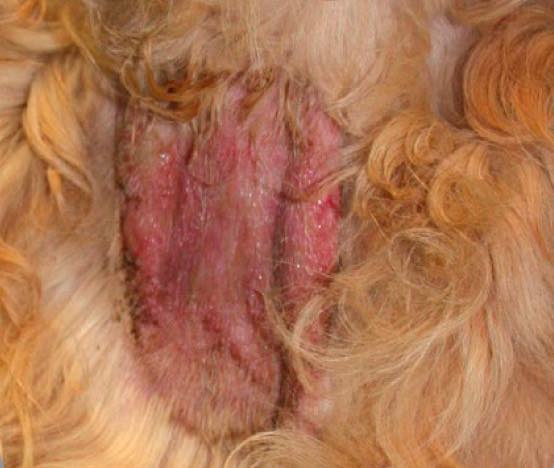 Dog Hotspot
Hot spots are round, raw lesions that occur most often on the head, hips, and sides of the chest. Hot spots are most common on dogs with long, dense hair, and usually occur during hot weather. Hair usually falls out in these areas. The skin becomes very irritated and dogs will often lick and bite at the area.
Hot spots can be caused by a number of things, including flea bites, lice, mites, poor grooming, bacterial or fungal yeast infections, and allergies. Treatment depends on the cause. Clipping the hair around the lesions makes it easier to clean and treat the dog skin sores. If infected, oral antibiotics will be prescribed. Treatment will be prescribed for fleas or other parasites, and your vet can instruct you on proper grooming techniques. It is important to accurately diagnose before using a mode of treatment.
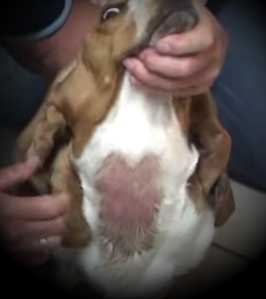 Sores on Dog Back Caused by Skin Infection Hot Spot
Bacterial Pyoderma (dog bacterial skin infection)
Canine pyoderma refers to any dog skin sore or lesion that is pus-producing. It is the second most common cause of skin disease in dogs. The condition can involve a single occurrence or a problem that reoccurs. There are many causes with the condition classified by on the type of bacteria, the chance that there is some type of underlying problem, disease prognosis (projected outcome) and if the infection will respond to available therapies.
The infection might exist only on the skin surface or in more chronic cases, infection can result in dog skin sores that reach into the fatty tissue just below the skin. Most cases are only on the skin surface and can be easily treated with an antibiotic selected to address the specific bacteria identified. Antibiotics are usually prescribed for 3 weeks for surface skin infections and 6 weeks for deeper infections. However, it should be remembered that dog bacterial skin infections are usually a secondary in nature, which means that is resulted once a primary cause is not treated and causes wounds on skin may result in bacterial infection. So, it is important that both primary and secondary causes are treated, particularly in recurring skin infections.
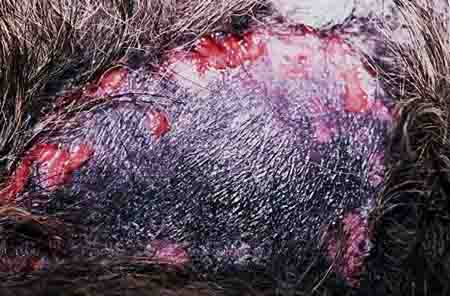 German Shepard Dog Sores from Deep Pyoderma
Source: Washington State University, Dr. Candace Sousa, Veterinary Specialist
Certain breeds such as Standard Poodles, Vizslas, Akitas and Samoyeds suffer from deep pyoderma or infection as a result of the condition sebaceous adenitis. Deep infections can also be helped by antibacterial benzoyl peroxide shampoo. The shampoo works by decreasing bacteria on the skin surface and by reducing the likelihood that an infection will return. Shampoos are used 2x per week.
All dogs suffering from skin infection will need to be re-evaluated for progress.
Dog Mange
There are two types of mange, demodectic and sarcoptic.
Demodectic Mange
Demodectic dog mange is usually seen in puppies from mites that spread to the puppy from the mother.
The demodex canis (demodectic mange) causes both localized (specific areas) and generalized symptoms (all over the body). If a puppy have a small number of mites, no treatment is usually necessary as the condition will clear by itself. If there are moderate numbers of mites, then dog sores on legs and other areas could appear. It is possible that dogs with mange have a compromised immune system that was unable to fight off the parasites. In adults, dog sores are commonly seen on the face, legs, abdomen and hind legs.
Sarcoptic Mange
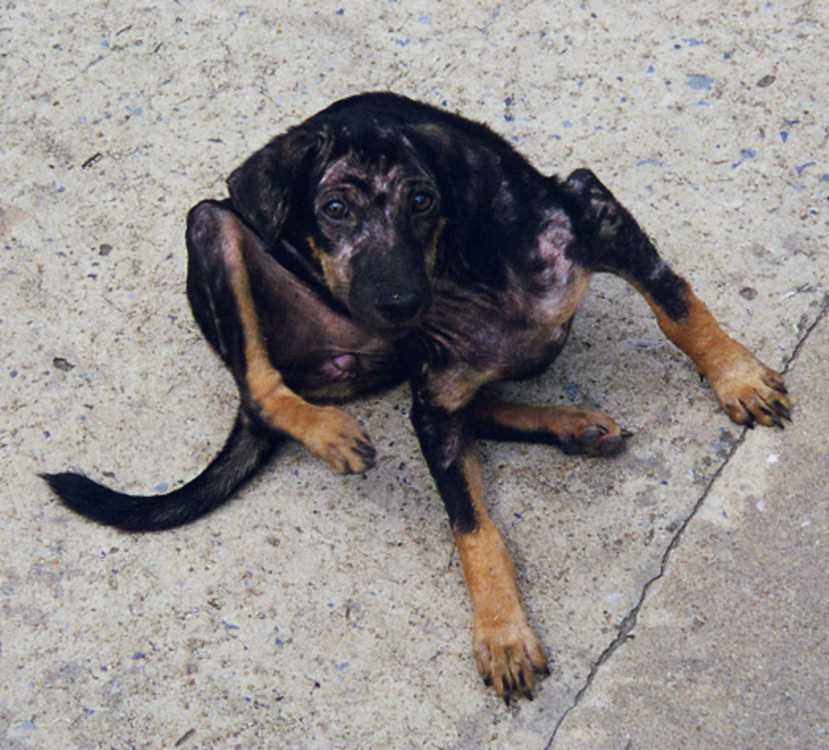 Dog Skin Sores Caused by Sarcoptic Skin Mange
Sarcoptic dog mange is from mites that spread from dog to dog or dog to wild animal contact. Mange dog skin sores ooze and crust over along with hair loss and itch. This may occur in one small area or may occur all over the body.
Mange Diagnosis and Treatment
To diagnose demodectic and sarcoptic mange, your vet will do a scraping of the affected skin and examine it under a microscope. Mites are not always found when a small number are causing the condition. In this case, the Vet will initiate treatment, and confirm the diagnosis if your dog responds to treatment. If your dog has this condition, it is usually treated with an over the counter topical lime-sulfur dip such as Naturasil for Pet Mange.
If the skin area is infected your veterinarian might prescribe a prescription medication which includes antibiotics and others. Since mange is difficult to diagnose, sometimes its better just to start treatment and see if there is some improvement.
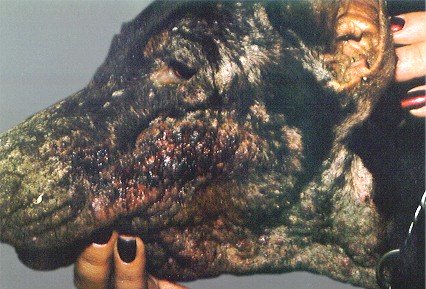 Picture of Dog Scabies and Sarcoptic Mange
Dog Fungal Skin Infections
Blastomycosis is a fungal infection that causes dog skin sores. It is a systemic infection that causes respiratory problems, a reluctance to walk, generalized weakness, a poor appetite, and even blindness. One of the first signs of the illness, however, is round, oozing sores on the skin. The sores may later crust over. This condition usually occurs in the fall and is caused by breathing in spores that are released when your dog digs into the ground.
The fungus occurs most often in areas near river valleys or lakes. Blastomycosis in dogs can spread to multiple parts of your dog's body through the blood stream. This kind of infection is common in hunting dogs, the ones who explore moist, dead vegetation and thus catch the fungi.
To diagnosis Blastomycosis, your vet will examine secretions from the sores under a microscope. Blastomycosis is treated with oral anti-fungal medication such as itraconazole (Sporanox) for a period of 6 months and with an anti-fungal medicated shampoo such as Curaseb.
The condition cannot be passed from dog to human or human to human.
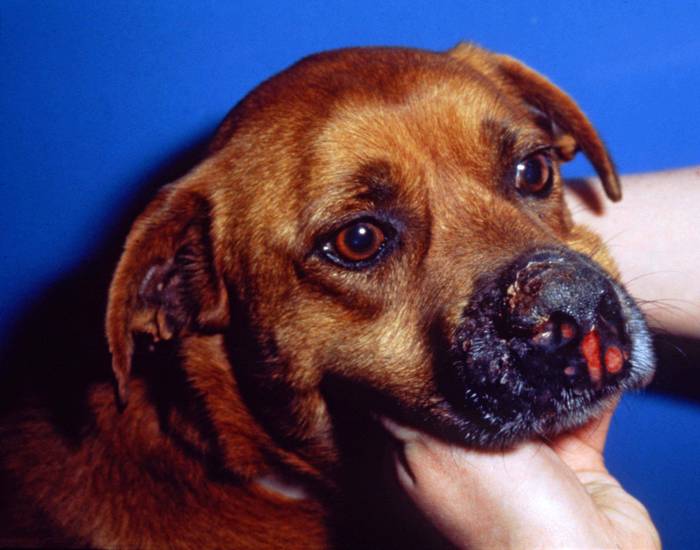 Picture of Dog with Blastomycosis which caused on a red sore on the dog nose.
Histoplasmosis is a less common fungal infection. Like blastomycosis, it is a systemic infection that causes weight loss, cough, fever and diarrhea. It can also cause dog skin sores. It is diagnosed and treated the same way as blastomycosis.
Dog Allergies
Flea allergy dermatitis, environmental and food allergies can lead to dog skin sores. Even if you don't find any fleas on your dog, they are skilled at hiding, with even a few able to cause a problem in allergic dogs. Symptoms are usually in the form of raised red bumps known as hives. They are itchy and will cause your dog to scratch. Excessive scratching may leave the skin wounded, leading to infection.
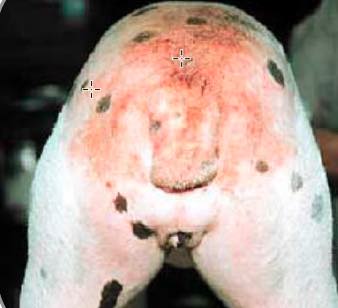 Flea Allergy is one of the Skin Problems in Dogs that Causes Scabs, Hair Loss and Itching. It is More Severe for Dogs that Have Flea Bite Sensitivity. Skin Irritation Often Starts at the Based of the Tail.
If no infection occurs, hives will usually go away on their own once exposure to the allergen is removed. If infection develops, however, medical treatment will be needed. See your vet if your dog has sores that don’t go away in a few days, or sores that ooze anything yellowish in color. Antibiotics may be required to administer.
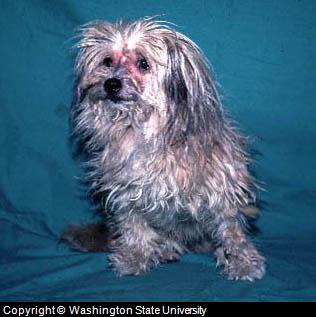 Lhasa apso with Atopic Dermatitis
Dog Skin Ulcers (erosive or ulcerative dermatoses)
A skin ulcer in dogs refers to a loss of skin due to deep sores or an open ulcer on the skin's surface. This can occur due to various reasons, such as an injury, prolonged pressure, infection, or a chronic health condition. Any condition that blocks or changes blood flow to skin can cause skin ulcer. Skin ulcer can be painful and may produce discharge, and often poorly heal at it's own. Skin ulcers are usually grouped as per intensity, for example the more erosive or ulcerative in nature.
However, there can be so many reasons for skin ulcers, it thus becomes a common condition and are classified into the following types based on their causes:
- Traumatic ulcers: These are caused by an injury or trauma to the skin, such as a self-injury, scrape, burn, electric, chemical, frostbite, cut, or bite wound.
- Pressure ulcers: Also known as bedsores, these are caused by constant pressure on a specific area of the skin, usually when a dog is immobile for extended periods.
- Vascular ulcers: These can be caused by issues with blood flow, such as venous insufficiency or arterial ulcers.
- Neuropathic ulcers: These can be caused by nerve damage, often in conjunction with diabetes.
- Pyoderma ulcers: These are caused by bacterial infections, often associated with a compromised immune system.
Some diseases characterized by erosions or ulcers of the skin are likely inherited since they tend to occur in certain breeds; however, no genetic screening tests are available (such as lupoid disorders, familial dermatomyositis, zinc-responsive dermatoses)
Treatment for skin ulcers depends on the underlying cause and may include cleaning and dressing the wound, antibiotics to treat or prevent infection, pain management, and potentially surgery. It's crucial to get any skin ulcer examined by a vet to determine the underlying cause and appropriate treatment.
Causes of a Skin Ulcer on a Dog
There are several potential causes of skin ulcers in dogs. Several dog ulcer pictures are also below.
Causes include:
|
Decubital ulcers |
A decubital ulcer is a localized injury to underlying tissue or the skin. It is often over a bony prominence and is the result of unrelieved pressure. (9) |
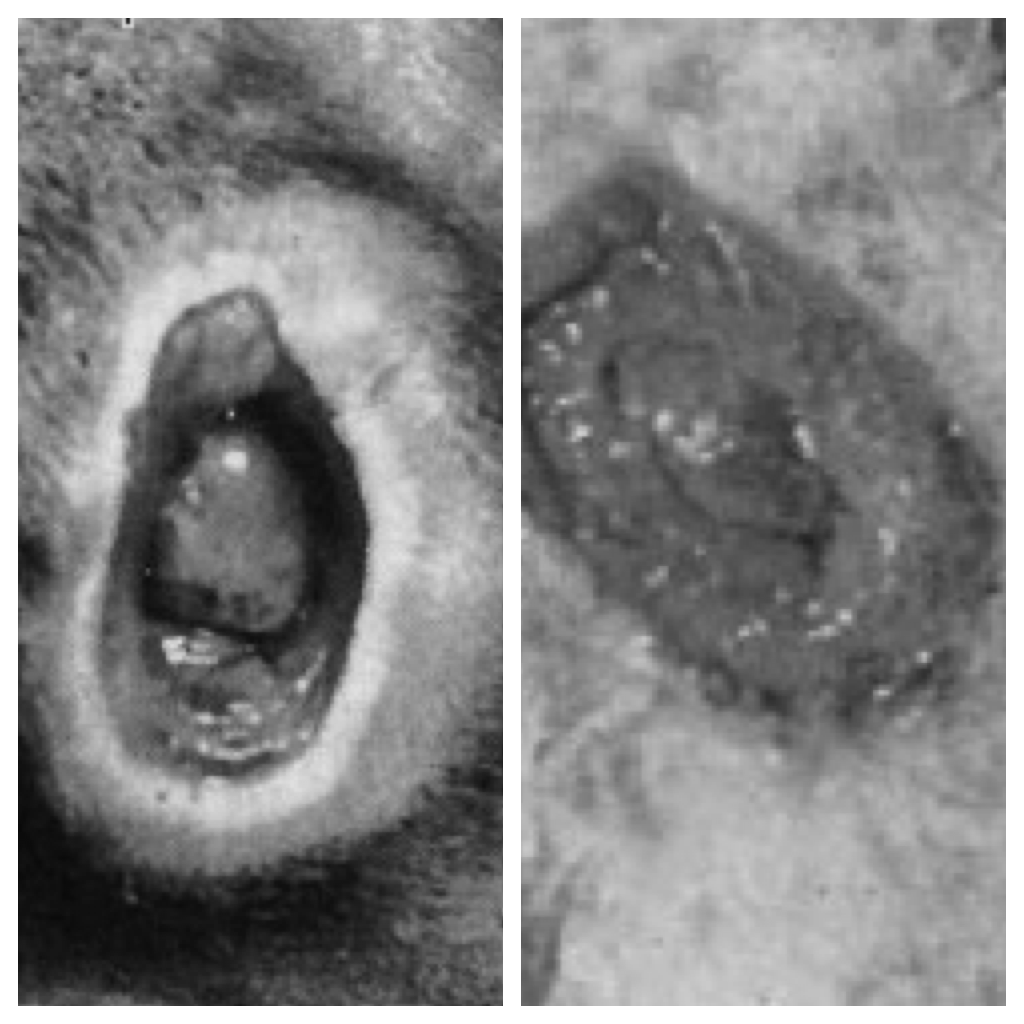 Dog Skin Ulcer Pictures (left - Decubitus ulcer over trochanter of an Irish Setter; right - Decubitus dog skin ulcer over the ischial tuberosity of a toy poodle
|
Histoplasmosis |
Fungal infection that causes skin lesions and ulceration. Can be accompanied by digestive system and breathing problems. Diagnosed with a biopsy. |
|
Hygroma |
A hygroma is a fluid-filled swelling surrounded by a thick capsule of fibrous tissue that develops under a dog's coat and skin1. They are typically not painful and can form over any bony prominence on the dog’s body, such as the side of the hock (ankle) joint or over the side of the hip, but they are most commonly found over the elbow.(1) |
 Irish Wolfhound Dog Skin Elbow Ulcer Picture After Surgical Excision of an Elbow Hygroma
|
Leishmaniasis |
Can cause dog nose ulcers. Also found on the ears Caused by a blood cell parasite. Considered to require Euthanasia. |
|
Lymphoma |
Cancer in dogs that can cause ulcers along with itching and redness. Diagnosed via a biopsy. Treated with surgical removal and possibly radiation or chemotherapy. |
|
Melanoma |
Tumor found on the skin of older dogs. Appears like a dark colored nodule. Diagnosed with a skin biopsy. Treated with surgical removal. |
|
Panniculitis |
Panniculitis is usually caused by a skin injury or when a foreign body enters the skin. It can also have an autoimmune or unknown cause. Nodules form on the skin surface that can become ulcerated. A veterinarian will drain the lesion and remove surgically if necessary. |
|
Phaeohyphomycosis |
Condition caused by the fungal contamination of a wound. It is found in a single ulcer, nodule or sores on dog legs. Treated with surgical removal. |
|
Pyoderma is a bacterial skin infection. It can result in ulcerated skin pustules or nodules. The condition is diagnosed with a biopsy, culture or skin scraping. Treatment is with antibiotics. |
|
Pythiosis |
Pythiosis is a condition where aquatic mold causes skin sores on a dogs legs. It can also occur on the tail base. Related symptoms are digestive problems and itch. The condition is diagnosed with a biopsy and examination under a microscope of any drainage. It can be fatal to the dog. |
|
Sebaceous Gland Tumors |
These tumors form into nodules which can become skin ulcers. Diagnosis is with a biopsy. Treatment involves surgical removal or by leaving the lesion in place depending on the location, discomfort of the dog and if the tumor if malignant. |
|
Spider Bites |
Spider bites contain toxin that can cause skin swelling that can become ulcers. Diagnosis is with a biopsy. Treatment includes the use of Corticosteroids. A dog may paw at affected areas causing additional skin sores and damage. |
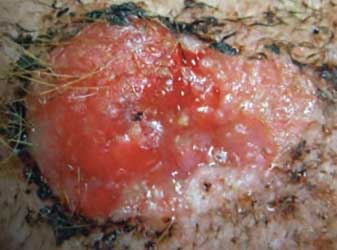 Sore on Dog Back Caused by a Squamous Cell Carcinoma (SCC), a condition related to sun exposure on the back.
|
Squamous Cell Carcinoma |
Causes crusted ulcers to form on dog legs or the body. Diagnosis is with a biopsy. Treatment for these types of canine skin lesions involves surgical removal. |
Dog Sores by Body Location
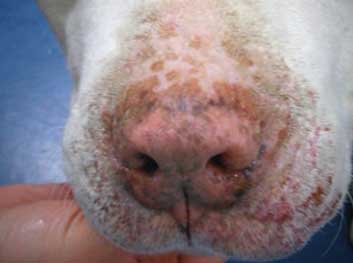 Sore on Dog Nose Caused by Solar Dermatitis. It is a condition where sunlight injures health skin cells, usually on the top of the nose.
Like most canine diseases, there are multiple causes for dog skin sores on different areas of the body as outlined in the table below.
Causes Dog Sores on the Paws, Legs, Ears and Face |
|
|---|---|
| Body Location | Common Causes of Dog Skin Sores |
| Dog sores on Legs | Canine
Osteosarcoma: An
osteosarcoma is one of the problems of dogs described as a giant breed that is middle age to a senior including Rottweilers and Scottish Deerhounds. The condition causes
lesions on the front dog legs 75% of the time. The condition starts in
the medullary bone cavity and breaks through the bone, ultimately
causing a skin lesion. It is common for osteosarcoma to form at sites
where bone fractures have been repaired with metal implants. Diagnosis
is made with a biopsy. Fortunately only 10% of dogs diagnosed have
cancer cells that spread from the original site. After diagnosis, a veterinarian will determine if the dog is in pain and if the pet can maintain a good quality of life after amputation. He or she might test the dog with a sling on one leg to simulate the experience of having 3 legs. Survival time after amputation with no other treatment has a median survival of 135 days with 11.5% surviving 1 year, and 2% for 2 years. When chemotherapy is used along with amputation, survival times jump to 200 to 400 days, with 1 year survival at 30% to 40%. Two year survival jumps to 20%. Typical treatment is the use of cisplatin for 3 to 4 weeks after amputation. Demodicosis: This is a form of mange that primarily affects young dogs (see above) 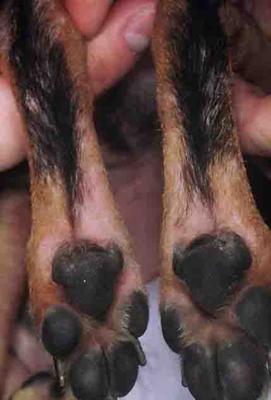 Dog Sores on Legs such as shown here could be caused by a contact allergy, skin infection, mites (demodicosis) or Even Ringworm Source: Dog Health Handbook |
| Ear Flap (Pinnae) | Atopy:
Environmental allergens cause a skin reaction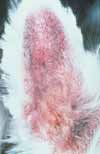 Canine Ear Sores Caused by Atopy Source: Dog Health Guide Diet: A reaction to food including allergy or intolerance Scabies: Mites can cause lesions to form Vasculitis: blood vessel inflammation |
Dog head and face sores |
Atopy: Sensitivity to environmental allergies 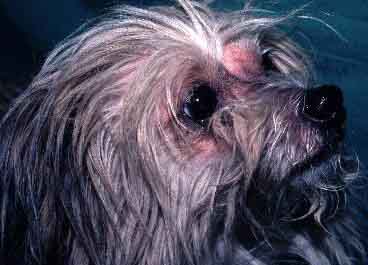 Canine Sores on Face From Atopy (Seasonal Allergy) Source: Washington State University Diet: Food intolerance or allergic response to a food component or ingredient 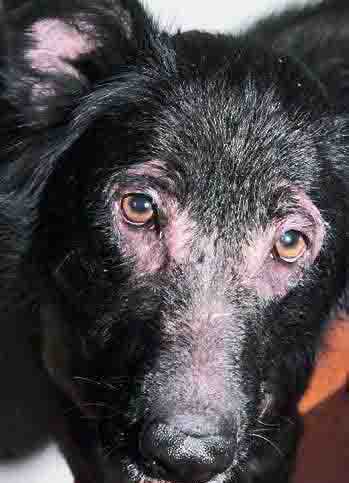 Dog Food Allergy Sores on Face and Ear Source: Washington State University Ringworm: Caused by the dermatophyte that triggers ringworm in dogs (Microsporum gypseum) 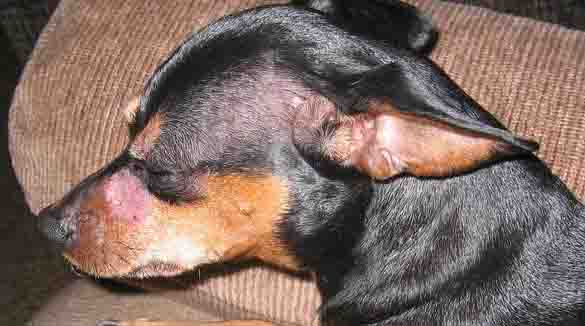 Ringworm Can Cause Dog Skin Sores on Face as Shown Above Source: Washington State University Allergies to Insects: Reactions to mites, fleas and other parasites |
| Dog
sores on paws |
Demodicosis (Demodectic Pododermatitis):
mange mites that
cause localized lesions on the paws. IT is common in young dogs (under age 1) and rarely seen in older dogs. The disease is frequently seen with bacterial infection on the paws. Paw areas see hair loss.
Parasites do not affect claws and footpads.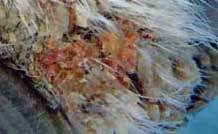 Sores on Dog Paws Caused by Demodectic pododermatitis in a male terrier.
 Source: Alexander Werner, VMD, DACVD, Animal Dermatology Center Digital Hyperkeratosis: This dog skin disorder affects the nose and footpads. Breeds susceptible to this problem include English bulldogs, Basset hounds, Beagles English springer spaniels and Cocker spaniels. The condition is caused by debris with collects on the footpads. Areas that bear weight cause the keratin to wear off. It is usually seen in older or middle-aged dogs. Other symptoms include leathery skin, oozing from the skin and crusting. Diagnosis is based on the condition being limited to the paws and the absence of the condition in other skin areas. The condition can be improved by improving the dog's hydration and the use of topicals that help with seborrhea. Atopy: Paws that come in contact with allergens in the environment such as pollen. Diet: Food reactions can result in an allergic response on the paws as well as contact allergies. Ringworm: This fungus can cause sores on the paws Pemphigus Foliaceous (PF): A dog skin autoimmune disease in which the canine body's immune system attacks and directs its efforts against the patient itself. Occurs in approximately .6 to 1.4% of all dogs. The disease causes skin bumps or pustules to suddenly appear on the paws. The lesion ruptures, causing crusts to form over the skin lesions on dogs. Other symptoms can include lameness, pain and appetite loss. Treatment depends on the type of canine pemphigus diagnosed. Topicals are used for Pemphigus erythematous. Prednisone and other therapies are available for other types. 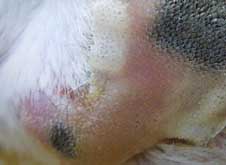 Skin Lesions on Dog Paws Caused by Pemphigus Source: Animal Dermatology Center Superficial Necrolytic Dermatitis (SND): The condition is caused by a liver disease. It is seen in older and smaller dogs. Symptoms are the accumulation of crust on paw pressure points. 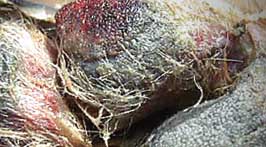 Superficial Necrolytic Dermatitis causes sores on the paw pads Source: Alexander Werner, VMD, DACVD, Animal Dermatology Center |
Dog Mouth Sores and Tumors
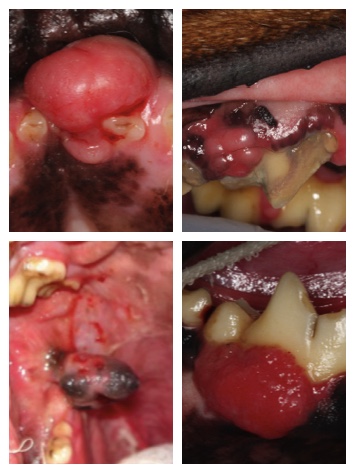 Dog Mouth Sores Pictures Including Sores Which Appear to Be on the Lips
Dog skin sores in a dog's mouth are called tumors. There are many types that can form in the oral tissues. Causes include:
- Gingival Enlargement: A non-cancerous growth that is triggered by periodontal disease. It can be removed by a veterinary dentist (top right above).
- Peripheral Odontogenic Fibroma: a type of tumor that is a benign (not cancerous) tumor (top left).
- Squamous Cell Carcinoma: A cancerous tumor that requires a biopsy to confirm the diagnosis (bottom right).
- Oral Malignant Melanoma (OMM): Forms in the soft tissues that line the tongue (bottom left).
Have A Question about Your Dog's Skin Condition? Our Team Will Answer It for Free!
Do you have a question or comment? Share it!
Our editors will pick 1 question to answer each week. Please include your dog's age, breed, medical history, medications and if possible, a picture of the condition.
We will do our best to get back to you quickly (it depends on how many questions we receive each day). If you do require an immediate response we suggest using this online dog veterinary service that is available now.
Other Reader Dog Skin Related Questions and Vet Suggestions
Click below to see contributions from other visitors to this page...
Reader Question: New Spot on Dog’s Snout – What It Might Be and When to See a Vet Not rated yet
Concern About New Spot on Dog's Snout and Other Ongoing Issues Reader's Question: Question from Alan: Should I be concerned about a new spot on …
Reader Question: Dog Has Large Red Patches on Belly – Possible Causes & What to Do Not rated yet
Dog’s Belly Covered in Large Red Patches – What Could Be Causing This? My dog has these large red patches on her belly on both sides. What is this, we …
Treating a Dog’s Inflamed and Licked Paw Pad: A Reader’s Question and Practical Solutions Not rated yet
Reader Question on a Dog Pad Sore Issue She has been licking this area on her pad for a few days. I didn’t notice it was that large. There is no blood, …
Managing Itchy, Smelly Skin Lesions in Dogs: Reader’s Question and Solutions Not rated yet
Practical Solutions for Chronic Itchy Skin Lesions in Dogs: A Response to a Reader's Experience My dog gets elevated bumps on hips. They are itchy so …
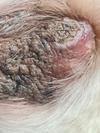
A Dry Sore on a Dog's :Leg Not rated yet
Reader Question: There is a dry sore on my dog's leg, The sore is several years old and increasing in size. The area is dry and painless. What is it and …
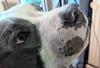
Identifying and Treating A Mysterious Wound on My Dog Not rated yet
Reader Question on Mystery Dog Wound:
I recently lost one of my dogs to some sort of anaphylactic shock or related seizure. There were several "what …
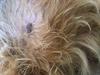
Brownish Raised Skin Lesion - Reader Question and Treatment Suggestions Not rated yet
Reader Question Regarding Lesion Near Front Armpit
I Wonder what this skin condition is and if I should have it removed or treated with something. …
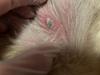
Odd spot on Lower Abdomen Not rated yet
Reader Question and Treatment Considerations Spot on Dog Abdomen
I Found a spot on lower ab/groin area of 8 yo male lab. Lump under skin as well. …
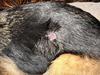
Unidentified Skin Ulcer on Side - Causes and Treatment Options Not rated yet
Reader Question: Causes, Identification and Treatment of a Dog Skin Ulcer on Side
I just found this 20 cent piece size wound/ulcer on my dogs side. …
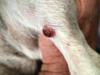
Reader Question and Home Treatment Suggestions: How to Treat an Ulcer on a Dog Leg Not rated yet
Reader Question: How Do You Treat a Dog Leg Ulcer at Home?
My dog's name is Lulu with a leg ulcer 11 year old female pug. Healthy girl, no medication. …
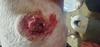
Dog Bite Wound Care Not rated yet
I have a 14 year old pitbull/boxer/mastiff mix and he had a bite that turned into a big sore. I haven't gone to the vet do the lack of funds but I'm trying …
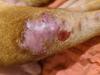
Sore on Dogs Leg Not rated yet
Can you tell me what this is om my dogs leg. It's red swollen missing hair. It does have a light bloody watery discharge in some spots.
Suggestions …
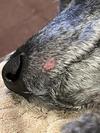
Bump on Dog's Face - What Should I Do - Suggestion From Our Editor Not rated yet
My 5 year old medium poodle, male, got a bump on his face a month ago. It’s on the side of his nose about half an inch from his lip . Vet looked and said …
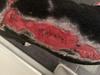
Possible Causes and Treatment of Large Sore on a Dogs Back Not rated yet
My dog has a large sore on his back that reoccured twice now, and has blistered once. We suspect that it’s an allergic reaction to cactus, but it is localized …
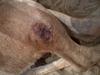
Causes of Sore on Dog Leg Not rated yet
Can you identify what type of dog skin sore this is? I’m sending a picture.
Editor Suggestions Regarding the Cause of a Dog Skin Sore on One Leg …
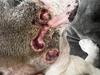
Causes and Treatment of Sores on Dogs Face Not rated yet
I have a 9yo F Olde English Bulldog, 60lbs. She was found in 2014 at a truck stop covered in chemicals. She has always had a terrible immune system and …
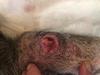
Sores All Over Dog Body Not rated yet
Hello, my name is Martha and this is my furbaby Halo. We have been to the vet many times and the vet did a skin scrape and it came back as the following …
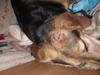
Sores on My Dogs Head Not rated yet
What can I use to treat these sores on my dogs head? I'm guessing it is from a food allergy. He is a 9 year old Beagle/Rotty mix. He has arthritis in his …
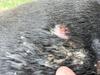
Dog Sores on Back After Seizure Not rated yet
My dog had a seizure so we took her to vet. When we got back home we noticed her back felt wet and there were several sores oozing with puss. Some of about …
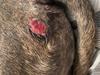
Treating an Open Wound on my Dog Not rated yet
Please tell me what I can do for him I can’t take him to a vet till I get paid and nobody will do a payment plan.
Editor Suggestion for Treating a …
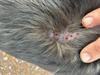
Sores on Dog Back Not rated yet
5 yr old cattle dog mix had a bath with aloe shampoo last Sunday and turned up with scabs on back that appear almost like puncture wounds. Dog is up to …
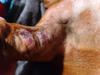
Sores on Doxie Feet and Between Toes Not rated yet
My 4 yr old Doxie, Beaux, suffers from seasonal allergies. But now he has red inflamed sores on his feet in between toes and his legs. No where else. …
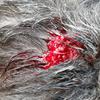
Possible Causes of New Open Sore on Dog Not rated yet
What is this? I noticed it today when giving my dog a bath because she stinks and was sticky so I thought she had rolled in something and this bloody …
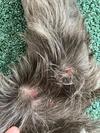
Sores/scabs On Inside Front Legs and Chest Not rated yet
We just noticed these and have no idea what they are. They seem like dead skin/bumps but have scabs over the top of it. They are only on the inside of …
Yellow Labrador Retriever Hairless Skin Lesions Legs Not rated yet
My yellow lab has 3 of these lesions. Any idea what they are?
Editor Comment
Hi Donna,
I'm not a veterinarian, but I can offer some suggestions. …
Denuded Areas on One Hind Leg Not rated yet
My 16 yr old retriever mix has developed a denuded area on her lower hind leg that started a few weeks ago. No known trauma or injury and it seems to have …
Brochures
References for Dog Skin Sores
(1) Hygroma in Dogs | VCA Animal Hospitals (vcahospitals.com)
(2) Washington State University, Carmichael, L., Recent Advances In Canine Infectious Diseases
(3) Management Challenges in Canine Pyoderma, Peter J. Ihrke, VMD, Diplomate ACVD
(4) School of Veterinary Medicine, University of California, David Scott, D. W., Miller, W. H., Griffin, C. E.Muller and Kirk’s Small Animal Dermatology
(5) Canine and Feline Demodicosis, Didler-Noel Carlotti Dr. vet DIP ECVD, Eysines (Bordeaux), France EU
(6) Canine Osteosarcomas, Alfred M. Legendre, DVM, MS DACVIM, College of Veterinary Medicine, University of Tennesse, Knoxville, TN
(7) Wandering Through the Autoimmune Dermatosis: Pemphigus Complex, Carlos Eduardo Larsson
(8) Sun-Induced Skin Lesions in Dogs, Alexander Werner, VMD, DACVD Animal Dermatology Center


