Summary:
"Dog Ear Illnesses have many causes including:
- Bacteria
- Fungus or yeast
- Changes in the structure of the ear
- Parasites
- Food or environmental hypersensitivity or allergy
- Treatment errors
Symptoms are often described as being Otitis Externa, which is inflammation of the external ear canal (includes the pinnae or ear itself, ear canals and external wall of the tympanic membrane), or Otitis media, which is inflammation of the middle ear. The middle ear includes the wall of the tympanic membrane, bulla (tympanic cavity), auditory ossicles and the auditory tube.
If a dog has balance problems, vestibular disease can be the cause, which is a problem in the inner ear and the way that information is coordinated with other senses and communicated to the brain.
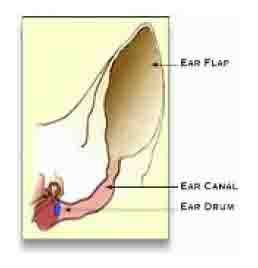
Inflammation in the ear is the result of a problem with the normal ear environment. For example enlarged glands (the ear is lined with cerumen glands) or excessive wax can cause inflammation. Problems in the middle ear often start in the outer or external ear. Otitis externa is the most common diagnosis with bacteria or yeast being the cause. The infection perpetuates the ear problem and if not treated, can lead to changes that can affect ear health and hearing.
Some breeds such as those with pendulous ears (Spaniel and Retrievers), with hair lined ear canals (Terriers and Poodles) or narrow ear canals (Shar pei) are prone to ear infections. This is also true for dogs that live in humid climates. Treatment is usually with select drops and antibiotics.
In some cases surgery is necessary to either resolve a dog ear problem (tumors, injuries) or as a complement to the use of medications."
Overview
There are two main types of dog ear illnesses: infections of the outer ear (otitis externa) and infections of the middle ear (otitis media). Most ear illnesses begin in the outer ear and are caused by either a bacterial or a fungal infection. Often only one ear is affected. Infections may spread from the outer ear into the middle ear. Improper cleaning or foreign bodies in the ear may rupture the ear drum, also spreading infection to the middle ear.
Dog ear illnesses are first evaluate based on the probably cause of the problem. This is based in part on the location of the problem on the ears.
Location and Common Causes of Dog Ear Illnesses |
|
| Breed |
Location of Dog Ear Symptoms |
|---|---|
| Pinnae (part of the ear that
extends from the dog's body to the tip of the ear) |
Pemphigus
folaiaceus, vasculitis (inflammation), scabies,
food reaction, atopy |
| Otitis Externa (problem in the
upper part of the ear and canal) |
Bacterial
and fungal infections, endocrine disease,
polyps, parasites,
food reaction, atopy |
Ear infections may also be caused by ear mites (Otodectes cynotis). Ear mites, when present, are generally present in both ears. They are easier to treat than many other types of infections. A single cleaning with a medicated solution often does the trick. If your dog has mites, be sure to clean the area he or she lives in with a miticide such as Benzarid.
Breeds Prone to Dog Ear Problems
Some pets are more susceptible to dog ear illnesses than others. This includes breeds with:
- Pendulous ears
-- basset hounds
-- cocker spaniels
-- retrievers - Hairy Ears (Hirsute external canals)
-- Terriers
-- Poodles
-- Schnauzers
- Narrow Ear Canals
-- Shar-pei
Common Dog Ear Illnesses
Common Dog Ear Illnesses
|
|
| Causes |
Description of Dog Ear Problem |
|---|---|
| Allergy or
Hypersensitivity to
Food |
A dog may or may not
be allergic;
commonly a reaction against a protein, rarely an additive;
clinically indistinguishable from atopy, which is inflammation caused
by an environmental allergy. The condition is treated with an elimination diet, where the diet is reduced to a simple protein and carbohydrate such as chicken and rice. Once improvement is seen ingredients are added back in until the culprit can be determined. Symptoms are treated with antihistamines, the addition of fatty acids to the diet and glucocorticoids for inflammation. |
| Atopy
(hypersensitivity to
allergens in air) |
Atopy is a
hypersensitivity to
aeroallergens such as pollens, house
dust mites, or mold spores. Allergy related problems could vary with
the change in seasons. Dog ear atopy is diagnosed using a dog's history, a physical exam and by ruling out other possible causes for the condition. The veterinarian might perform an allergy skin test to identify the specific allergen that is causing the problem. Treatment can include allergy shots to reduce the level of sensitivity (called immunotherapy), adding fatty acids to the diet and topical glucocorticoids to reduce inflammation. Dogs treated for atopy has a good prognosis with treatment, although the condition often cannot be cured. Dog Ear Atopy
|
| Changes to Ear Structure and Hair |
The ear canal can narrow
(stenosis) as the result of several conditions, trapping debris in the
ear. Conditions include cerumen gland hyperplasia (too many normal
cells formed in the ear) and the formation of polyps. Excessive amounts of hair could block the ear canal causing moisture buildup and related dog ear illnesses. |
| Ear Infections |
There are two types of dog ear
infections, those cause by bacterial
and other that are caused by yeast
or fungus. When the problem occurs in the outer or external ear, it
is
referred to as Otitis externa. Depending on the cause, it can be a
challenge to treat, although in most cases, cleaning the ear canal and
applying medications will cure the problem. Medications used include an antibiotic or antifungal agent as well as a glucocorticoid to address the inflammation. The glucocorticoid also changes the secretion in the glands that line the ear canal, creating an unfavorable environment for the infectious agent to multiply in numbers. Most medications are applied as drops since the liquid is easily distributed in the ear canal. If a dog ear infection is left untreated, it can spread to the otitis media or inner ear, causing problems such as a thinning of the tympanic membrane. Problems such as ulceration can extend all the way to the eardrum. Once the disease progresses to this point, it is more difficult for the veterinarian to break the cycle of inflammation, ulceration, infection and issues which start to destroy surrounding structures in the ear. Over time hearing can decline such as the inability to hear high pitched sounds. A dog can experience pain as well. Problems can occur if the eardrum ruptures allowing infectious agents to spread to the other side. Once treated a veterinarian has to make sure that the eardrum doesn't heal before the infection is eliminated, or it can become trapped. |
| Foreign Bodies |
During the spring and summer
grass seeds or plant awns are a common cause, particularly in breeds
with longer hair around the ears. The foreign body is found during an
in office examination using a device called an otoscope. Once the
foreign body is removed, ear health should be restored. |
| Genetics |
There are several inherited
problems can result in dog ear illnesses and abnormalities. These include:
|
| Hyperadrenocorticism
(spontaneous or idiopathic) |
The
spontaneous form of hyperadrenocorticism or Cushing's
Disease is an excessive production of glucocorticoids either
due to a microadenoma (small tumor) or macroadenoma (large tumor) of
the pituitary gland or due to adrenocortical neoplasms (non cancerous
tumor that forms from the cells lining the outside of a tumor. The condition is diagnosed with several blood tests and a urinalysis. X-rays are used to check the adrenal glands and for osteoporosis. Ultrasound can also check the adrenal gland. Medications are used to treat the disease depending on the type of hyperadrenocorticism diagnosed. It may be necessary to remove the adrenal gland if tumors are present (neoplasia). The prognosis for 60% of dogs with adrenal tumors is a life expectancy of 36 months. |
| Hypothyroidism |
Hypothyroidism
is caused by
insufficient production of thyroid hormone. Diagnosis is reached using
blood tests and thyroid tests for free T4, total T4 and TSH assays
among others. Hypothyroidism in dogs is treated with hormone replacement therapy. The prognosis is good for dogs that achieve remission by taking the recommended medications. |
| Keritinization Disorders |
Keritinization disorders in the ears turn normal squamous skin cells into a horny material such as nails. |
| Medication |
Certain topical drugs can irritate and injure the ears. Abrasive cleaners can also cause irritation. |
| Moisture |
Moisture in the ears can create
the conditions that lead to bacterial infections. This can occur as the
result of swimming, the use of the wrong dog ear cleaning products,
living in a high humidity environment and dog owners that clean the
ears too often. |
| Neoplasia
(tumors) |
Neoplasia
is the abnormal
proliferation of cells in the ear can cause an obstruction. Other types
of obstructions are polyps cerumen gland hyperplasia (increase in the
number of normal cells in the glands that line the ear). Dog ear tumors are diagnosed with an examination using an otoscope. Treatment involves surgical removal of the cancerous area. The prognosis is good if the cancer is completely removed. |
| Parasites |
Several types of parasites
can
cause dog ear illnesses. This includes:
|
| Pemphigus
foliaceus
(immune-medicated skin diseases) |
The skin disease Pemphigus
foliaceus causes blistering on the ears. The condition can be
induced by drugs or as the result of a tumor. The condition often
occurs on the inner surface of the ear. Pemphigus in the ears is diagnosed using a biopsy. The condition is treated with immunosuppression drugs. The prognosis is fair with treatment. If the pemphigus was caused by a medication your dog is taking, making a change results in an excellent prognosis. Pemphigus Foliaceus in Dog Ear |
| Seborrhea (idiopathic seborrhea) |
Idiopathic seborrhea
(unknown
cause) is the excessive formation of ear wax. It causes an abnormal
change in the cell renewal time, causing too many skin cells to form. The condition is diagnosed with a biopsy. Dog ear seborrhea is treated with ear cleaners and corticosteroids and retinoids. The prognosis is guarded for dogs with this condition. |
| Vestibular Disease |
In dogs, the vestibular or inner
ear provides the dog's brain with information on body position. It
informs the dog if it is turning, falling, or speeding up. This
information coordinates with information from the eyes and other
sensory information such as touch to help a dog maintain balance.Dog With Vestibular Ear Problem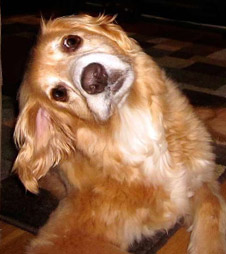 Dog Vestibular Disease Patient that "couldn't walk straight." Symptoms of dog vestibular disease:
|


Brochures and References:
Brochures on dog ear illnesses referenced on this page:
For additional reading on Dog Ear Illnesses and Problems:
Vestibular Disorders Association
Diseases of the Outer Ear
Haar, G. Ter DVM
The Patient with Otitis Externa
R. S. Mueller
Department of Clinical Sciences Coll. of Veterinary Medicine & Biomedical Sciences
Colorado State University, Fort Collins, CO, USA.


