Table of Contents
Summary:
"Canine uveitis is caused by inflammation in the uvea, the part of the eye that supplies blood. It can cause cataracts and glaucoma if left untreated. Treatment includes topical medications for pain and inflammation."
Overview
Uveitis is a condition where the part of the uvea, the part of the eye
that supplies blood to the retina, becomes inflamed. The inflammation
causes proteins to leak out resulting in cloudiness in the eye. Anterior uveitis and posterior uveitis refer to inflammation in different parts of the uvea.
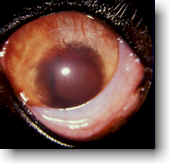 Canine Uveitis
The condition is caused by:
- Injury or trauma
- Cataracts
- Infections
-- Rocky Mountain Spotted Fever
-- Lyme disease
-- Ehrlichia (bacteria spread by ticks)
-- Infected uterus in females
-- Hepatitis virus
-- Systemic fungal infections - Tumors
Canine uveitis can cause cataracts, scar tissue formation, retinal disease and glaucoma.
Symptoms of Uveitis in Dogs
Symptoms of uveitis in dogs include:
- Cloudiness
- Redness
- Tearing
- Squinting
- Occasional bleeding within the eye (hemorrhage)
- Vision Loss
- Pain
- Iris color change
- Puss on the front of the eye (hypopyon)
Diagnosis of Canine Uveitis
Your veterinarian can diagnose the condition using a ophthalmoscope, an instrument used to inspect the interior of the eye.
Clinical signs include:
- Reduced blood flow to the eye (hypermia)
- Abnormal amount of fluid in the eye (edema)
- Decreased intraocular pressure
- Accumulation of blood in the front of the eye from trauma (hyphema)
- Thickening of the iris
- Solid particles inside the cornea (keratic precipitates)
- Constriction of muscles in the eye (miosis)
Treatment of Dog Uveitis
Treatment for uveitis attempts to reduce the inflammation causing the condition in order to avoid the onset of glaucoma. It also involves treatment of any complications.
Options include topical medication for inflammation and medication to reduce any pain. Antibiotics are also sometimes prescribed, as in the case of infection to prevent the onset of glaucoma.
Ask a Question or Share Your Story
Have a Dog Eye Related Question For Our Editors or A Story to Tell About This Topic?
Tell us about your dog: breed, age, sex, the part of the body affected, what you are seeing, and any medical history. Our editorial team answers a selection of reader questions for free. We can't reply to every question, and an answer may take several days. Answers are general information, not veterinary advice.
If you need help right away, you can ask a veterinarian online at JustAnswer (a paid service; we may earn a commission if you use it). In an emergency, call your vet or the nearest emergency clinic.
Other Dog Eye Related Reader Questions and Answers from Our Editors
Click below to see contributions from other visitors to this page...
Dog Eye Problem Not rated yet
Reader Question: Eye allergy or Dog Eye Infection?
My mother's dog is about 10 yrs old. She is a sheltie/pom mix. She has:
-an auto-immune deficiency …


